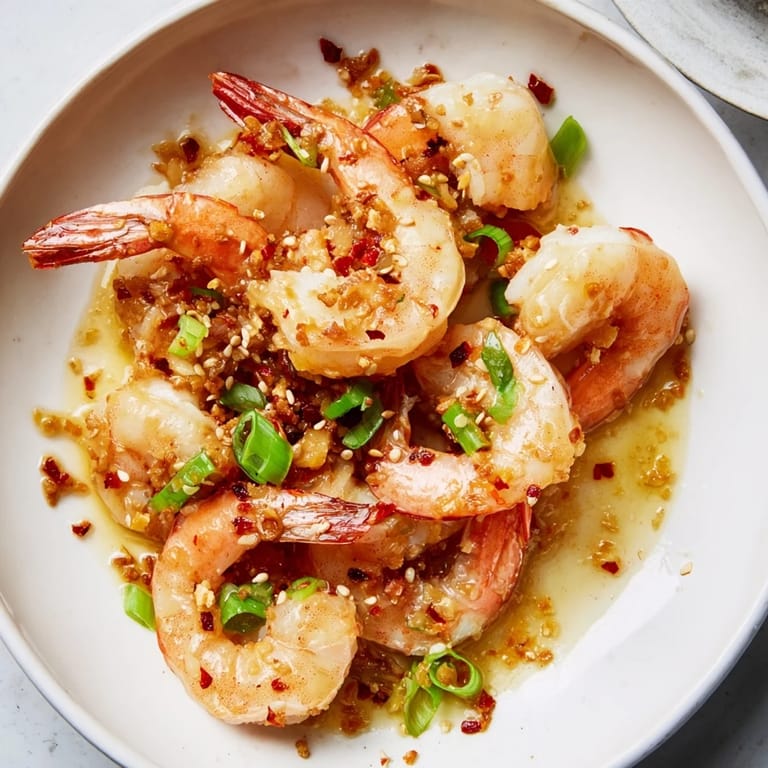
 Save
Save I discovered this dish entirely by accident on a Tuesday night when my fridge was nearly empty and I was craving something bold. I had shrimp, butter, and a jar of gochugaru that a friend had given me months earlier, sitting in the back of my spice cabinet. The way the garlic bloomed in that butter, releasing this nutty warmth, felt almost meditative—like the kitchen was finally waking up. When I added the Korean chili flakes, that first whiff made me pause and actually pay attention to what I was making. By the time the shrimp hit the pan, sizzling and curling into these perfect little crescents, I knew I'd stumbled onto something special.
Last spring, I made this for my neighbor who had just moved in, and she showed up at my door the next day asking for the recipe before even saying hello. There's something about serving someone food that's still steaming, when you can see them visibly relax as they taste it, that makes cooking feel less like a chore and more like a small act of generosity. We ended up opening a bottle of white wine and talking until midnight on her apartment steps.
Ingredients
- Shrimp: Look for large shrimp with a slightly translucent appearance—they cook evenly and stay tender, plus they look more elegant on the plate.
- Unsalted butter: This lets you control the salt level, which matters when soy sauce is already in the mix.
- Garlic: Mince it fresh yourself if you can; jarred garlic tastes almost metallic by comparison.
- Gochugaru: Korean chili flakes have this bright, fruity heat that's different from regular red pepper flakes—they're worth seeking out in an Asian market or online.
- Soy sauce: Use a quality brand; the difference in depth of flavor is noticeable and worth the extra dollar or two.
- Honey: A touch of sweetness balances the spice and salt, creating a sauce that tastes rounded instead of one-dimensional.
- Sesame oil: Just a teaspoon adds this haunting, toasted depth that makes people ask what the secret ingredient is.
- Scallions and sesame seeds: These aren't just garnish—they add texture and brightness that keeps the dish from feeling heavy.
Tired of Takeout? 🥡
Get 10 meals you can make faster than delivery arrives. Seriously.
One email. No spam. Unsubscribe anytime.
Instructions
- Dry your shrimp:
- Moisture is the enemy of a good sear, so pat them completely dry with paper towels. This small step is the difference between shrimp that stick to the pan and shrimp that develop a light caramelization.
- Bloom the garlic gently:
- Melt the butter over medium heat and cook the minced garlic for exactly one minute, stirring constantly. You're looking for that moment when it becomes fragrant and takes on a pale golden hue—any longer and it turns bitter, which would ruin the entire sauce.
- Build the sauce:
- Add the gochugaru, soy sauce, honey, and sesame oil all at once, stirring for about thirty seconds. This quick toast wakes up the flavors and lets them marry slightly before the shrimp goes in.
- Sear the shrimp:
- Arrange them in a single layer in the skillet and resist the urge to move them around for the first two to three minutes. Listen for that gentle sizzle and you'll know they're developing a light crust; flip and cook the other side until they turn fully pink and opaque.
- Toss and finish:
- Remove from heat and gently toss the shrimp in the glossy sauce, making sure each piece gets coated. The residual heat will continue cooking them slightly, so don't overcook at this stage.
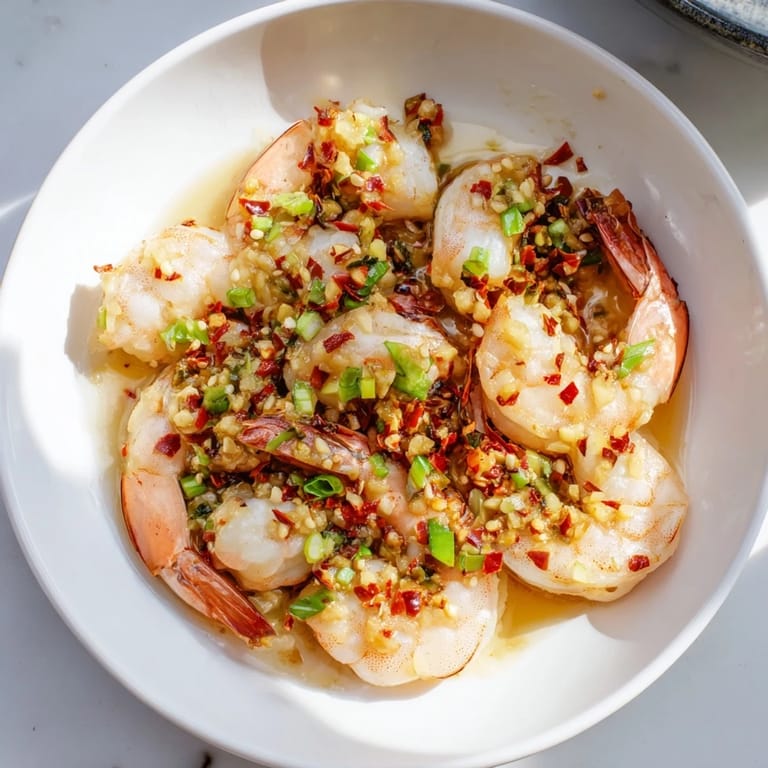 Save
Save I served this to my parents last month, and my father—who is notoriously picky about seafood—actually asked for seconds. My mother kept saying it tasted expensive, like something from a restaurant, and I realized that's what happens when you respect simple ingredients and don't overthink them. That quiet moment when someone tastes something you made and their face softens a little, that's the real reward here.
Why This Sauce Works
The magic isn't in a long list of ingredients but in how they balance each other. The butter carries the garlic and chili flakes so they coat every shrimp evenly instead of settling at the bottom of the pan. Soy sauce brings umami depth, honey adds subtle sweetness that rounds out the heat, and sesame oil whispers in at the very end with this toasted complexity that makes people pause mid-bite and wonder what they're tasting. It's the kind of sauce that tastes like it took hours to develop, but it comes together in under five minutes.
Serving and Pairing Ideas
I love serving this over fluffy white rice so the sauce pools underneath and every bite of rice gets that buttery, spicy coating. It also works beautifully over noodles—egg noodles especially become this silky vehicle for the sauce. Sometimes I skip the rice entirely and serve it as an appetizer with crusty bread for dipping, which is honestly the most decadent way to eat it. A crisp Sauvignon Blanc or even a cold beer cuts through the richness perfectly.
Making It Your Own
This recipe is forgiving and invites small tweaks depending on what you have and what you like. If you want more heat, add an extra half teaspoon of gochugaru or a pinch of fresh red pepper flakes—I've done both and they work beautifully. Some people swap the honey for brown sugar or even a splash of rice vinegar if they want the sauce more savory. You can play with the ratios slightly and the dish will still sing.
- Brown sugar works if you're out of honey, though it won't dissolve quite as smoothly.
- Add a squeeze of fresh lemon juice at the end for brightness, or reserve lemon wedges for people to add as they eat.
- If you're making this for a crowd, you can prepare the sauce ahead and just cook the shrimp fresh when people arrive.
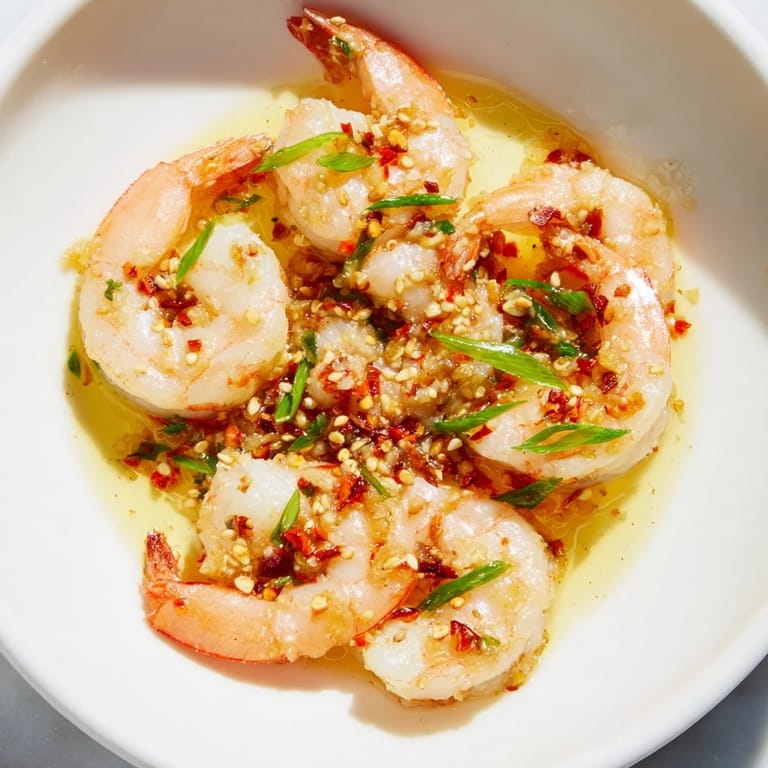 Save
Save This dish has become my go-to when I want to cook something that feels special without spending hours in the kitchen. There's something deeply satisfying about taking a handful of good ingredients and transforming them into something that tastes like you actually know what you're doing.
Recipe FAQs
- → What type of shrimp works best for this dish?
Large, peeled, and deveined shrimp provide the best texture and flavor absorption.
- → Can I adjust the spice level?
Yes, increase or reduce the Korean chili flakes to suit your preferred heat tolerance.
- → What is the purpose of honey in the sauce?
Honey balances the spice and saltiness with a subtle sweetness for a well-rounded flavor.
- → Is there a suitable substitute for soy sauce?
Gluten-free tamari or coconut aminos can be used for those avoiding gluten.
- → How should the shrimp be cooked for best results?
Cook shrimp 2–3 minutes per side until pink and opaque to maintain juiciness and texture.