 Save
Save I discovered this recipe by accident one lazy Sunday morning when I realized I had leftover vanilla ice cream melting on the counter. Instead of watching it puddle into waste, I thought, why not whisk it into French toast custard? The result was so ridiculously creamy and rich that my kids asked for it every weekend after. Now it's become our little brunch ritual, though sometimes I use coffee or cinnamon ice cream just to keep things interesting.
One rainy afternoon, I made this for my sister and her family when they dropped by unexpectedly. I could hear my nephew from the kitchen saying "this tastes like ice cream toast" with pure amazement, and honestly, that's the best compliment I've ever gotten for any recipe.
Ingredients
- Thick-cut bread (brioche or challah): Slightly stale bread is your secret weapon here because it holds the custard without turning into mush; fresh bread will absorb too much and fall apart.
- Premium ice cream: The quality matters more than you'd think since the ice cream is literally the custard; vanilla works beautifully but chocolate, coffee, or cinnamon ice cream will each tell a different story.
- Eggs: These bind everything together and help the custard set up on the griddle, creating those gorgeous caramelized edges.
- Cinnamon and vanilla extract: Optional but they complement the ice cream base and add warmth to every bite.
- Unsalted butter: Essential for getting that golden, crispy exterior while keeping the inside custardy and tender.
Tired of Takeout? 🥡
Get 10 meals you can make faster than delivery arrives. Seriously.
One email. No spam. Unsubscribe anytime.
Instructions
- Melt and mix your custard:
- Whisk together your softened ice cream, eggs, cinnamon, vanilla, and a pinch of salt until the mixture is smooth and no ice cream lumps remain. You're essentially making a luscious, already-sweetened custard without any of the fussing.
- Heat your cooking surface:
- Get your skillet or griddle warming over medium heat with a tablespoon of butter. You want it hot enough that the butter foams gently but not so hot that it burns; this is your sweet spot for golden toast.
- Soak with care:
- Dip each bread slice into the custard for about 10 to 15 seconds per side, letting any excess drip back into the bowl. Don't be shy, but don't let it sit there swimming either.
- Cook to caramel:
- Place the soaked bread onto your hot buttered skillet and let it sizzle for 2 to 3 minutes on each side until the edges turn deep golden and the custard sets. This is where the magic happens: the ice cream and eggs combine on the heat to create something silky inside and crispy outside.
- Keep them warm:
- Transfer finished slices to a wire rack so they don't sit in their own steam and get soggy while you cook the rest of the batch. Add more butter to the skillet as needed.
 Save
Save I'll never forget watching my eight-year-old take a bite and pause mid-chew with that look of pure discovery. She said it tasted like "if ice cream and toast got married," and honestly, she wasn't wrong.
Choosing Your Ice Cream Flavor
The beauty of this recipe is that your ice cream choice completely transforms the dish. Vanilla is the reliable classic that lets the caramelization shine, but coffee ice cream creates an almost savory depth that pairs beautifully with butter and heat. I've had success with cinnamon, cookie dough, and even salted caramel, though sweeter flavors mean you might skip the powdered sugar on top. The ice cream becomes part of the custard rather than an extra ingredient, so pick something you genuinely love eating by the spoon.
The Bread Matters More Than You Think
Brioche and challah are ideal because their subtle sweetness and tender crumb complement the rich custard without fighting for attention. Texas toast works in a pinch, though it won't have quite the same luxe feel. The stale bread is the real game-changer: it has less moisture, so it absorbs the custard evenly and stands up to the heat without disintegrating. If your bread is too fresh, you can toast it lightly in the oven for a few minutes before dipping.
Serving and Toppings
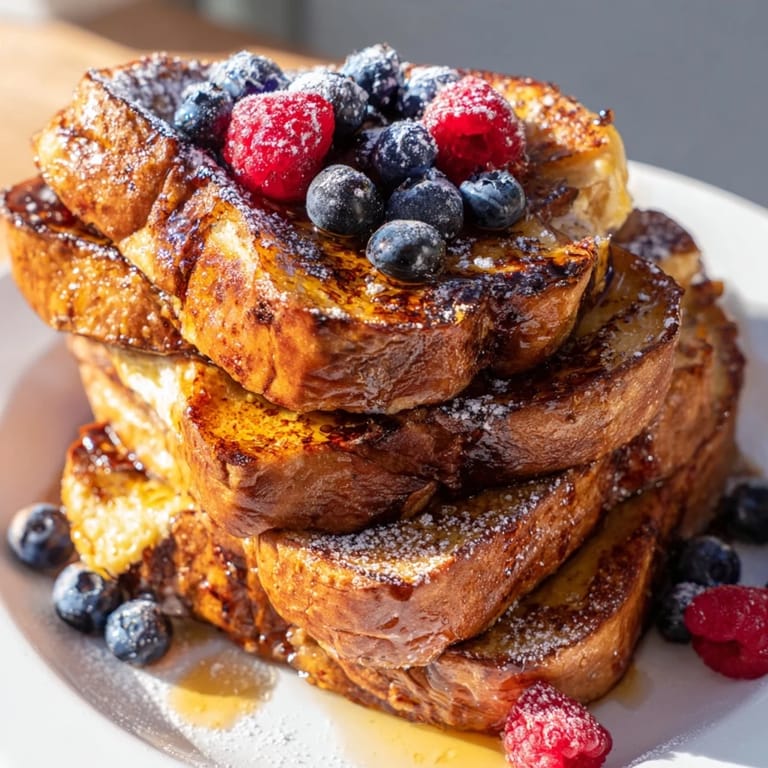
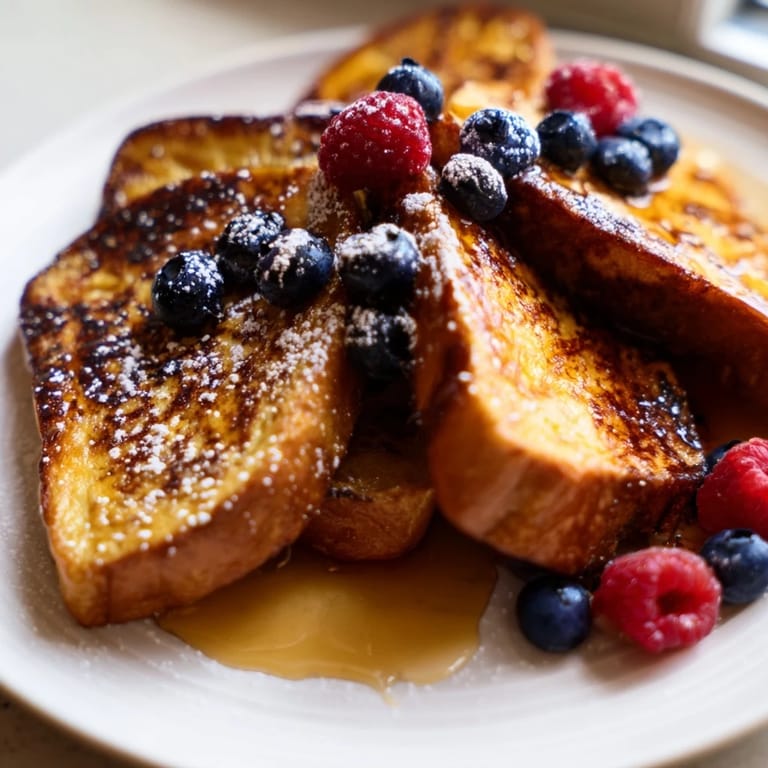
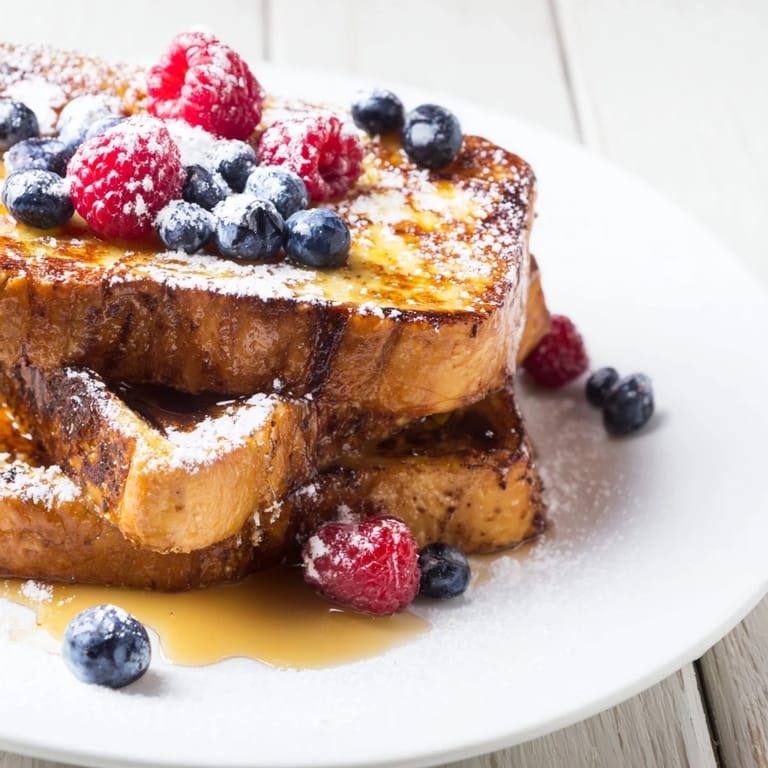
Warm maple syrup soaks into the crispy edges while fresh berries add a bright contrast to the richness. A light dusting of powdered sugar is optional but transforms the presentation if you're feeding people who care about such things. Whipped cream is amazing but honestly, these slices are rich enough on their own that toppings are more about what sounds good in the moment.
- If you go the berries route, scatter them on while the toast is still warm so they soften slightly.
- Make sure your maple syrup is genuinely warm when you pour it so it doesn't cool down your toast.
- This recipe feeds four generously, but leftovers can be gently warmed in a low oven if anyone's coming back for seconds hours later.
 Save
Save This French toast has become my answer to the question "what should we make for brunch?" It feels fancy enough to serve guests but easy enough to pull together on a random Tuesday morning when inspiration strikes.
Recipe FAQs
- → What type of bread works best?
Thick-cut bread like brioche, challah, or Texas toast is preferred for its ability to absorb the custard without becoming soggy.
- → Can any ice cream flavor be used?
Yes, vanilla is classic, but flavors like cinnamon, chocolate, or coffee add extra depth and richness.
- → How do you prevent the toast from being soggy?
Using slightly stale bread helps absorb the custard better, and allowing excess to drip off prior to cooking reduces sogginess.
- → What cooking fat is recommended?
Unsalted butter provides a rich flavor and helps achieve caramelized, golden-brown edges during cooking.
- → How should the toast be served?
Warm with toppings such as maple syrup, fresh berries, and powdered sugar to enhance sweetness and texture contrast.
- → Is this suitable for vegetarians?
Yes, the dish contains no meat and uses vegetarian-friendly ingredients like eggs, milk, and bread.