 Save
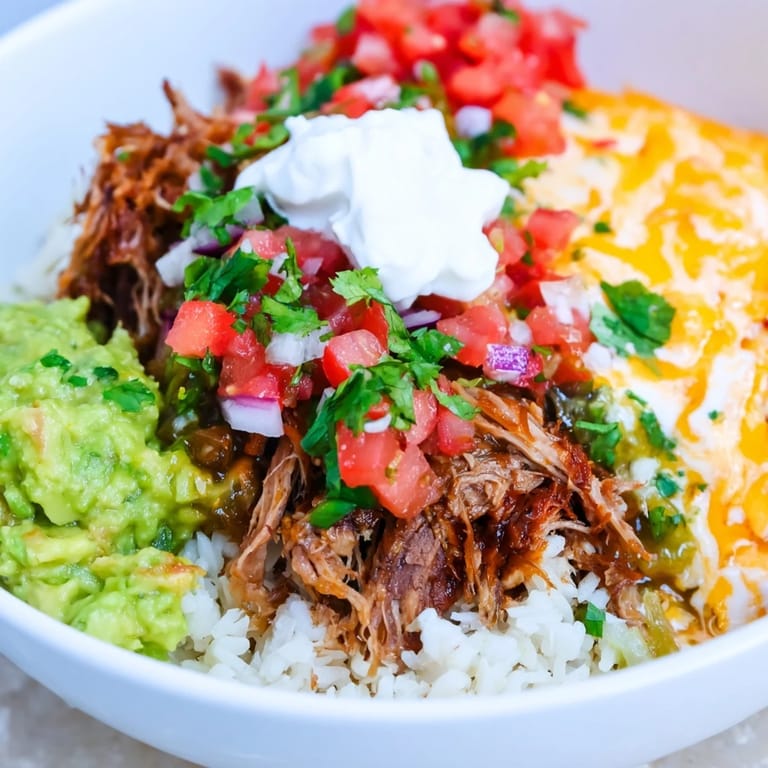
Save The first time I made a proper burrito bowl at home, I was trying to recreate that exact feeling you get walking out of Chipotle with a warm, overstuffed foil package. But halfway through building the bowl, I realized the real magic wasn't in chasing a corporate recipe—it was in the smell of carnitas falling apart in the pot, the way fresh cilantro lime rice glistens, and how every layer tastes better than the last. This is the bowl that made me stop ordering out.
I remember serving this to friends on a Sunday afternoon, and someone asked if I'd bought it from somewhere because it looked so restaurant-quality. The truth is, I'd been simmering carnitas since morning while we all lounged around the kitchen, and by the time we built the bowls, the whole apartment smelled incredible. That moment made me realize homemade doesn't have to be complicated—it just has to be made with actual ingredients and a little patience.
Ingredients
- Pork shoulder: Two pounds of the fattiest cut you can find because that's where the flavor lives—it braises down to silk.
- Cilantro and lime: The backbone of everything here; don't skip the lime juice in the rice or you'll miss that bright, sharp note.
- Chicken broth: Keeps the carnitas moist and adds subtle flavor without overpowering the pork's natural richness.
- Monterey Jack and cheddar cheese: Jack melts smooth and fast, cheddar adds color and depth—use both for the best queso texture.
- Ripe avocados: The difference between great guacamole and disappointing mush is waiting for them to yield just slightly when squeezed.
- Cornstarch in the queso: This prevents the cheese from breaking and getting grainy; it's a small trick that makes everything silky.
Tired of Takeout? 🥡
Get 10 meals you can make faster than delivery arrives. Seriously.
One email. No spam. Unsubscribe anytime.
Instructions
- Season and sear the pork:
- Coat your chunks generously with salt, pepper, cumin, oregano, and smoked paprika—you want every piece tasting like something before it even hits the pan. Get your oil shimmering and brown the meat hard on all sides until it's almost black in spots; this takes maybe 10 minutes and builds the foundation for everything.
- Braise low and slow:
- Pour in the citrus, garlic, onion, and broth, then cover and let the oven do the work at low heat for two hours. You'll know it's done when a fork shreds the meat without resistance; it should be falling apart by itself.
- Cook the rice while the pork rests:
- Rinse until the water runs clear—this removes starch and prevents gumminess. The standard ratio of water to rice is 2:1, and 18 minutes of covered cooking will get you fluffy grains every time.
- Make the queso without fear:
- Melt butter, whisk in cornstarch to create a roux, then slowly add milk while whisking constantly to avoid lumps. The sauce should coat the back of a spoon before you add cheese; this prevents separation.
- Build your bowls strategically:
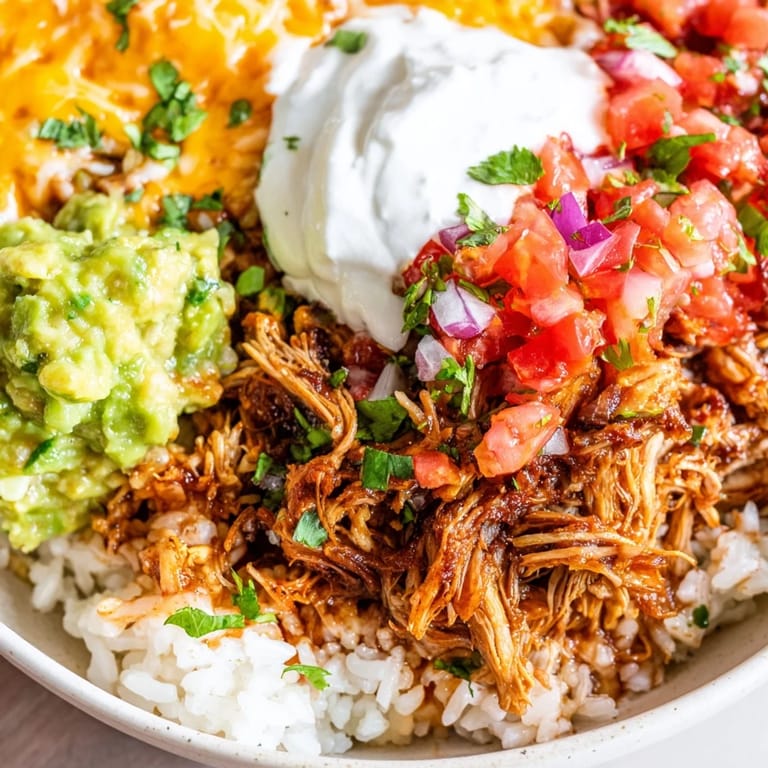
- Start with rice as your base, then beans, then carnitas while still warm. Layer queso next so it pools slightly, then finish with salsa, sour cream, and guacamole; the order keeps everything from getting soggy.
 Save
Save There's something about assembling these bowls that feels like creating something whole from separate perfect parts. When everyone's bowl comes together and the warm carnitas meet the cool guacamole, and the queso drips down into the beans—that's when it stops being a copycat and becomes your own thing.
The Secret to Restaurant-Quality Carnitas
Real carnitas come from patience and fat, not shortcuts. The pork shoulder's marbling is doing the heavy lifting here—as it braises, the fat renders out and keeps the meat impossibly tender. When you shred it, the connective tissue has completely broken down, so every bite tastes succulent rather than tough. Some people finish the shredded meat under a hot broiler for three minutes to crisp the edges, and honestly, that's the move if you want restaurant vibes.
Building Flavor Into Every Component
The genius of this bowl is that nothing is neutral—the rice has cilantro and lime singing through it, the beans are seasoned, the salsa is fresh and acidic, and the guacamole is balanced with lime and salt. This is why it beats assembly-line versions; each element tastes like someone actually cooked it for you. When you layer them together, those flavors build on each other instead of competing, and suddenly you have something that's more than the sum of its parts.
Make It Your Bowl
The beauty of a burrito bowl is that it's infinitely customizable—add grilled corn, shredded lettuce, pickled jalapeños, or crispy onions depending on what you're craving that day. Some versions include black beans, some use pinto or refried beans; some skip queso entirely for crema instead. The skeleton of carnitas, cilantro lime rice, and fresh toppings stays the same, but everything else is yours to adjust.
- Swap black beans for pinto or refried beans without changing the cooking time.
- Add hot sauce if you want more kick, or keep it mild by skipping the jalapeños.
- Make carnitas on the weekend and use them all week in tacos, nachos, or salads.
 Save
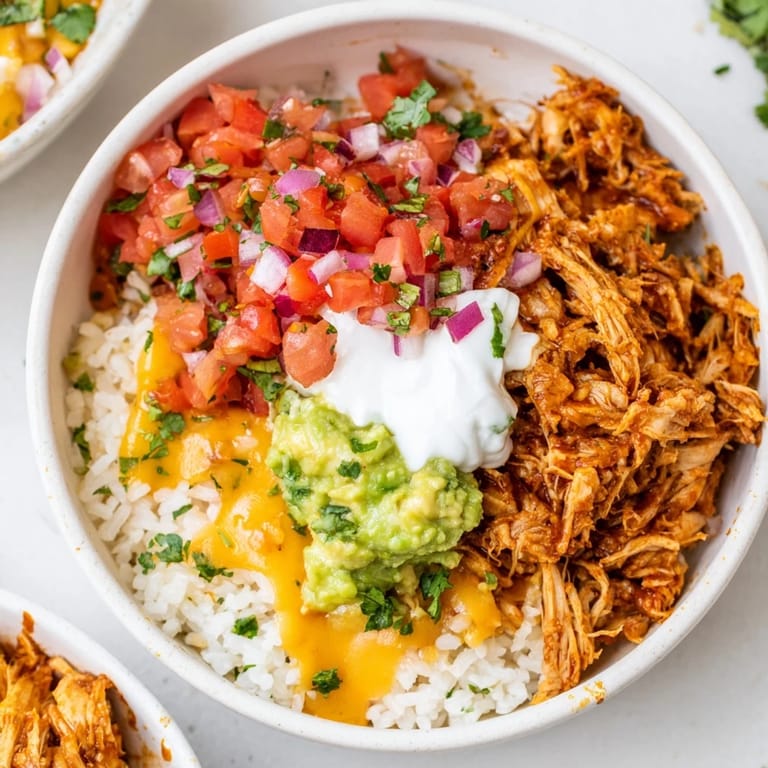
Save This bowl is proof that homemade doesn't need to be complicated, just intentional. Once you've made it once, it becomes the thing you make for people you want to impress.
Recipe FAQs
- → How long should the carnitas cook for best tenderness?
Slow cooking the pork shoulder for about 2 hours allows the meat to become tender and easily shredded.
- → Can I substitute black beans with another type?
Yes, pinto beans work well as a substitute and complement the other ingredients nicely.
- → What is the purpose of adding citrus juices in the carnitas?
Orange and lime juice add a bright acidity that enhances the pork’s flavor and helps tenderize the meat.
- → How do I achieve a creamy queso sauce?
Melting Monterey Jack and cheddar cheeses with a cornstarch-thickened milk base creates a smooth, creamy queso perfect for layering.
- → What are some suggested serving additions for variety?
Extras like shredded lettuce, corn, or pickled jalapeños add crunch and contrasting flavors for more complexity.
- → Is there a way to add a crisp texture to the carnitas?
Broiling the shredded carnitas for 3 minutes before serving crisps the edges and intensifies the flavor.