 Save
Save I stumbled onto veggie boards completely by accident while scrolling through my phone at midnight, half-asleep, and suddenly thought: why do we make snacking so complicated? The next afternoon, I cleared off a wooden board, started piling vegetables and cheese, and realized I'd accidentally reinvented lunch. My friends devoured it without a second thought, and I loved watching them graze and mix their own bites—nobody needed instructions, nobody needed permission to skip something, it just worked.
I made this for a packed lunch gathering last spring, and what stuck with me wasn't the compliments—it was watching my coworker who usually eats the same sad sandwich every day actually smile while building his own combination. He mixed hummus with that gouda, added some snap peas, and suddenly he was excited about lunch. That one moment sold me completely on the format.
Ingredients
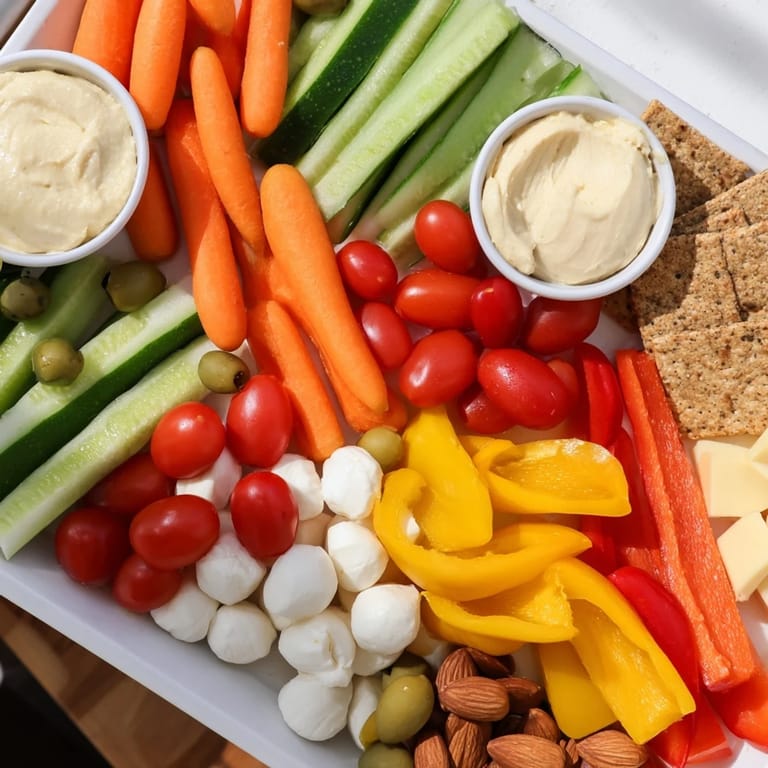
- Baby carrots: Buy these pre-cut if you're short on time, no shame in that, and choose the ones with the sweet orange color.
- Cucumber: Slice these right before serving or they'll get mushy and sad, and honestly, a crisp cucumber slice is half the appeal.
- Cherry tomatoes: These little guys stay fresher longer than sliced tomatoes, which matters when your board sits out for a while.
- Bell peppers: Mix your colors because your eyes eat first, and red peppers taste slightly sweeter if you want to balance out the hummus.
- Sugar snap peas: These are your secret weapon for crunch and they need zero prep, just rinse and go.
- Hummus: Pick a brand you actually like eating plain or the whole board suffers, don't cheap out here.
- Ranch or Greek yogurt dip: Greek yogurt tastes fresher and lighter, but honestly whatever you'll actually eat matters more than what sounds healthier.
- Cheddar cheese: Cube it roughly so it looks intentional, not like you were being sloppy with a knife.
- Mozzarella balls: These are pure joy and worth seeking out specifically, they make the board feel a little fancier without trying.
- Gouda or Swiss: Slice thicker than you think you need to because thin slices disappear and feel less satisfying to eat.
- Whole grain crackers: Choose ones that actually taste good because you'll be eating them plain, not drowning them in dip.
- Roasted nuts: Use what you love and don't stress about mixing them, a pile of almonds alone is totally fine.
- Olives: Pit them if you have guests who don't expect that, or warn people loudly and enjoy the drama.
- Dried fruit: This bridges the gap between sweet and savory beautifully, use whatever calls to you from the bulk bin.
Tired of Takeout? 🥡
Get 10 meals you can make faster than delivery arrives. Seriously.
One email. No spam. Unsubscribe anytime.
Instructions
- Wash everything like you mean it:
- Give your vegetables a real rinse under cold water and pat them completely dry with paper towels, because wet vegetables slide around the board and look sloppy. Wet also makes the crackers sad.
- Slice what needs slicing:
- Cut your cucumbers on a slight angle so they look intentional, and slice those bell peppers into strips instead of rings because they sit better. Do this right before you build the board so nothing gets tired and brown.
- Pick a board and claim it:
- Use whatever platter you have that feels like it can hold a feast—size matters less than confidence here. If you only have a small cutting board, make it work and own that energy.
- Start with vegetables as your map:
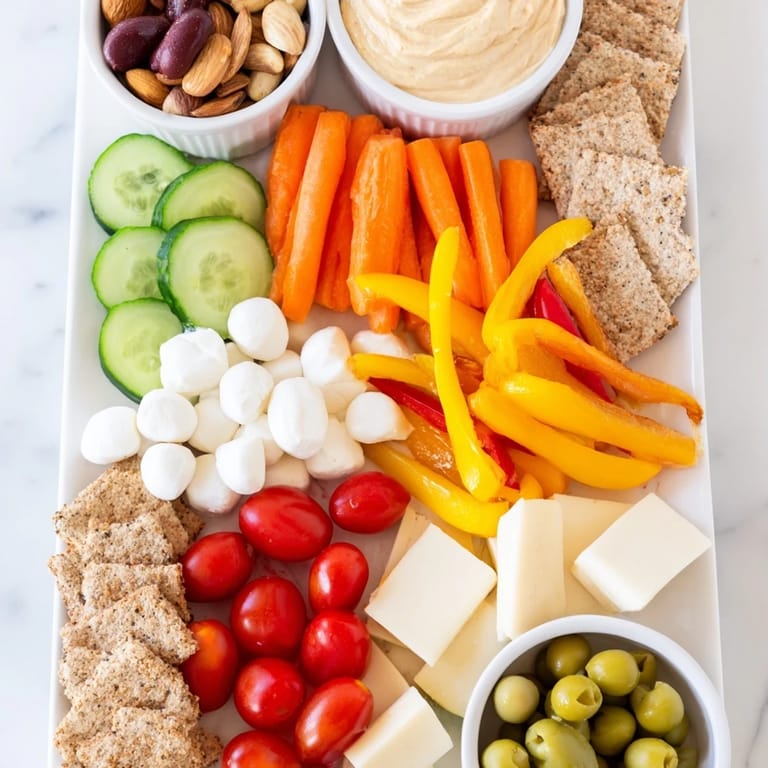
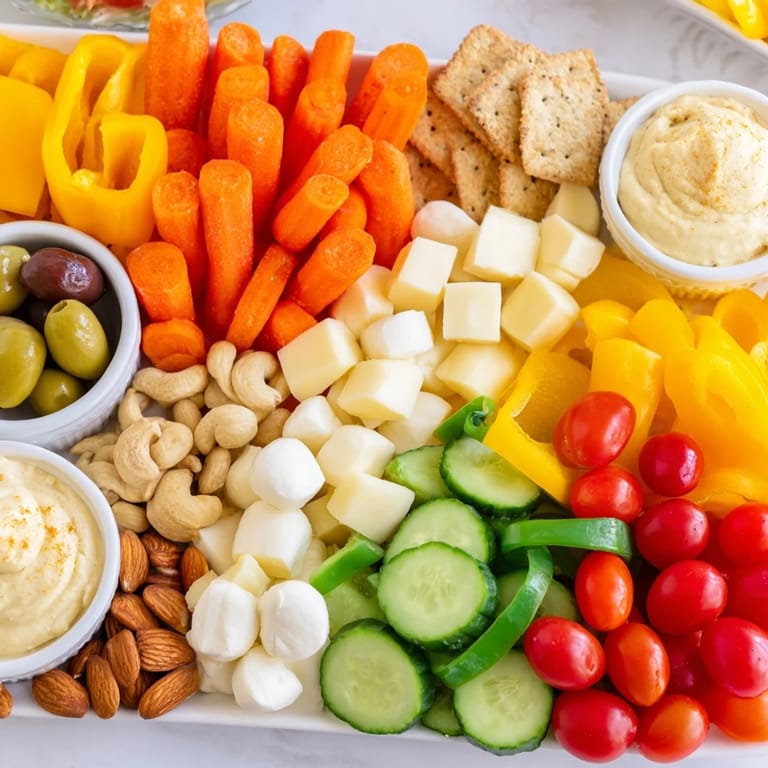
- Arrange your raw vegetables in loose sections across the board, leaving intentional gaps where your fancy stuff will go. Think of it like you're painting, not solving a puzzle that has only one right answer.
- Nestle the dips:
- Pour your hummus and ranch into small bowls and tuck them into the board wherever they look good, let them anchor one section. If you don't have small bowls, use small drinking glasses or even halved avocados for texture.
- Build your cheese moment:
- Cluster your cheese—cubes with slices with mozzarella balls all touching and looking abundant. Cheese wants to feel generous, not rationed.
- Fill the empty spaces:
- Scatter your crackers, nuts, olives, and dried fruit into the gaps like you're adding the finishing touches, let them flow naturally. Step back and add more of whatever looks thin.
- Serve it while it feels fresh:
- Bring this out immediately if you can, or cover it loosely with plastic wrap and refrigerate until people arrive. Cold vegetables taste crisper anyway.
 Save
Save The thing I love most about this format is that it stops being food and starts being conversation. People linger, they try things they wouldn't normally choose, they build weird combinations that somehow work. It's the opposite of a meal that happens and then it's over.
The Art of Building a Board That Actually Gets Eaten
There's a rhythm to arranging a board that you learn by doing it a few times. The first time you make it, you'll probably cluster everything by type and it'll look a little sterile. The second time, you'll remember that colors next to each other pop, and that empty space is just as important as what you're placing. By the third time, you stop thinking and just let your hands arrange it, and that's when boards start looking alive instead of like a catalog photo.
Customization Is the Whole Point
This isn't a recipe that demands you follow it exactly—it's more like permission to raid your fridge and make it look intentional. If you have roasted chickpeas instead of nuts, use them. If you love beets more than bell peppers, cut them into chips and add them. If someone's coming over who doesn't eat cheese, build two dip stations instead and nobody will notice the absence. The vegetables you have access to matter more than the ones I listed.
When This Becomes Your Secret Weapon
I keep this in my mental back pocket for whenever I need to feed people without cooking, or when someone's coming over and I'm genuinely too tired to turn on the oven. It works for lunch, it works for snack time, it even works for entertaining because people feel taken care of and you spent fifteen minutes making it. That gap between effort and impact is why this board matters.
- Make your board the night before if you need to, just keep the vegetables in separate containers and assemble it right before people arrive.
- Add hard-boiled eggs if you want protein to feel more like a meal and less like a snack board pretending to be lunch.
- If anyone's vegan, dairy-free cheese has gotten shockingly good—use it freely and don't make a whole thing about it.
 Save
Save This board is proof that the best meals are the ones that stop feeling like you're performing dinner and start feeling like you're just sharing good food with people you like. Make it, set it down, and watch what happens.
Recipe FAQs
- → What vegetables work best for this snack board?
Fresh, crunchy vegetables like baby carrots, cucumbers, cherry tomatoes, bell peppers, and sugar snap peas provide vibrant colors and textures.
- → Can I substitute the cheeses for dairy-free options?
Absolutely. Use plant-based cheeses to keep the board vegan-friendly while retaining creamy textures and variety.
- → What types of dips complement the vegetables and cheeses?
Hummus and ranch-style Greek yogurt dips offer savory and tangy flavors that pair well with the fresh produce and cheeses.
- → Are there gluten-free options for crackers on the board?
Whole grain gluten-free crackers can be used to accommodate gluten sensitivities without sacrificing crunch.
- → How can this board be customized for extra protein?
Additions like hard-boiled eggs or sliced deli meats can enhance protein content and provide more variety.