 Save
Save My neighbor threw open her garden gate one sweltering July afternoon and handed me a basket of tomatoes still warm from the sun. They were so heavy I had to grip both handles, their skins blushing with impossible colors—deep purples, sunset oranges, chartreuse streaks. That basket sat on my counter for two days while I wondered how to do them justice, until I remembered my nonna's rule: the best salads are the ones that don't try too hard. This salad proved her right.
I made this for my partner's family dinner once, nervous about bringing something so simple to a table of serious cooks. My mother-in-law took one bite, set down her fork, and asked for the recipe before finishing her plate. That's when I understood that simplicity, when done right, is its own kind of power.
Ingredients
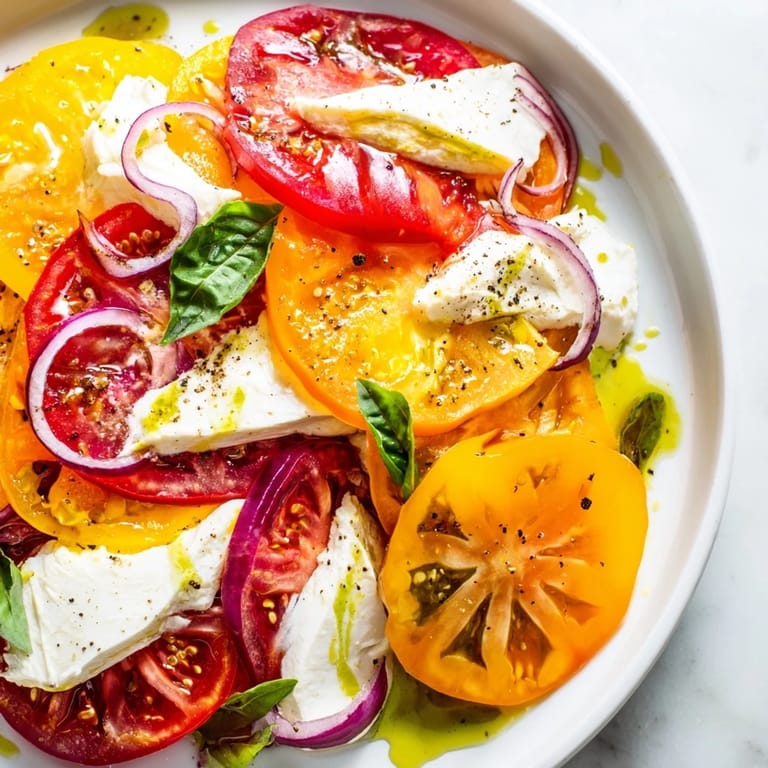
- Heirloom tomatoes, assorted colors: Choose tomatoes that smell fragrant at the stem end—that perfume is a promise of flavor. Different colors give you a visual story and subtle flavor variations that make the salad more interesting.
- Fresh mozzarella: The kind that comes packed in water, not the firm yellow block. It should be so soft it practically dissolves on your tongue, creamy against the bright acidity of the tomatoes.
- Fresh basil leaves: Pick them from the plant in the morning if you can, when their oils are most alive. Avoid the purple bruises that come from rough handling.
- Extra-virgin olive oil: This is where you spend your money. The oil becomes the backbone of the whole dish, so use one you'd actually want to drink.
- White balsamic or red wine vinegar: The vinegar is your brightness, your finishing touch. White balsamic keeps the salad looking pristine if that matters to you.
- Sea salt and freshly ground black pepper: These aren't afterthoughts—they're the things that make everything else sing louder.
- Red onion, thinly sliced (optional): A whisper of sharpness that some days you'll want and some days you won't. Trust your mood.
Tired of Takeout? 🥡
Get 10 meals you can make faster than delivery arrives. Seriously.
One email. No spam. Unsubscribe anytime.
Instructions
- Blend the basil into liquid gold:
- Tear your basil leaves gently and tumble them into the blender with the olive oil. Pulse until the leaves break down and the oil turns a soft green—this takes maybe thirty seconds. If you strain it through a fine sieve, the oil becomes clear and elegant; if you don't, it stays flecked with basil bits, which is also beautiful and more flavorful.
- Build your canvas:
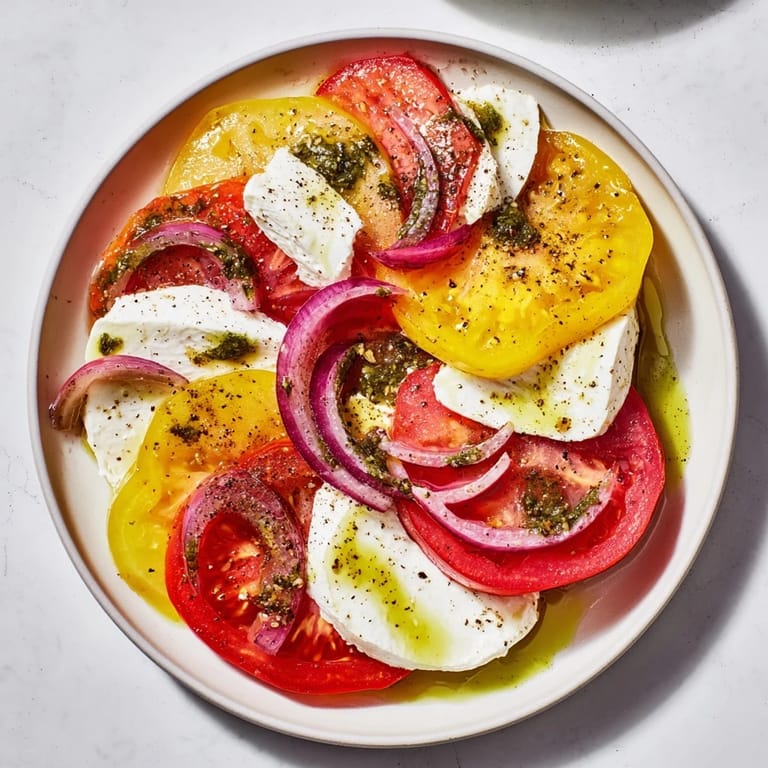
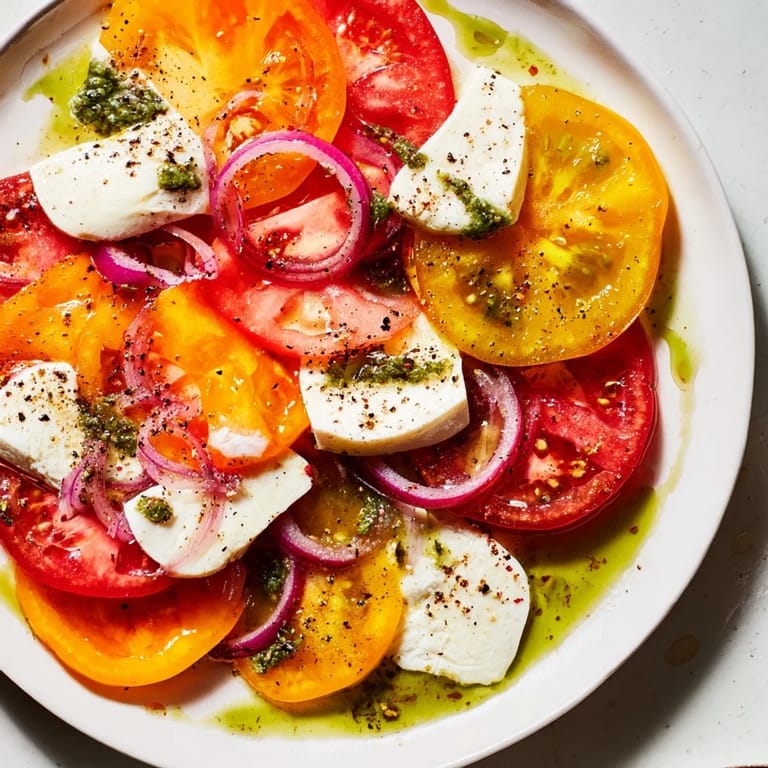
- Slice your tomatoes about a quarter-inch thick and arrange them on a platter like you're telling a story with color. Tear the mozzarella into irregular pieces and tuck them into the spaces between tomato slices, so they'll catch the oil. If you're using red onion, scatter it across like a finishing detail.
- Anoint with basil oil:
- Pour the basil oil generously—this isn't the time for restraint. Let it pool in the spaces, coat the mozzarella, make everything gleam. Shower the whole thing with sea salt and a few grinds of black pepper.
- The final flourish:
- Just before people sit down, add the vinegar in thin drizzles. This is your last-second brightness, the thing that prevents the salad from feeling heavy. Bring it to the table immediately.
 Save
Save My kid, who usually eats like we're running out of food, once asked for seconds of this salad. No napkin on his shirt, no complaint—he just wanted more. That's when I realized this isn't just dinner; it's the kind of simple thing that reminds people why they cook at all.
When Tomatoes Are Everything
This salad lives and dies by the quality of your tomatoes. A mediocre tomato with basil oil is still a mediocre tomato. But a perfect one, even without the oil, would probably be fine. The rest is just ceremony. Seek out farmers markets in summer, ask questions, taste before you buy if they'll let you. This is not the salad for those mealy supermarket tomatoes packed in plastic.
The Basil Oil Revelation
The basil oil is what elevates this from nice to memorable. There's something about blending basil with oil that brings out flavors neither ingredient has on its own—it becomes almost floral, almost peppery, almost impossible to name. Some people are skeptical until they taste it, and then they want to put it on everything. You can make it an hour ahead and let it sit. You can even strain it and keep it for a few days, though it will darken and lose some brightness.
Variations and Spirited Adjustments
Summer is long, and the same salad four times a week gets boring. Once I added corn kernels in August and it became something new entirely. Another time I layered in thin slices of ripe peaches and felt like I'd discovered something revolutionary. The salad is a canvas, and you're holding the brush.
- Swap the mozzarella for burrata if you want creaminess that borders on indulgent, or use ricotta salata if you want something firmer and nuttier.
- Add grilled sourdough rubbed with garlic if you're turning this into a meal instead of a side dish.
- Try mint or oregano in place of basil, or blend them together—different herbs, different moods.
 Save
Save There's something sacred about a salad this simple, this green, this bright. Eat it outside if you can, with the sun still warm on your shoulders.
Recipe FAQs
- → What type of tomatoes work best?
Heirloom tomatoes with assorted colors and firm texture provide the best flavor and visual appeal for this dish.
- → How is the basil oil prepared?
Blend fresh basil leaves with extra-virgin olive oil until smooth, then strain if a clear oil is preferred.
- → Can I substitute mozzarella with another cheese?
Burrata is an excellent alternative for extra creaminess, maintaining the dish's fresh profile.
- → Should the salad be served immediately?
Yes, serving promptly preserves the texture of tomatoes and freshness of basil oil for optimal taste.
- → What variations can enhance this salad?
Adding sliced ripe peaches or nectarines introduces a sweet contrast; pairing with grilled sourdough adds heartiness.