 Save
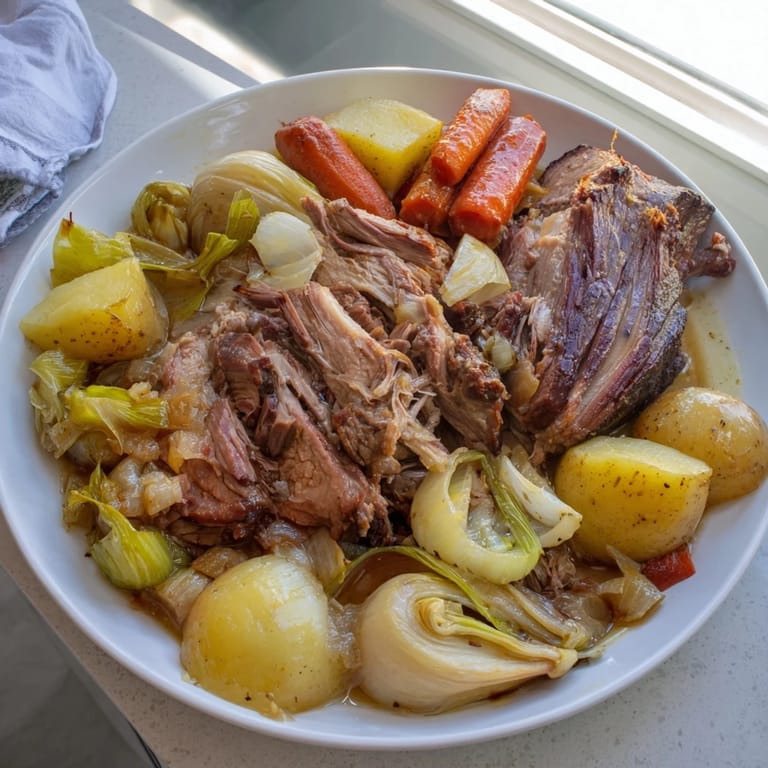
Save I used to think pot roast was something only grandmothers could make well, until a particularly cold Sunday proved me wrong. The kitchen windows fogged up completely while the roast bubbled away in the oven, filling the apartment with a smell so rich my neighbor knocked to ask what I was cooking. That day I learned that patience, not skill, is the real secret. Now it's my go-to when I want the house to feel like home.
The first time I made this for friends, I panicked when the liquid looked too thin halfway through cooking. I resisted the urge to fiddle with it, left the lid on, and trusted the process. When I finally pulled it from the oven, the beef shredded at the slightest touch and the vegetables had soaked up all that deep, savory flavor. Everyone went quiet for the first few bites, then asked for seconds.
Ingredients
- Boneless beef chuck roast (3 to 4 lb): This cut has enough marbling to stay juicy during the long roast, becoming melt-in-your-mouth tender without drying out.
- Kosher salt and black pepper: Simple seasoning is all you need here, it lets the beef flavor shine and forms a beautiful crust when seared.
- Carrots, parsnips, onions, potatoes, celery: These roots hold their shape while absorbing the braising liquid, becoming sweet and rich instead of mushy.
- Garlic cloves (peeled and smashed): Smashing releases more flavor than slicing, and whole cloves turn soft and mellow in the broth.
- Tomato paste: Just two tablespoons add a subtle depth and help thicken the sauce naturally as it cooks down.
- Beef broth and dry red wine: The wine adds acidity and complexity, but you can swap it all for broth if you prefer, the dish will still be delicious.
- Worcestershire sauce: This is the secret umami boost that makes people wonder what the mystery ingredient is.
- Fresh thyme, rosemary, and bay leaves: Woody herbs love slow cooking, they infuse everything without becoming bitter or overpowering.
- Olive oil: A high smoke point fat for searing the beef until it is deeply caramelized and golden.
Tired of Takeout? 🥡
Get 10 meals you can make faster than delivery arrives. Seriously.
One email. No spam. Unsubscribe anytime.
Instructions
- Preheat and prep the beef:
- Set your oven to 300 degrees F and let it warm up while you pat the roast completely dry with paper towels. Moisture is the enemy of a good sear, so take your time here and season every side generously with salt and pepper.
- Sear the beef:
- Heat the olive oil in your Dutch oven over medium-high until it shimmers, then lay the beef in gently and let it sit undisturbed for 3 to 4 minutes per side. You want a deep brown crust that smells toasty and rich, this is where the flavor begins.
- Saute the vegetables:
- Toss in the onions, carrots, parsnips, potatoes, and celery, stirring occasionally and letting them pick up all those caramelized bits stuck to the pot. After 5 minutes, add the garlic and tomato paste, stirring for just a minute until fragrant.
- Deglaze and build the braising liquid:
- Pour in the red wine and scrape up every browned bit from the bottom with a wooden spoon, then let it simmer for 2 minutes. Nestle the beef back in, pour in the broth and Worcestershire, and tuck in the thyme, rosemary, and bay leaves so the liquid comes halfway up the meat.
- Slow roast until tender:
- Bring everything to a gentle simmer, cover tightly with the lid, and slide it into the oven. Roast for 3 to 3 and a half hours, resisting the urge to peek too often, until the beef yields to a fork and the vegetables are silky soft.
- Rest and serve:
- Pull out the pot, fish out the herb stems and bay leaves, and let the beef rest for 10 minutes before slicing or shredding. Spoon the vegetables and pan juices over the top and serve it hot.
 Save
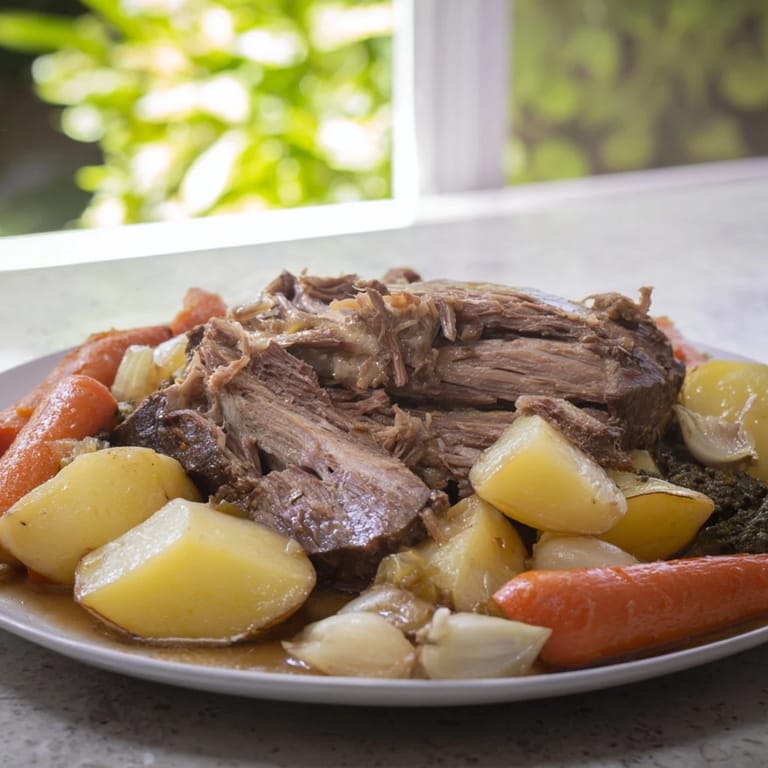
Save One winter evening, I served this to my parents and watched my dad go back for thirds without saying a word. Afterward, he admitted it reminded him of Sunday dinners from his childhood, even though I had never tasted those meals myself. That is when I realized food does not just feed people, it brings back feelings they forgot they had.
Making It Your Own
You can swap parsnips for turnips or even sweet potatoes if that is what you have on hand. I have tried it with a splash of balsamic vinegar instead of wine, and it added a slightly sweeter, tangier note that worked surprisingly well. Some nights I throw in mushrooms or fennel, whatever needs to be used up, and it always turns out hearty and satisfying.
Storage and Reheating
Leftovers keep in the fridge for up to four days and somehow taste even better after the flavors have had time to marry. I reheat individual portions gently on the stovetop with a splash of broth to loosen the sauce, or in the microwave covered with a damp paper towel. You can also shred the beef and use it for sandwiches, tacos, or stirred into a quick stew with extra vegetables.
Pairing and Serving Ideas
This pot roast does not need much on the side since the vegetables are already built in, but a crusty baguette or buttered egg noodles never hurts. I like serving it with a simple green salad dressed in vinegar to cut through the richness, or roasted Brussels sprouts if I am feeling fancy. A glass of the same red wine you used for braising ties the whole meal together beautifully.
- Serve over creamy mashed potatoes or polenta for an even heartier plate.
- Pair with a robust Cabernet Sauvignon or Merlot to echo the braising flavors.
- Use any leftover juices as a base for French onion soup or gravy the next day.
 Save
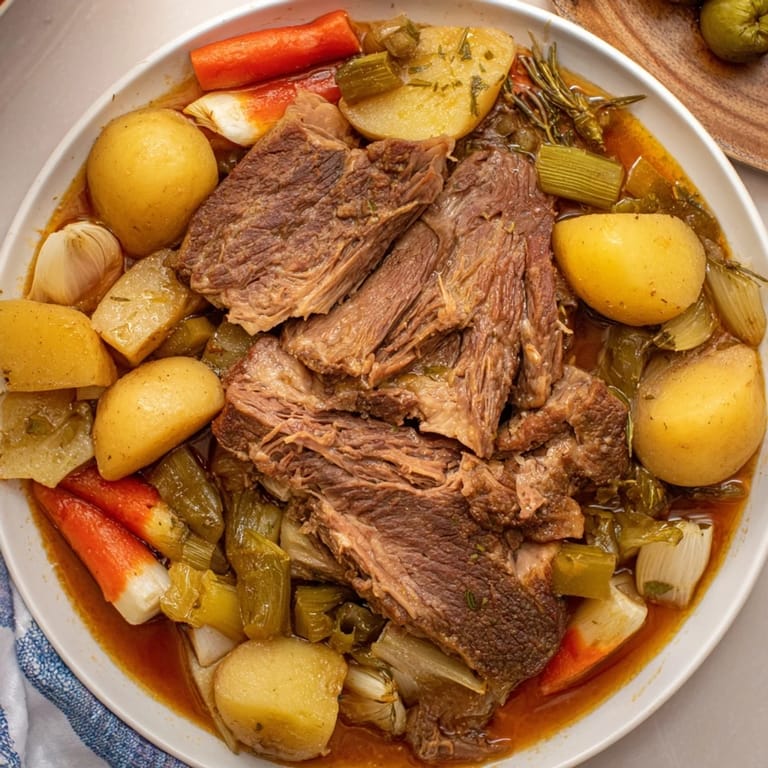
Save There is something magical about a dish that asks so little of you but gives so much back. Make this on a day when you want your home to feel warm and full, even if it is just you at the table.
Recipe FAQs
- → What cut of beef is best for slow roasting?
A boneless beef chuck roast is ideal for slow roasting due to its marbling and ability to become tender and flavorful over long cooking times.
- → Can I substitute vegetables in this dish?
Yes, parsnips can be replaced with turnips or omitted based on availability or preference without altering the overall flavor profile.
- → Why is searing the beef important before roasting?
Searing creates a flavorful crust that enhances the taste and locks in juices during the slow cooking process.
- → Is red wine necessary for this preparation?
Red wine adds depth to the sauce but can be substituted by additional beef broth if preferred or to keep the dish alcohol-free.
- → How can I thicken the pan juices into a sauce?
After roasting, remove the beef and vegetables, then simmer the juices on the stove to reduce. Alternatively, stir in a cornstarch slurry for quicker thickening.
- → What herbs complement slow-roasted beef?
Fresh thyme, rosemary, and bay leaves are excellent choices, infusing the dish with aromatic, earthy notes during roasting.