 Save
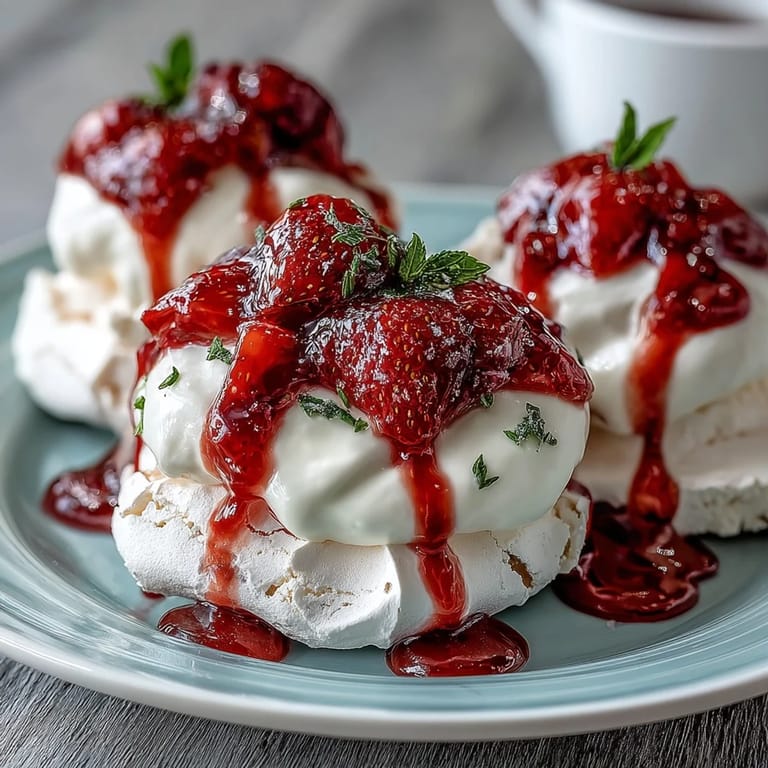
Save There's something almost magical about watching egg whites transform into clouds of meringue, and I discovered this magic at a spring garden party where someone brought these delicate pavlovas. The way the crisp exterior gave way to that marshmallow-soft interior, then the cool sweetness of cream and bright tartness of strawberries—it felt like edible architecture. I went home that evening determined to master the technique, and after a few wobbles and one oven door disaster, I finally understood why these Australian treasures are worth every ounce of patience.
I'll never forget making these for my daughter's birthday brunch last May when she insisted on something elegant but not fussy. Watching her face light up when she bit through that crispy shell into the soft, cream-filled center told me everything—this was the dessert that would become a tradition. Now whenever spring rolls around, someone inevitably asks, 'Are you making those pavlovas?'
Ingredients
- Egg whites, at room temperature: The foundation of everything, and room temperature is non-negotiable because cold eggs simply won't whip to the volume you need.
- Superfine sugar: It dissolves faster than granulated sugar, which means your meringue peaks stay glossy and stable instead of turning grainy.
- Cornstarch: This tiny addition is the secret to that characteristically crispy outside with a marshmallow center.
- White vinegar: Works with the cornstarch to stabilize the meringue and enhance that signature texture.
- Vanilla extract: Adds warmth without overwhelming the delicate flavor profile.
- Heavy whipping cream, cold: Temperature matters here too, as cold cream whips faster and holds peaks longer.
- Powdered sugar: Dissolves instantly into the cream without the grittiness of granulated sugar.
- Fresh strawberries: Choose ripe but firm berries, and macerate them lightly so they release their juices without becoming a soggy mess.
- Lemon juice: Brightens the strawberries and prevents them from tasting one-note sweet.
Tired of Takeout? 🥡
Get 10 meals you can make faster than delivery arrives. Seriously.
One email. No spam. Unsubscribe anytime.
Instructions
- Prepare your workspace:
- Preheat the oven to 250°F and line your baking sheet with parchment paper. This low temperature is crucial because it allows the meringue to dry out rather than brown, creating that prized crispy texture.
- Whip the egg whites:
- Using a completely clean, dry bowl (any grease will sabotage you), beat egg whites on medium speed until soft peaks form, which takes about 2 to 3 minutes. You'll see the mixture transform from foamy to cloud-like.
- Incorporate the sugar:
- Add superfine sugar one tablespoon at a time while continuing to beat, pausing occasionally to ensure the sugar dissolves and your peaks stay glossy. This gradual approach prevents the meringue from becoming overworked and weepy.
- Fold in the magic ingredients:
- Gently fold in cornstarch, vinegar, and vanilla with a spatula, being careful not to deflate all those air bubbles you've worked so hard to incorporate. The mixture should still look billowy and light.
- Shape the nests:
- Spoon or pipe the meringue into 6 mounds on your prepared baking sheet, then use the back of a spoon to create a shallow indent in the center of each. These little wells will cradle your cream and berries perfectly.
- Bake low and slow:
- Slide the baking sheet into the oven for exactly 1 hour at 250°F. The meringues should turn pale cream-colored but not brown; you're drying them out, not baking them.
- Cool with the door ajar:
- Turn off the oven and crack the door open about 2 inches, then let the meringues cool completely inside for at least 1 hour. This gradual cooling prevents cracking and keeps the centers tender.
- Prepare the strawberries:
- While the meringues cool, toss your sliced strawberries with granulated sugar and lemon juice, then let them sit at room temperature for 15 minutes. You want their own juices to macerate them gently.
- Whip the cream:
- In a separate bowl with cold beaters, whip cold heavy cream with powdered sugar and vanilla until soft peaks form, which usually takes 2 to 3 minutes. Stop before stiff peaks or you'll edge toward butter.
- Assemble and serve:
- Place each cooled meringue on a serving plate, fill the center generously with whipped cream, and top with the macerated strawberries and any of their lovely juices. Serve immediately to preserve that textural contrast.
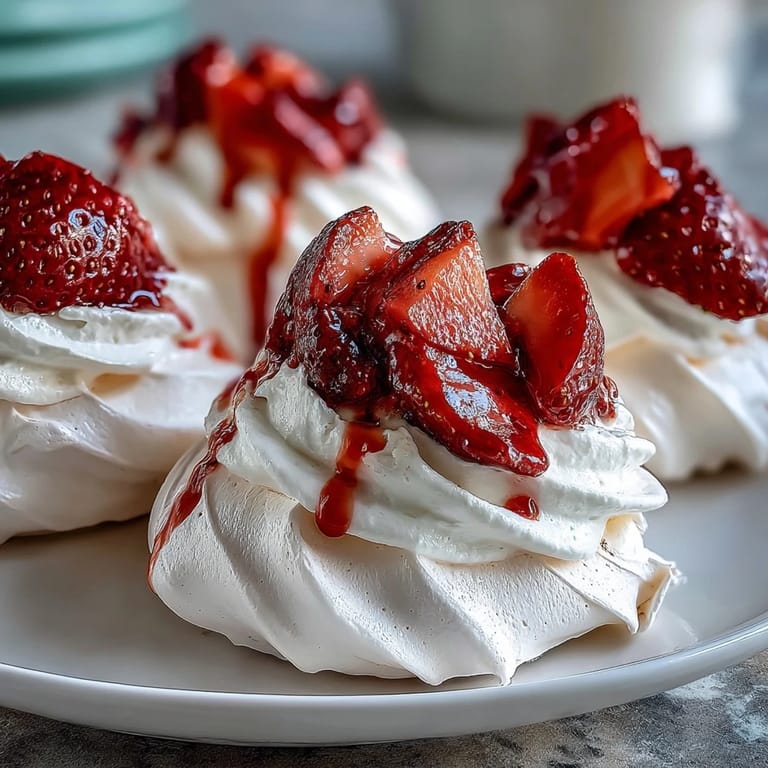 Save
Save There's a quiet confidence that comes from pulling perfect meringues out of the oven, and I felt it even more when a friend who's notoriously hard to impress asked for the recipe. It became the dessert I made whenever I wanted to feel like I'd truly accomplished something in the kitchen.
Why Meringue Matters
Meringue is one of those techniques that seemed intimidating until I realized it's really just patience and respect for the ingredients. The crispy-then-marshmallow texture isn't some kitchen magic; it's the result of understanding how heat and time interact with whipped eggs. Once you nail pavlovas, you'll understand why French pastry chefs have built entire careers around mastering the meringue.
Timing and Make-Ahead Strategy
One of the greatest gifts this recipe gives you is flexibility. The meringue nests are actually more stable after a full day in an airtight container, which means you can bake them on a quiet afternoon and save the assembly for when your guests arrive. I've learned to whip my cream just 30 minutes before serving and slice the strawberries no more than 45 minutes ahead, which keeps everything at peak texture and flavor.
Variations and Personal Touches
Once you've mastered the basic technique, these pavlovas become your canvas for seasonal berries, passion fruit pulp, or even a drizzle of dark chocolate. I've made summer versions with raspberries and mint, and winter ones with pomegranate seeds and candied citrus. The meringue base stays the same, but the toppings let you keep the recipe fresh throughout the year.
- Berry combinations like raspberries and blackberries work beautifully together and add visual drama to the plate.
- A light dusting of matcha powder or cocoa powder adds sophistication without overwhelming the delicate balance of flavors.
- Store baked meringues in an airtight container at room temperature, never in the refrigerator where humidity will soften them.
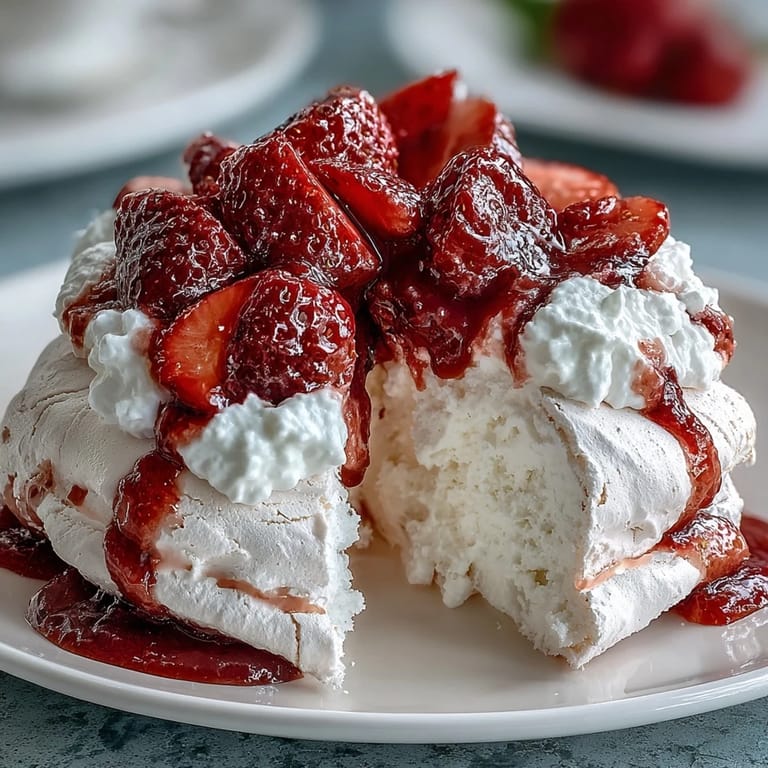 Save
Save There's something deeply satisfying about a dessert that feels both achievable and showstopping, and these pavlovas deliver on both fronts. Every time I make them, I'm reminded that sometimes the most impressive dishes come from understanding a few simple ingredients and giving them the time they deserve.
Recipe FAQs
- → How do I achieve the perfect meringue texture?
Beat egg whites until soft peaks form, gradually adding sugar until stiff and glossy peaks develop. Baking slowly at low temperature ensures crisp exteriors and tender centers.
- → Can I substitute strawberries with other fruits?
Yes, fresh berries like raspberries, blueberries, or a mixed berry combination work well, adding varied flavors and colors.
- → What is the purpose of cornstarch and vinegar in the meringue?
Cornstarch helps stabilize the meringue and create a tender shell, while vinegar enhances stability and adds slight tang to balance sweetness.
- → How should I store mini pavlovas before serving?
Store baked and cooled meringue nests in an airtight container at room temperature. Assemble shortly before serving to maintain crispness.
- → Is it better to whip cream by hand or with a mixer?
Using an electric mixer speeds up the process and achieves consistent soft peaks without overbeating.