 Save
Save A friend visiting from Tokyo brought a small container of this to a potluck, and I watched people go back for thirds without understanding why something so simple could be so magnetic. When she finally told me the secret was just butter, garlic, and soy sauce, I felt foolish for overthinking corn my whole life. That night I went home and made it, and the smell of butter hitting the minced garlic made me understand immediately—it's not about complexity, it's about letting each ingredient speak without apology.
I made this for a family dinner last summer when corn was at its peak, and my usually quiet brother actually asked for the recipe, which he never does. I remember the kitchen filling with that buttery, garlicky steam, and how everyone seemed to slow down while eating it, which doesn't happen often at our table. It became the dish he requested every time he came home after that.
Ingredients
- Fresh corn: Four ears husked gives you that tender, milky sweetness that frozen simply can't replicate, though three cups of thawed frozen kernels work beautifully on nights when fresh isn't available or affordable.
- Unsalted butter: Two tablespoons melted until foamy creates the foundation for everything else, letting the garlic and corn shine rather than competing.
- Garlic: Two cloves minced fine mean they distribute evenly and won't overpower, which is the mistake I made the first time with three whole cloves.
- Soy sauce: One and a half tablespoons brings the savory depth that makes people ask what the secret ingredient is.
- Black pepper: Half a teaspoon freshly ground tastes completely different from pre-ground, adding a subtle heat that rounds everything out.
- Sea salt: A pinch optional, but I've learned it's only needed if your soy sauce tastes flat, which sometimes happens with cheaper brands.
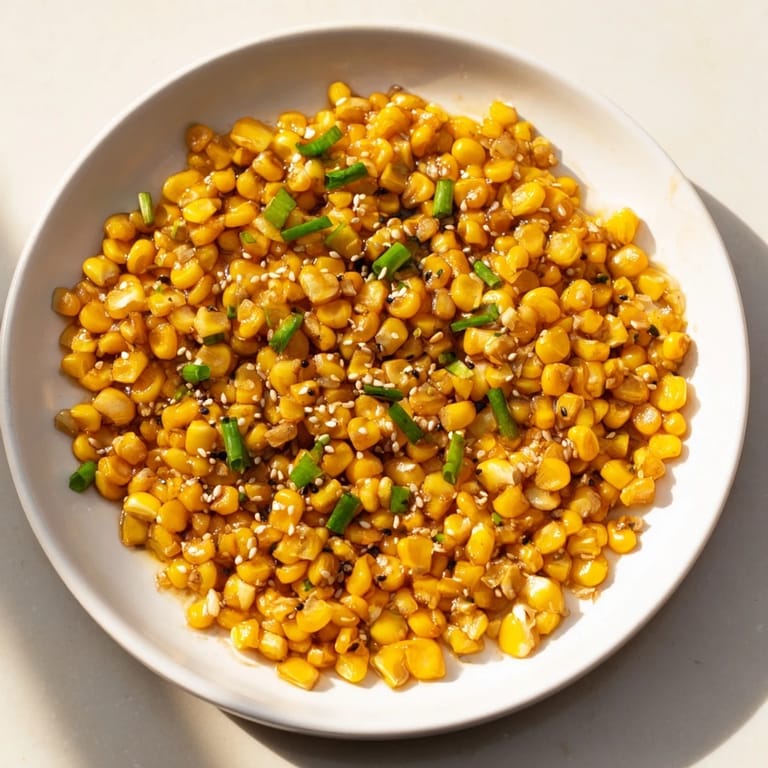
- Scallions and sesame seeds: These are the garnish that makes it feel intentional and finished, though the dish is delicious without them on busy nights.
Tired of Takeout? 🥡
Get 10 meals you can make faster than delivery arrives. Seriously.
One email. No spam. Unsubscribe anytime.
Instructions
- Prepare your corn:
- If using fresh ears, cut the kernels from the cob with a sharp knife, working over a bowl to catch the sweet liquid that releases. Frozen kernels should be thawed and drained well so you're not adding extra moisture to the pan.
- Melt the butter gently:
- In a large skillet over medium heat, let the butter turn foamy and quiet—you'll hear it settle when it's ready. This takes about a minute and means your garlic won't burn when it hits the pan.
- Toast the garlic briefly:
- Add your minced garlic and listen for a gentle sizzle, then count to thirty while stirring constantly. You want fragrance, not browning, which would make it bitter and ruin the whole thing.
- Add the corn and let it color:
- Stir the kernels in and let them sit for a minute between stirs, which allows them to develop little golden spots and deepen in flavor. Four to five minutes of this, and you'll notice the pan smells sweeter and more caramelized.
- Finish with soy sauce:
- Pour it in slowly while stirring so every kernel gets coated, then let it sizzle for a minute until most of the liquid has evaporated. The whole kitchen will smell like a Japanese side dish counter at this point.
- Season and serve:
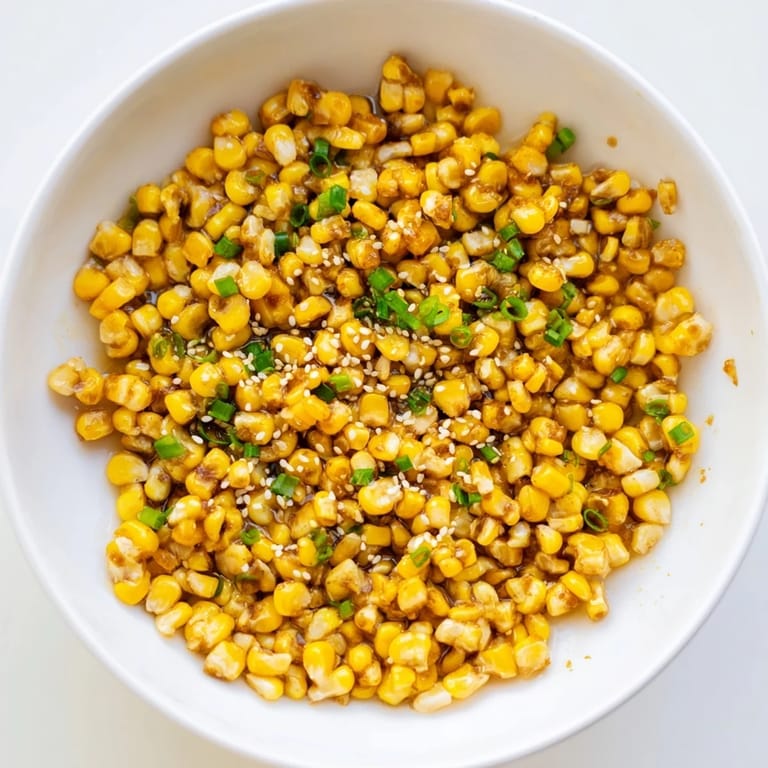
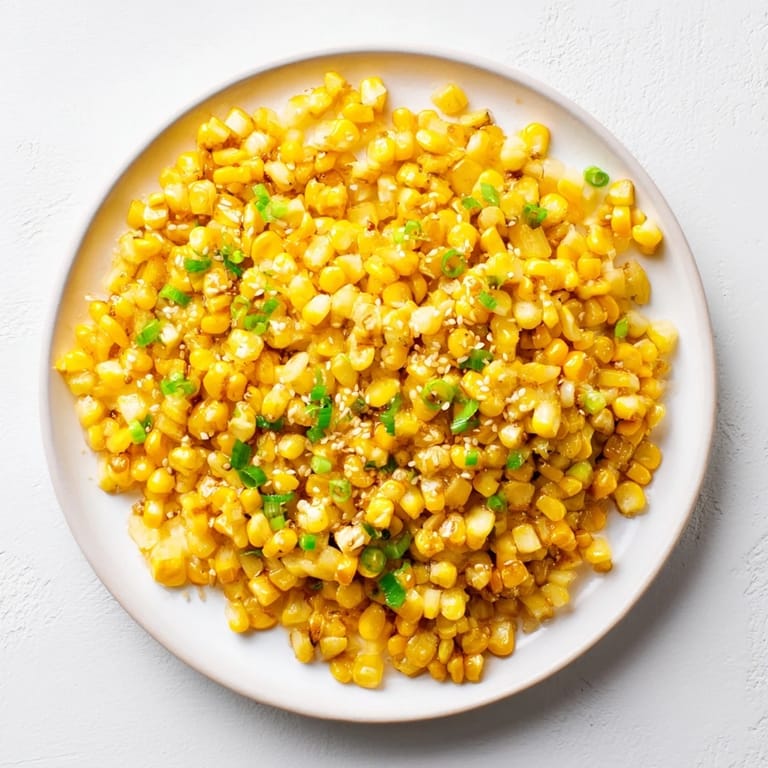
- Taste first, then add your black pepper and salt if needed, transfer to a warm bowl, and scatter with scallions and sesame seeds. Serve it hot while the butter still glistens.
 Save
Save This dish became my answer to the question I used to dread: what do I bring to a potluck where I don't know what else is being made. It pairs with everything, it travels well in a covered container, and somehow it's the thing people remember most about the meal.
Why This Works Every Time
The magic is in the order of operations, not the ingredients themselves. Butter first becomes the vehicle, garlic becomes the flavor anchor, and corn becomes the canvas where soy sauce adds umami without salt overwhelming the natural sweetness. I've watched people who claim not to like corn ask for seconds because they're tasting what corn should actually taste like.
Fresh Versus Frozen
I used to feel like I had to apologize for using frozen corn until I realized that good frozen corn, thawed and drained properly, delivers nearly the same result as fresh. The difference is texture—fresh has that tender bite, while frozen can be slightly softer—but the flavor is honest either way. The real trick is buying corn that was frozen close to harvest time, not something that's been sitting in warehouses.
Simple Upgrades and Variations
Once you've made this classic version, it's worth experimenting with small additions that deepen rather than complicate it. A teaspoon of mirin brings subtle sweetness, while a touch of mayo creates unexpected richness, and I've had great results with a pinch of five-spice powder stirred in at the end. This is the kind of recipe that teaches you how to taste and trust your instincts instead of following rules.
- Try a splash of mirin for a rounded sweetness that doesn't taste sugary.
- Add one teaspoon of mayonnaise after the soy sauce for richness that feels mysterious to people who taste it.
- Fresh red chili flakes or a thread of toasted sesame oil can elevate it to something special without losing the heart of what makes it work.
 Save
Save This recipe taught me that sometimes the most memorable food isn't about showing off—it's about respecting what you're cooking and letting it be itself. Keep it on rotation through corn season and beyond.