 Save
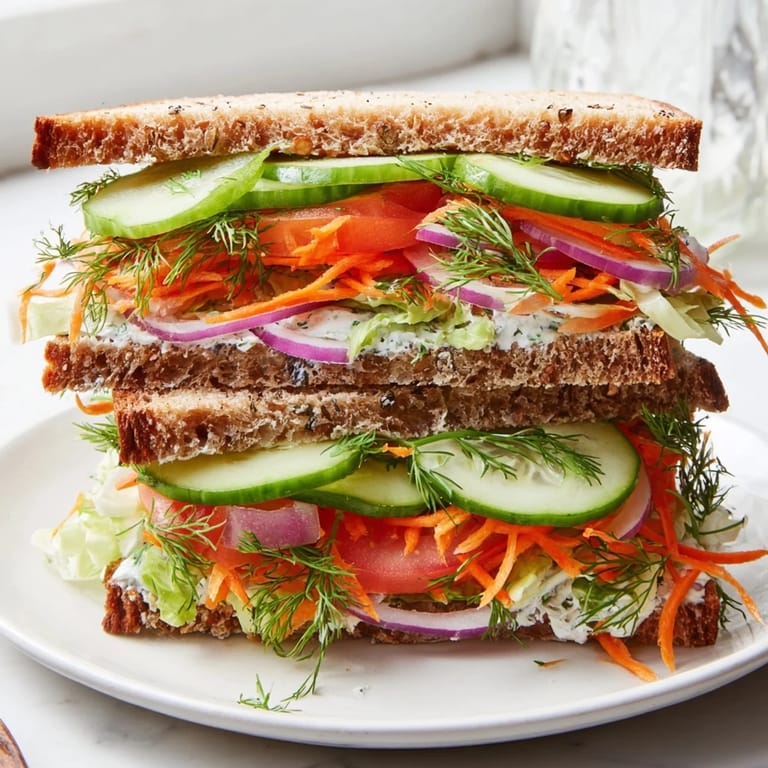
Save There was an afternoon when my friend showed up at my door with a jar of homemade dill pickles and a mischievous grin, insisting I had to do something bold with them besides just eating them straight. That simple challenge led me to stack pickles so high on a sandwich that the bread could barely contain them, and something magical happened—the brine soaked into the creamy spread, the vegetables stayed impossibly crisp, and I realized this wasn't just a sandwich, it was an experience.
I made this for my roommate on a random Tuesday when she came home exhausted from a long shift, expecting just leftover sandwiches. When she bit into it and that brine hit her tongue while the cucumber stayed so perfectly crisp, she closed her eyes and actually sighed—the kind of sigh that meant something small had just made her day better. That's when I knew this recipe was worth perfecting.
Ingredients
- Hearty whole grain or sourdough bread: 4 slices—use bread thick enough to hold the moisture without falling apart, and slightly stale bread works even better than fresh.
- Dill pickle slices: 1 cup plus extra—use the crunchiest ones you can find, and don't drain them completely; a little brine clinging to them adds flavor.
- Cucumber: 1 small, thinly sliced—keep the skin on for color and nutrients, and slice just before assembly so it stays crisp.
- Carrot: 1 small, julienned—this adds sweetness and another textural element that keeps things interesting.
- Red onion: ½, thinly sliced—the sharpness cuts through the richness and adds visual pop.
- Shredded lettuce: ½ cup—it acts as a moisture barrier between the wet pickles and the bread.
- Tomato: 1 medium, thinly sliced—choose one that's ripe and flavorful, and pat it dry to prevent sogginess.
- Cream cheese: 3 tbsp—let it sit at room temperature for a minute so it spreads smoothly without tearing the bread.
- Mayonnaise: 1 tbsp—this helps the mixture flow better and adds a subtle richness.
- Fresh dill: 1 tbsp, chopped—use fresh, never dried, because you taste the difference immediately.
- Dijon mustard: 1 tsp—it adds a subtle sharpness that complements the pickle flavor.
- Garlic powder: ½ tsp—just enough to hint at savory depth without overwhelming.
- Black pepper: freshly ground, to taste—the grind matters more than you'd think.
- Pickled jalapeños: 2 tbsp, sliced (optional)—add these if you want the sandwich to have a gentle heat.
- Sprouts: 2 tbsp alfalfa or broccoli (optional)—they add a peppery freshness and serious crunch.
Tired of Takeout? 🥡
Get 10 meals you can make faster than delivery arrives. Seriously.
One email. No spam. Unsubscribe anytime.
Instructions
- Make your flavor base:
- In a small bowl, combine the cream cheese, mayo, fresh dill, Dijon mustard, garlic powder, and black pepper, stirring until the mixture is completely smooth. Taste it—this is your moment to adjust the seasoning because once it's on the bread, you won't be able to fix it.
- Toast the bread:
- Slice your bread and toast it until it's golden and crispy enough to stand up to the weight of the vegetables and brine without becoming a soggy mess. The warmth also helps the spread melt slightly into the bread.
- Spread with intention:
- Spread your cream cheese mixture generously on one side of each bread slice—don't be shy, this is the glue that holds everything together.
- Layer the pickles:
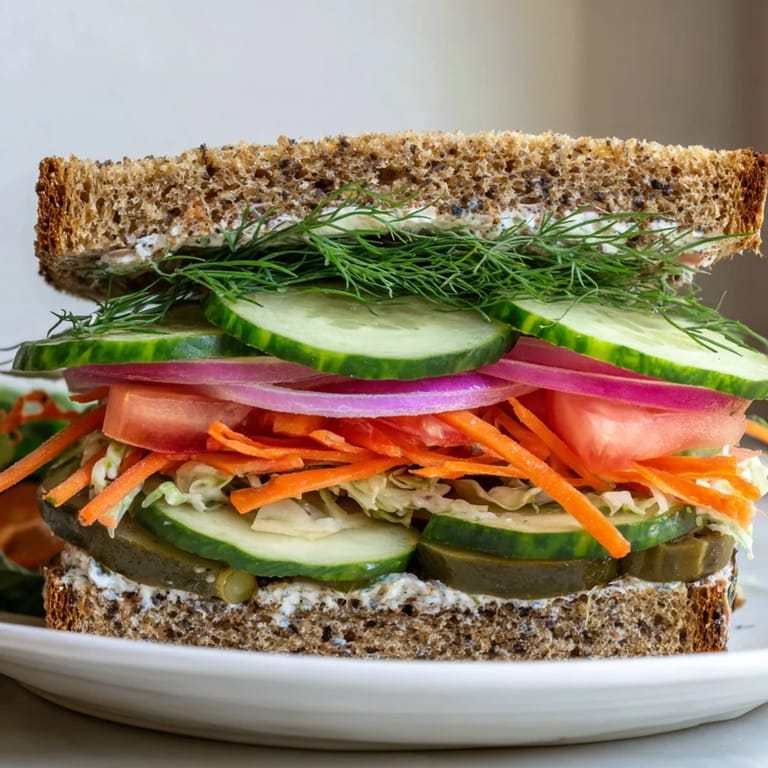
- Distribute your dill pickle slices evenly across two of the bread slices, creating a solid base layer that will anchor all the other vegetables.
- Build your structure:
- Layer the cucumber, carrot, red onion, lettuce, and tomato in that order, letting the lettuce do its job as a protective barrier against excess moisture.
- Go wild (optional):
- If you're using pickled jalapeños and sprouts, add them now—they go on top of the tomato for maximum flavor and crunch impact.
- Close it up:
- Press the remaining bread slices on top with the spread side facing down, then slice the sandwich diagonally in half with a sharp bread knife using gentle sawing motions rather than pressure.
- Serve and enjoy:
- Eat immediately while everything is still crisp, and use toothpicks to hold it together if needed—your sandwich just became the kind of meal that makes you sit down and actually pay attention.
 Save
Save I brought one of these sandwiches to a picnic where someone complained that vegetarian food was boring, and watched them completely change their tune after one bite. The way their face lit up when they realized they could actually taste each layer, that the flavors weren't competing but dancing together—that moment reminded me why I love cooking for people.
The Art of Layering
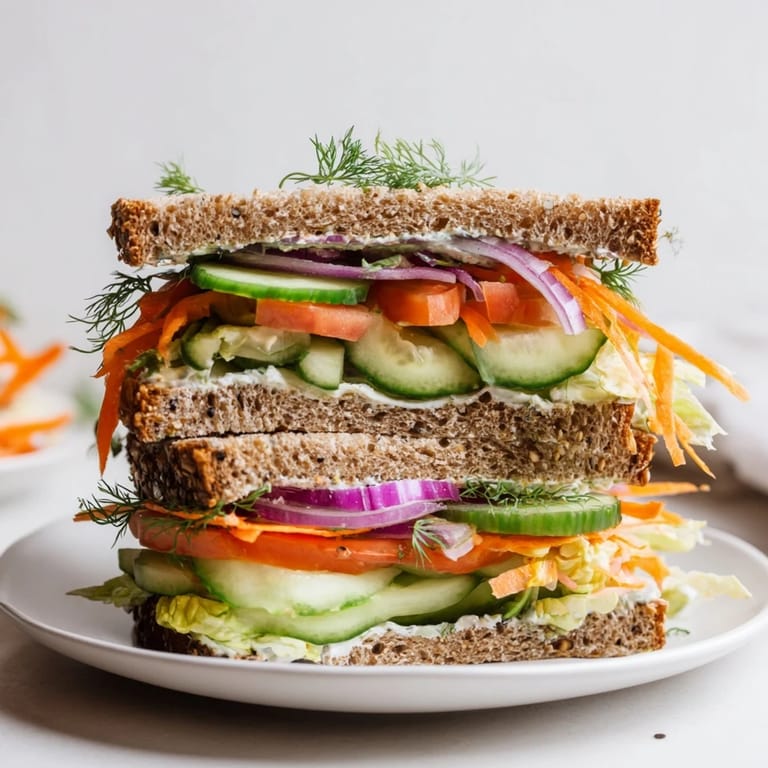
The order in which you layer matters more than you might think, and I learned this the hard way by putting soft ingredients on the bottom and watching them compress into an unrecognizable paste. The lettuce acts as your first defense, creating a barrier that lets moisture sit on top without soaking through to the bread. Then comes the crisp vegetables that can handle being pressed, then your delicate tomato on top where it stays protected but still adds its flavor. Think of it like building a house—you need a solid foundation before you can add the beautiful details.
Why This Works as a Meal
There's something about the combination of textures and temperatures that makes this sandwich feel more substantial than its ingredients suggest. The coldness of the vegetables, the slight warmth of the toasted bread, the creaminess of the spread, and the aggressive crunch of the pickles create this complete sensory experience. It's filling enough for lunch but light enough that you don't feel weighted down afterward, which is why I find myself making it over and over even when I had something completely different planned.
Variations and Personal Tweaks
Once you understand how this sandwich works, you can play with it endlessly. I've made it with rye bread for a deli-style feeling, added thinly sliced radishes for extra bite, and even swapped in different herb spreads depending on what I have on hand. The core concept—crispy bread, creamy spread, crunchy vegetables, and assertive pickles—stays the same, but the details can shift with your mood and what's in your kitchen.
- Try kettle-cooked potato chips layered inside for a texture surprise that somehow makes sense in your mouth.
- Swap cream cheese for hummus and you've got an entirely different sandwich that's lighter and earthier.
- Keep a small jar of pickled vegetables in your fridge so you're always ready to build something this satisfying.
 Save
Save This sandwich has become my answer when someone asks me what my favorite meal is, not because it's fancy or complicated, but because it's honest. It tastes like care, like paying attention to detail, and like knowing that sometimes the simplest things made with intention become the ones you remember.
Recipe FAQs
- → What type of bread works best for this sandwich?
Hearty whole grain or sourdough bread offers the ideal texture and flavor, balancing the tangy pickles and fresh vegetables.
- → Can I make this sandwich vegan-friendly?
Yes, by substituting cream cheese and mayonnaise with vegan alternatives, you can make this sandwich fully plant-based.
- → What adds extra crunch to the sandwich?
Adding pickled jalapeños, alfalfa or broccoli sprouts, or even kettle-cooked potato chips provides delightful crunch and flavor contrast.
- → How can I prepare the creamy spread?
Mix cream cheese or vegan cream cheese with mayonnaise, chopped fresh dill, Dijon mustard, garlic powder, and freshly ground black pepper until smooth and well combined.
- → Are there any allergen considerations?
This sandwich contains wheat, milk, and egg. For allergen-free options, use vegan spreads and check ingredient labels carefully.