 Save
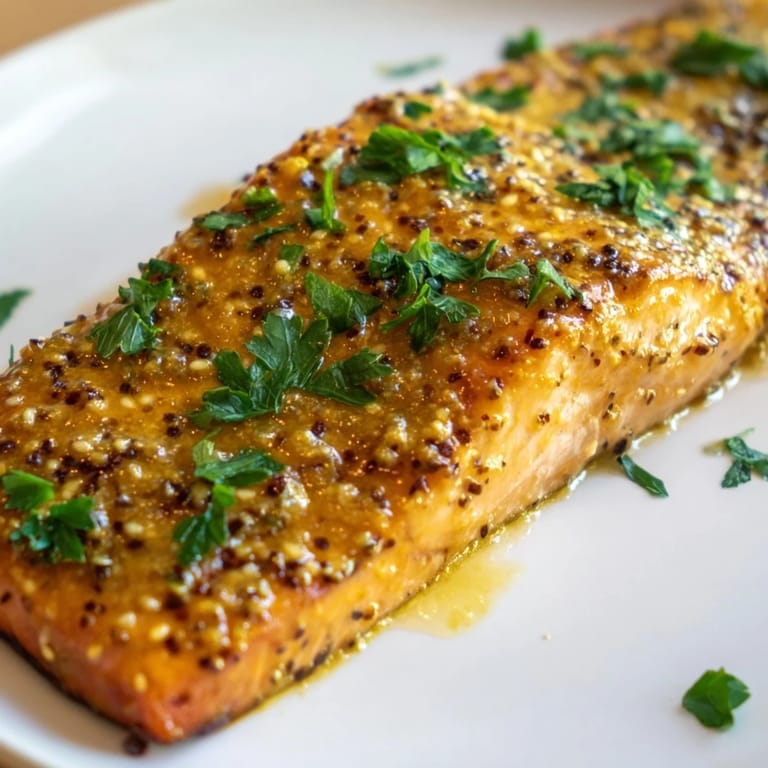
Save There's something about the sizzle of salmon hitting a hot baking sheet that makes me feel like I actually know what I'm doing in the kitchen. One Tuesday night, I threw together this honey mustard glaze out of sheer desperation—we had guests coming in an hour and I'd forgotten to plan dinner—and somehow it turned into the dish people still ask me to make. The sweet-tangy sauce clings to the fish in this gorgeous caramelized coat, and honestly, it tastes far too impressive for how little effort goes into it.
I remember my neighbor standing at the kitchen counter, watching the salmon bake through the oven window like we were watching something precious happen. When it came out glistening with that honeyed glaze, the whole kitchen smelled like toasted mustard and caramelized sweetness. She asked for the recipe before we'd even sat down to eat, and I realized this wasn't just dinner—it was the kind of simple, show-stopping dish that makes people feel cared for.
Ingredients
- Salmon fillets (6 oz each, skin-on or skinless): The skin adds flavor and helps the fillet stay intact, but honestly, either works beautifully.
- Dijon mustard: The sharp, sophisticated backbone of the sauce—don't skip it or you'll lose that essential tang.
- Whole grain mustard: This one's all about texture and rustic charm, giving you those little seed flecks throughout.
- Honey: What balances the mustard's bite and creates that caramelized glaze on top as it bakes.
- Olive oil: Brings everything together smoothly and helps the sauce coat the fish evenly.
- Lemon juice: The secret brightness that keeps the dish from feeling heavy, even with all that richness.
- Garlic: Just two minced cloves, enough to whisper through without overpowering the delicate fish.
- Salt and black pepper: These seem small, but they're what make each bite taste intentional rather than just creamy.
Tired of Takeout? 🥡
Get 10 meals you can make faster than delivery arrives. Seriously.
One email. No spam. Unsubscribe anytime.
Instructions
- Get your oven ready and prep the pan:
- Preheat to 400°F and line your baking sheet with parchment paper or a light grease—this prevents sticking and makes cleanup feel like less of a chore later. You want everything ready before the salmon hits the heat.
- Whisk the sauce into existence:
- Combine both mustards, honey, olive oil, lemon juice, minced garlic, salt, and pepper in a small bowl and whisk until it's smooth and glossy. Taste it and adjust—if it's too sharp, add a touch more honey; if it's too sweet, squeeze in more lemon.
- Arrange and dry the salmon:
- Pat each fillet dry with paper towels (this is the step everyone skips and then wonders why their crust doesn't brown). Lay them skin-side down on your prepared sheet, spacing them so they're not crowded.
- Coat generously with the glaze:
- Spoon the honey mustard sauce over each fillet, spreading it evenly across the top and sides. Don't hold back—this sauce is what makes the magic happen.
- Bake until perfectly cooked:
- Slide into the oven for 15 to 20 minutes, watching until the salmon flakes easily with a fork and turns opaque in the center. The thicker your fillets, the longer they'll need.
- Add brightness and serve:
- Remove from the oven, scatter fresh parsley over the top, and serve with lemon wedges alongside. The lemon is as much part of the dish as the glaze itself.
 Save
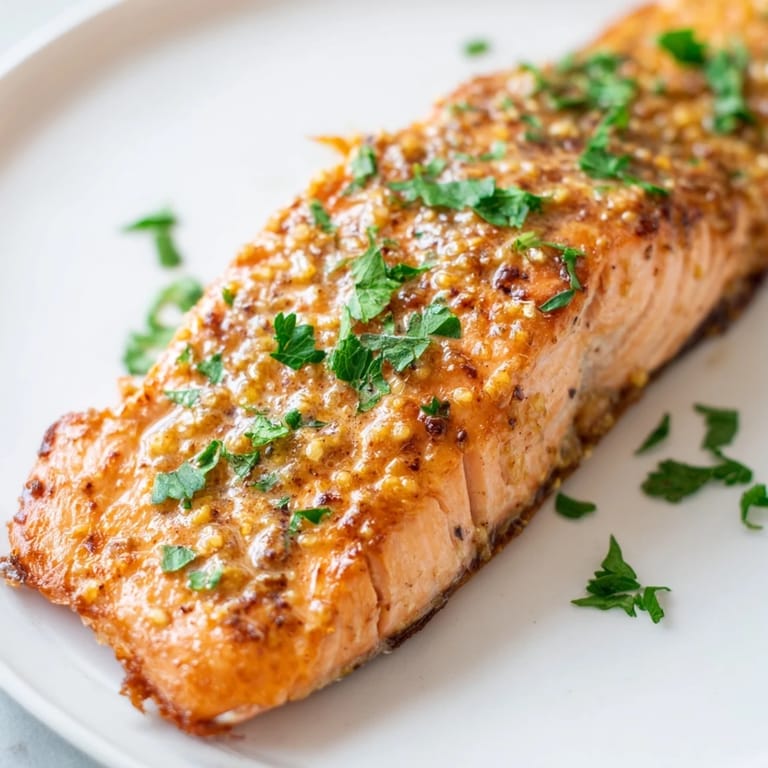
Save The first time someone asked me to teach them this recipe, I realized it wasn't about the ingredients or technique—it was that they felt safe trying something they thought was fancy. Watching someone taste that moment when the honey sweetness and mustard tang hit their palate together, and seeing their face light up, that's when I knew this dish had become more than just dinner for me.
What Makes This Sauce So Special
The genius of this glaze is the balance between two very different mustards. Dijon brings sharpness and sophistication, while whole grain mustard adds texture and a gentler, almost nutty flavor. Honey bridges the gap between them, sweetening without making it cloying, and the lemon juice keeps everything bright and lifted rather than heavy. It's a sauce that tastes complicated but requires no fancy techniques—just a whisk and confidence.
Timing and Temperature Tips
This dish thrives on being straightforward, so temperature control matters. Baking at 400°F ensures the exterior of the salmon develops flavor while the inside stays tender and moist, not dried out. The 15 to 20 minute window depends entirely on thickness—a thinner fillet might finish in 12 minutes, while a chunky 1-inch-thick piece needs closer to the full 20. The real test is that fork flake test: if the fish is opaque and breaks apart easily, it's ready.
Serving and Pairing Ideas
This salmon isn't fussy about sides, which is part of why it's become my go-to. Serve it with fluffy rice or quinoa to catch the extra sauce, or pile a plate with roasted vegetables for something lighter. A fresh green salad works beautifully too, the acidity there echoing the lemon in the glaze. The honey mustard sauce is bold enough that it plays well with almost anything you put beside it.
- Roasted asparagus and new potatoes soak up the glaze beautifully and feel elegant without effort.
- A simple arugula salad dressed with lemon and olive oil provides bright contrast to the rich, sweet-savory sauce.
- If you're feeling like rice or grains, let them finish cooking while the salmon is in the oven so everything lands at the table warm and ready.
 Save
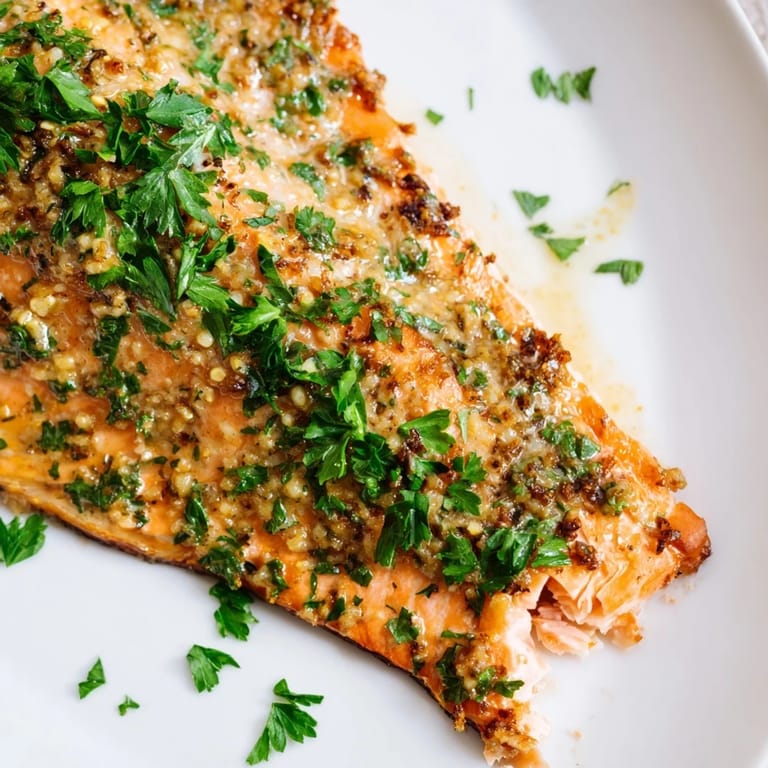
Save This recipe sits in that golden space where it's simple enough for a weeknight but impressive enough for guests, which might be why it's become one of my most-made dishes. It's proof that sometimes the best meals come from happy accidents and the willingness to trust your instincts in the kitchen.
Recipe FAQs
- → What is the best way to bake salmon for this dish?
Preheat your oven to 400°F (200°C) and bake salmon fillets on a lined baking sheet for 15-20 minutes until they flake easily with a fork.
- → Can I use skin-on salmon fillets?
Yes, both skin-on and skinless fillets work well. Skin-on can add extra flavor and helps keep moisture during baking.
- → How can I enhance the glaze flavor?
Whisk together Dijon and whole grain mustard with honey, olive oil, lemon juice, garlic, salt, and pepper to create a balanced sweet and tangy glaze.
- → Is there a way to add caramelization to the top?
For extra caramelized edges, broil the salmon for the last 2 minutes after baking. Keep a close eye to prevent burning.
- → What side dishes pair well with baked salmon?
Serve alongside rice, quinoa, roasted vegetables, or a fresh salad to complement the rich mustard glaze.
- → Can this dish be adapted for dietary restrictions?
This meal is naturally gluten-free and pescatarian. Ensure mustard ingredients are free of allergens like sulfites for sensitive diets.