 Save
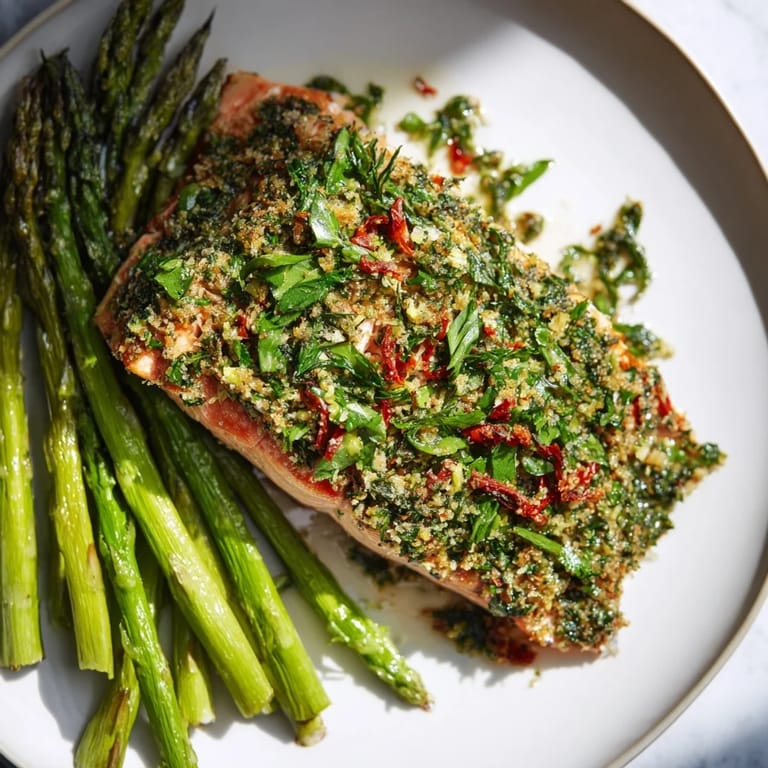
Save I was scrambling for something impressive yet doable on a Tuesday night when I remembered this salmon trick from a cooking demo I'd wandered into at a farmers market. The chef made it look effortless, pressing handfuls of herbs onto fish like he was patting down garden soil. I tried it that evening with whatever greens were in my fridge, and the kitchen smelled like a coastal herb garden within minutes. It's been my go-to ever since.
The first time I made this for guests, I plated it with lemon wedges and felt like a culinary genius. My friend asked if I'd taken a cooking class. I hadn't, but I let the compliment linger. That night taught me that good food doesn't need complexity, just attention to a few key details and the confidence to let fresh ingredients shine.
Ingredients
- Salmon fillets: Look for fillets with even thickness so they cook uniformly. Pat them dry before brushing with oil to help the crust adhere.
- Olive oil: A fruity, quality oil makes a noticeable difference in flavor. Don't skimp here, it carries the herbs beautifully.
- Dijon mustard: Acts like edible glue for the herb mixture and adds a subtle tang. Yellow mustard won't give the same depth.
- Fresh parsley, dill, and chives: Use truly fresh herbs, not the wilted bag at the back of the fridge. Chop them finely so they blanket the fish like green confetti.
- Garlic: One clove is enough to whisper through the crust without overpowering the delicate fish.
- Lemon zest: Zest only the yellow part, the white pith beneath turns bitter. This brightens everything without adding moisture.
- Asparagus: Snap off the woody ends instead of cutting them. The stalks naturally break where tender meets tough.
- Kosher salt and black pepper: Season in layers, first the fish, then the vegetables. Freshly cracked pepper has more punch than pre-ground.
- Lemon wedges: A squeeze at the table wakes up every bite. Keep them visible so people remember to use them.
Tired of Takeout? 🥡
Get 10 meals you can make faster than delivery arrives. Seriously.
One email. No spam. Unsubscribe anytime.
Instructions
- Preheat and Prep:
- Set your oven to 400°F and line a baking sheet with parchment. This temperature is hot enough to caramelize without drying out the salmon.
- Make the Herb Mixture:
- Toss parsley, dill, chives, garlic, lemon zest, salt, and pepper in a small bowl until evenly distributed. The garlic should be minced fine enough to disappear into the greens.
- Dress the Salmon:
- Arrange fillets on the sheet, brush tops with olive oil, then spread a thin layer of Dijon over each. The mustard should coat the surface but not pool.
- Apply the Crust:
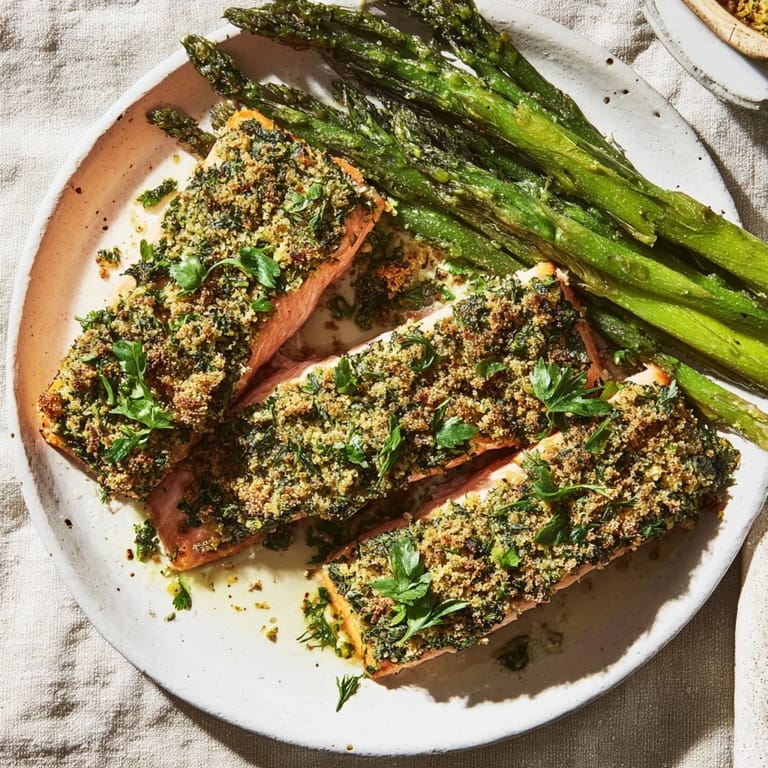
- Press the herb mixture onto each fillet with your fingertips, patting gently so it sticks. You want a visible green blanket, not a sparse dusting.
- Season the Asparagus:
- Lay asparagus beside the salmon, drizzle with olive oil, sprinkle with salt and pepper, then roll them around with your hands. They should glisten lightly.
- Bake Together:
- Slide the sheet into the oven and bake for 15 to 18 minutes. The salmon should flake when nudged with a fork, and the asparagus tips will bronze slightly at the edges.
- Serve Hot:
- Transfer everything to plates and tuck lemon wedges alongside. Serve immediately while the crust is still fragrant and the fish is warm.
 Save
Save There's a moment when you pull this dish from the oven and the herbs release one final wave of fragrance that fills the whole kitchen. It feels like an event, even on a quiet Wednesday. That's when I realized cooking doesn't have to be elaborate to feel special, it just has to smell this good and taste even better.
Flavor Variations
Swap the dill for fresh tarragon if you want a hint of anise, or use basil for a sweeter, summery note. I've even tried a mix of cilantro and mint when I had leftover herbs from tacos, and it worked beautifully. The key is keeping the total volume the same so the crust still clings properly.
Wine Pairing
A crisp Sauvignon Blanc or a light Pinot Grigio cuts through the richness of the salmon and echoes the bright lemon and herbs. I once served this with a slightly chilled rosé and it was equally lovely. Avoid heavy reds, they compete with the delicate fish instead of complementing it.
Extra Touches
If you want to gild the lily, sprinkle a tablespoon of grated Parmesan over the asparagus before baking. It turns golden and nutty, adding a savory layer that makes the vegetables almost as exciting as the fish. I also sometimes drizzle everything with a little balsamic glaze at the table for a sweet-tart contrast.
- Use parchment paper instead of foil to prevent sticking and make cleanup instant.
- If your salmon has skin, place it skin-side down and leave it on during baking for extra moisture.
- Leftovers reheat gently in a low oven or taste great cold over a salad the next day.
 Save
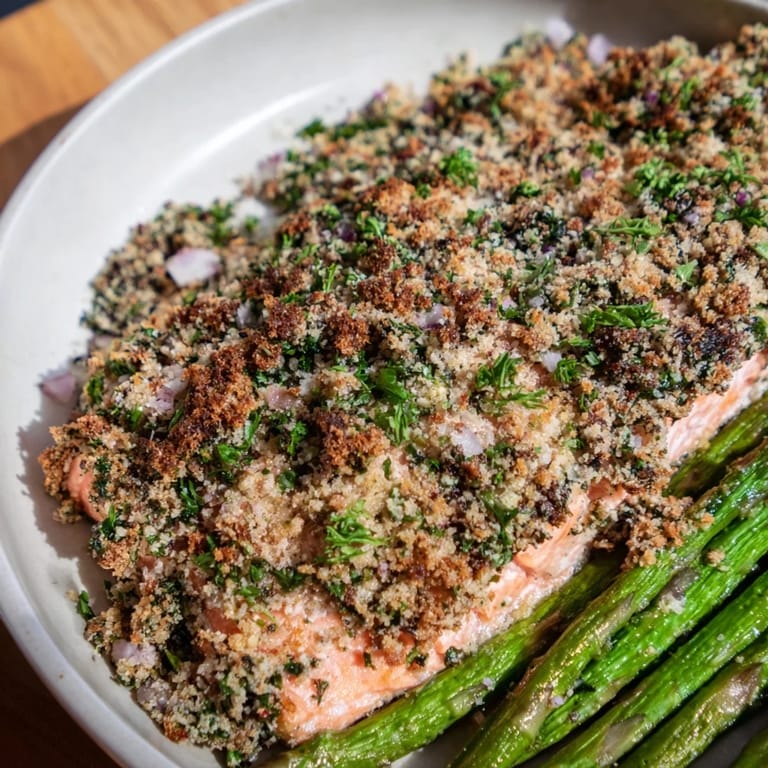
Save This dish taught me that weeknight cooking doesn't have to mean compromise. With a handful of fresh herbs and twenty minutes, you can make something that feels like a celebration, even if it's just dinner for yourself.
Recipe FAQs
- → What herbs are used for the crust?
Parsley, dill, and chives combine to create a fresh, aromatic herb crust that enhances the salmon’s flavor.
- → How do I know when the salmon is done?
The salmon is ready when it flakes easily with a fork and has an opaque color throughout.
- → Can I substitute the asparagus with other vegetables?
Yes, tender vegetables like green beans or zucchini work well roasted alongside the salmon.
- → Is Dijon mustard necessary for the herb crust?
Dijon mustard adds tang and helps the herb crust adhere, but it can be replaced with a mild mustard or skipped if preferred.
- → What wine pairs best with this dish?
A crisp Sauvignon Blanc or light Pinot Grigio complements the flavors of the salmon and asparagus nicely.