 Save
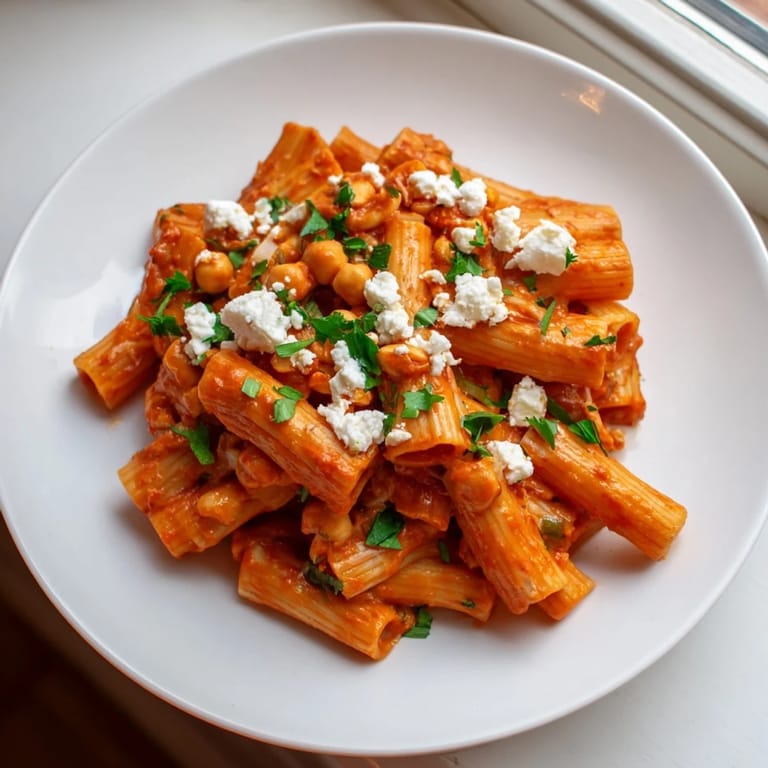
Save There's something about the smell of harissa hitting hot oil that stops me mid-task every time. Years ago, I grabbed a jar of harissa paste from a market stall without quite knowing what to do with it, and this pasta ended up being my answer—a dish that transformed a weeknight kitchen into something that smelled like a Mediterranean street corner. The chickpeas soften into the spiced tomato sauce while the pasta cooks, and before you know it, you're tossing it all together with lemon juice that brightens everything at once.
I made this on a cold Tuesday evening when my friend Maya mentioned she'd been craving something with real heat and real flavor. We were standing in my kitchen, the pot bubbling away, and she kept asking what I was making because the aroma had already won her over. By the time we sat down to eat, the pasta had absorbed enough of that spiced sauce that each bite tasted more interesting than the last, and we both ended up going back for seconds.
Ingredients
- Dried short pasta (350 g): Penne, rigatoni, or fusilli works equally well—short shapes catch the sauce better than long strands do.
- Olive oil (2 tbsp): Use good oil here since it's part of your base; it makes a real difference in how the sauce comes together.
- Onion (1 medium): Finely chopped so it softens and nearly dissolves into the sauce while cooking.
- Garlic cloves (3): Minced, never skipped—this is where the backbone of flavor starts.
- Harissa paste (2 tbsp): The star ingredient with heat and depth; adjust up or down depending on your tolerance and the brand you use.
- Ground cumin (1 tsp): Adds earthiness that balances the spice and tomato acidity.
- Smoked paprika (1/2 tsp): A whisper of smoke that makes the whole dish feel more complex.
- Diced tomatoes (1 can, 400 g): The body of your sauce; canned is perfect here since the tomatoes have time to soften.
- Chickpeas (2 cans, 400 g each): Drained and rinsed so they don't cloud the sauce; they absorb flavor beautifully while staying tender.
- Vegetable broth or water (1/2 cup): Keeps the sauce from reducing too quickly and gives the chickpeas room to cook.
- Salt and black pepper: Taste as you go; you'll need both at different stages.
- Lemon (zest and juice): This finishes the dish and cuts through the richness with brightness.
- Fresh parsley or cilantro (2 tbsp): Chopped just before serving to keep it vibrant; cilantro adds an extra layer if you like it.
- Feta cheese, optional: Crumbled over the top, it's not necessary but it does add a cool, creamy contrast to the spice.
Tired of Takeout? 🥡
Get 10 meals you can make faster than delivery arrives. Seriously.
One email. No spam. Unsubscribe anytime.
Instructions
- Start the pasta:
- Fill a large pot with water, salt it generously, and let it come to a rolling boil. Once it's boiling, add your pasta and stir immediately so nothing sticks to the bottom. Set a timer according to the package instructions, but plan to check it a minute or two early—you want it al dente, still with a slight firmness when you bite through.
- Build the base:
- While the pasta cooks, heat your olive oil in a large skillet over medium heat. Add the chopped onion and let it cook undisturbed for a minute before stirring, letting it soften and turn translucent at the edges. This takes about 4 to 5 minutes, and you'll know it's ready when it smells sweet and takes on a light golden tint.
- Toast the spices:
- Add the minced garlic, harissa paste, cumin, and smoked paprika to the softened onion. Stir constantly for about a minute—this is crucial because it wakes up the spices and lets them bloom in the oil rather than taste raw. You'll smell it shift from pungent to fragrant, and that's your signal to move on.
- Add the sauce components:
- Pour in the diced tomatoes with their juices and add the drained chickpeas and vegetable broth. Stir everything together, scraping the bottom of the skillet to lift up any flavorful bits stuck there. Season with salt and pepper, tasting as you do.
- Simmer and meld:
- Bring the mixture to a gentle simmer, cover the skillet partially, and let it cook for 10 to 12 minutes. Stir occasionally and watch as the sauce reduces slightly and deepens in color—the tomatoes will break down further, the chickpeas will soften even more, and all those spices will weave together into something cohesive and warm.
- Combine and finish:
- By now your pasta should be drained and set aside, with that reserved pasta water close by. Add the pasta directly to the skillet and toss it with the sauce, using tongs or two wooden spoons to coat every piece. If it looks too thick, splash in a little of that reserved pasta water and stir until the sauce loosens and clings to the pasta.
- Brighten with lemon and herbs:
- Remove the skillet from heat and stir in the lemon zest, lemon juice, and your chopped herbs. Taste and adjust for salt, pepper, or heat—this is your moment to correct anything that needs it. The lemon should make you notice the brightness immediately.
- Serve:
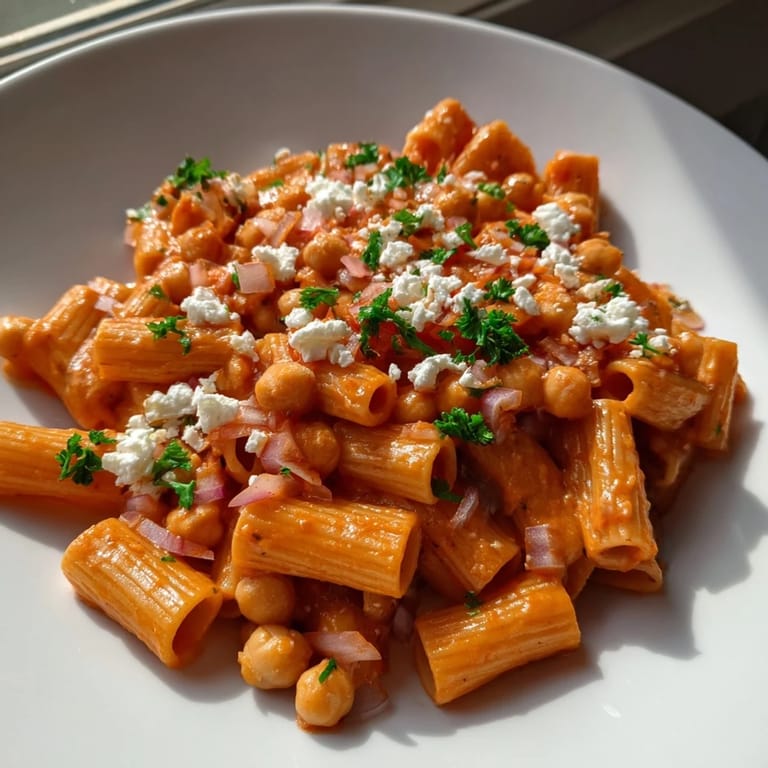
- Spoon the pasta into bowls and top with a little more fresh herb and a handful of crumbled feta if you're using it. Serve hot, while the sauce is still clinging to everything and the warmth brings out all the spiced aromas.
 Save
Save I remember my sister tasting this and saying it felt like comfort food with an edge, warm and filling but with enough spice to keep things interesting. That's when I realized this dish sits in a perfect middle ground—it's satisfying enough to feel like dinner, but bright enough that you don't feel heavy afterward.
Why Harissa Works Here
Harissa paste brings a kind of controlled heat that builds as you eat rather than hitting you all at once. It's made from chiles, garlic, spices, and oil, so it adds dimension beyond just spice—there's smokiness, warmth, and a depth that fresh chiles alone wouldn't give you. Paired with cumin and smoked paprika, it creates a sauce that tastes like it simmered for hours even though it only takes 40 minutes total.
Timing and Texture Tips
The key to this dish is not overcooking the pasta. Shoot for al dente because it will finish cooking slightly as it sits in the warm sauce, and you want it to stay firm enough to hold the sauce without turning mushy. The chickpeas, on the other hand, benefit from those extra 10 to 12 minutes in the sauce—they soften completely and absorb all that harissa flavor, becoming almost creamy inside.
Variations and Swaps
This recipe is forgiving about what you put in it. White beans or cannellini beans work just as well as chickpeas if that's what you have, and they'll absorb the sauce the same way. You can stir in roasted vegetables like zucchini or bell peppers in the last few minutes, or add a handful of spinach that wilts right into the heat. Some people like to mash a few of the chickpeas against the side of the skillet to thicken the sauce naturally.
- Try swapping cilantro for parsley if you want a more herbaceous finish.
- Stir in a splash of red wine vinegar at the end for extra acidity and complexity.
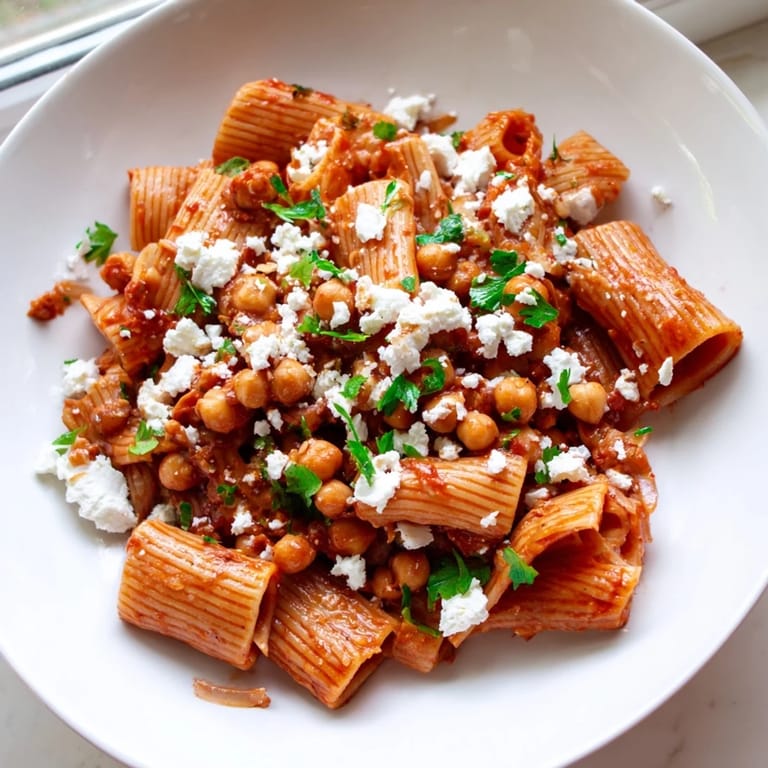
- Add crumbled feta, a drizzle of tahini, or even a dollop of hummus for creaminess without dairy cream.
 Save
Save This is the kind of pasta that tastes even better the next day when the sauce has had time to settle into every piece. Warm it gently in a skillet with a splash of water, and it comes back to life tasting just as good as it did fresh.
Recipe FAQs
- → How do I achieve the perfect pasta texture?
Cook pasta in salted boiling water until al dente, following package instructions closely. Reserve some pasta water to adjust sauce consistency if needed.
- → Can harissa spice level be adjusted?
Yes, harissa's heat can be modified by adding more for extra spice or less for a milder flavor. Adding chili flakes can also increase heat.
- → What alternatives exist for chickpeas in the sauce?
White beans or roasted vegetables can replace chickpeas, offering different textures while maintaining hearty substance.
- → How does lemon enhance the dish?
Lemon zest and juice add brightness and balance, cutting through the richness and complementing the spices.
- → What herbs work best to finish the dish?
Fresh parsley or cilantro provide a fresh, herbal note that lifts the flavors and adds a touch of color.
- → Can this dish accommodate dietary restrictions?
Using gluten-free pasta and omitting cheese makes this dish dairy-free and gluten-friendly, adaptable to various diets.