 Save
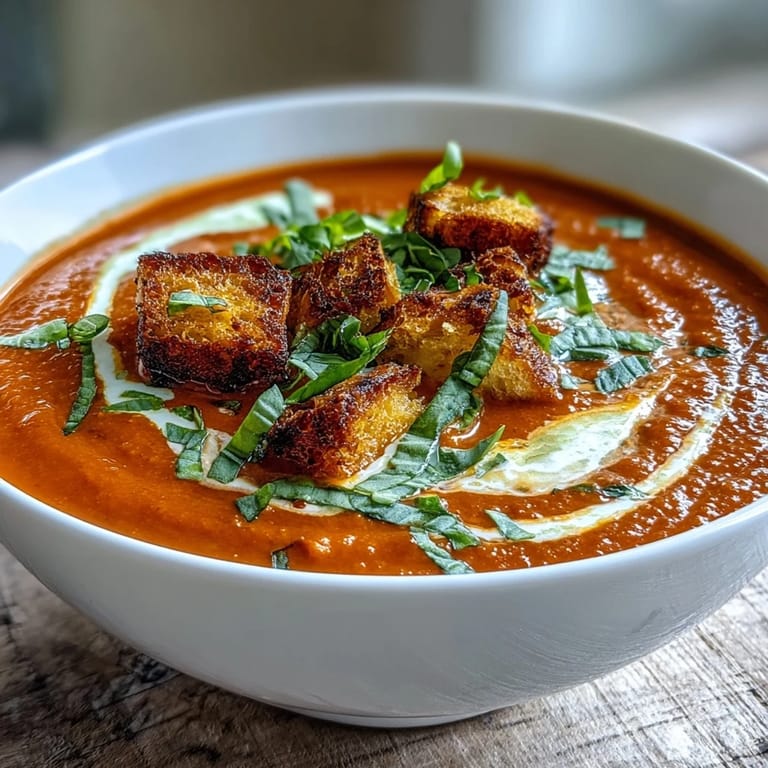
Save The first time I made roasted tomato soup, my kitchen windows were completely fogged from the steam. It was late September, and I'd just hauled home an ambitious haul from the farmers' market - ruby tomatoes still warm from the sun. The transformation that happens when you roast tomatoes is almost magical - they collapse and caramelize, their sweetness intensifying as they surrender to the heat. The aroma filled every corner of my home, drawing my neighbor over with a curious knock and an eager smile.
Last winter during that unexpected snowstorm, I made this soup for my sister who had driven through treacherous roads to visit. We sat wrapped in blankets by the window, watching fat snowflakes dance outside while steam rose from our bowls. She was quiet for three spoonfuls before declaring it was worth risking her life on icy roads. I laughed, but secretly felt that particular mix of pride and pleasure that comes when food becomes more than sustenance.
Ingredients
- Ripe tomatoes: The foundation of this soup deserves your attention - look for tomatoes that yield slightly to pressure and smell fragrant at their stem ends.
- Smoked paprika: Though optional, this adds a subtle complexity that transforms the soup from merely delicious to memorable.
- Day-old bread: Slightly stale bread actually makes better croutons as it absorbs less oil and crisps more evenly.
- Heavy cream: This brings everything together with a silky richness that perfectly balances the acidity of the tomatoes.
- Fresh basil: Added at the end preserves its aromatic oils that would otherwise be lost in the cooking process.
Tired of Takeout? 🥡
Get 10 meals you can make faster than delivery arrives. Seriously.
One email. No spam. Unsubscribe anytime.
Instructions
- Roast with intention:
- When you arrange those halved tomatoes cut-side up, you're creating little cups that will collect their own juices as they roast. The kitchen will begin to fill with a concentrated tomato perfume that signals transformation is happening.
- Make croutons while you wait:
- While the vegetables are roasting, toss those bread cubes with olive oil and seasonings. They'll turn golden faster than you expect, so keep an eye on them.
- Blend with care:
- If using an immersion blender, keep it submerged to avoid splashing hot soup. The color will deepen as you blend, turning from bright red to a rich rusty orange.
- The final touch:
- As you swirl in that heavy cream, watch how it creates beautiful patterns before fully incorporating. This moment of mixing is surprisingly meditative.
 Save
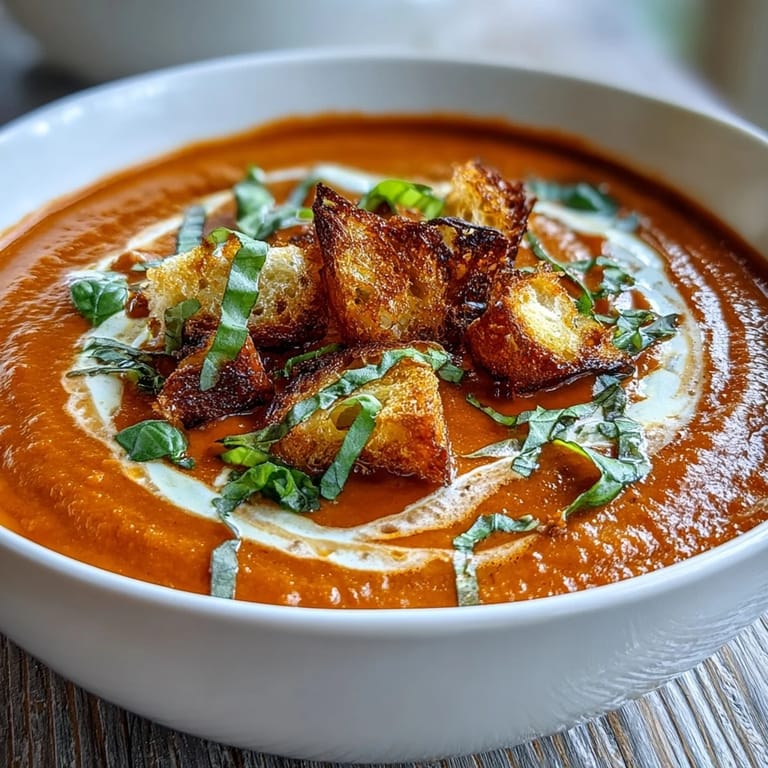
Save One summer evening, I served this soup chilled as gazpacho's warmer cousin at an impromptu patio gathering. My friend Marco, a self-proclaimed soup skeptic, asked for the recipe after his second bowl. We ended up talking until midnight, the empty soup pot between us, about how certain foods carry memories across borders and years. That night reminded me how a simple pot of soup can anchor an entire evening of connection.
Seasonal Adaptations
When peak tomato season has passed, I've discovered that slow-roasting even lackluster winter tomatoes with a touch of honey helps develop their potential. In really desperate months, I supplement with a can of good fire-roasted tomatoes mixed with the fresh ones. The oven's heat performs a kind of alchemy, extracting sweetness that didn't seem possible from those pale January tomatoes.
Serving Suggestions
While a grilled cheese sandwich is the classic pairing, I've found that a slice of crusty sourdough bread rubbed with a raw garlic clove and drizzled with olive oil makes for an equally satisfying companion. Something about the brightness of the raw garlic creates a wonderful counterpoint to the deep, roasted flavors of the soup. The contrast becomes a conversation between bold and subtle that keeps each spoonful interesting.
Storage and Reheating
This soup actually improves overnight as the flavors meld in the refrigerator. I've found it keeps well for about three days, though it rarely lasts that long in my house. When reheating, do it gently over medium-low heat and stop short of boiling to preserve the cream's texture.
- If freezing, do so before adding the cream, then add it fresh when reheating for the best texture.
- Store croutons separately in an airtight container to maintain their crunch.
- A fresh garnish of basil just before serving revives even day-old soup with bright aromatics.
 Save
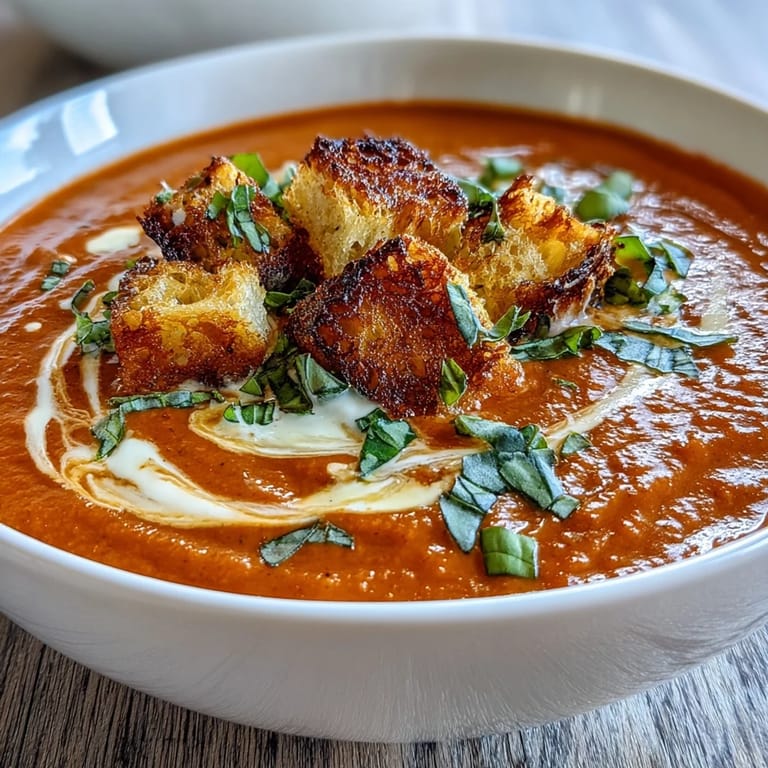
Save This soup has become my culinary love letter to tomatoes in their many moods across seasons. Whether made with summer's bounty or winter's promise, it reminds us that comfort can be both simple and profound.
Recipe FAQs
- → Can I make this soup ahead of time?
Yes, the soup base stores beautifully in the refrigerator for up to 4 days or freezer for 3 months. Add cream when reheating to prevent separation.
- → What if I don't have fresh tomatoes?
Canned whole tomatoes work wonderfully. Drain them slightly before roasting, and reduce the cooking time by about 10 minutes since they're already tender.
- → How do I achieve the smoothest texture?
Use a high-speed blender in batches rather than an immersion blender. Strain the blended soup through a fine-mesh sieve for an ultra-silky finish.
- → Can I make this dairy-free?
Absolutely. Substitute heavy cream with full-fat coconut cream, cashew cream, or your favorite plant-based cream alternative for equally rich results.
- → What's the best way to store leftover croutons?
Keep cooled croutons in an airtight container at room temperature for up to 1 week. Refresh them in a 350°F oven for 5 minutes if they lose their crunch.
- → How can I adjust the acidity?
Add the optional sugar to balance bright tomatoes. Start with ½ teaspoon and increase gradually, tasting after each addition until perfectly balanced.