 Save
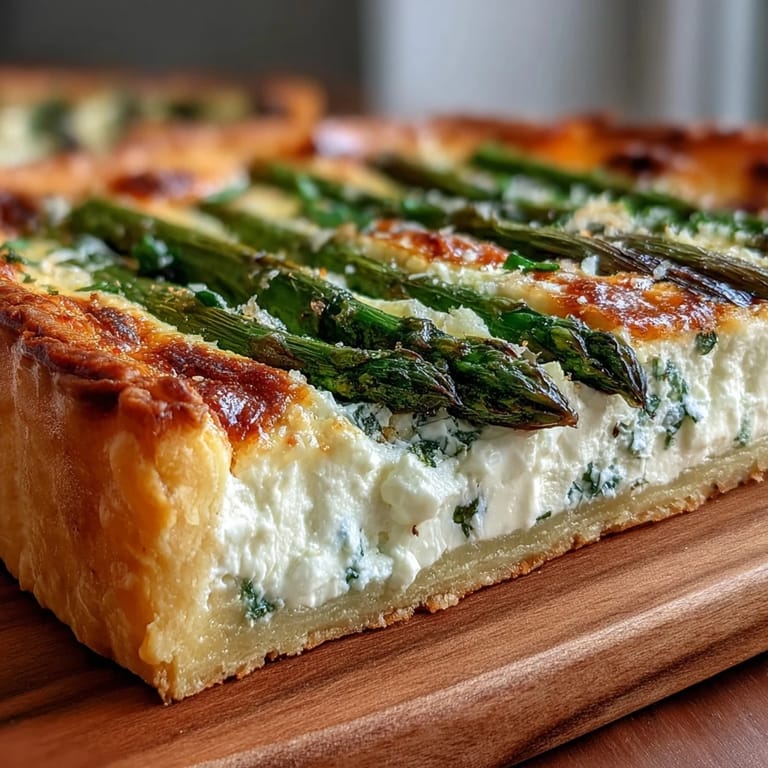
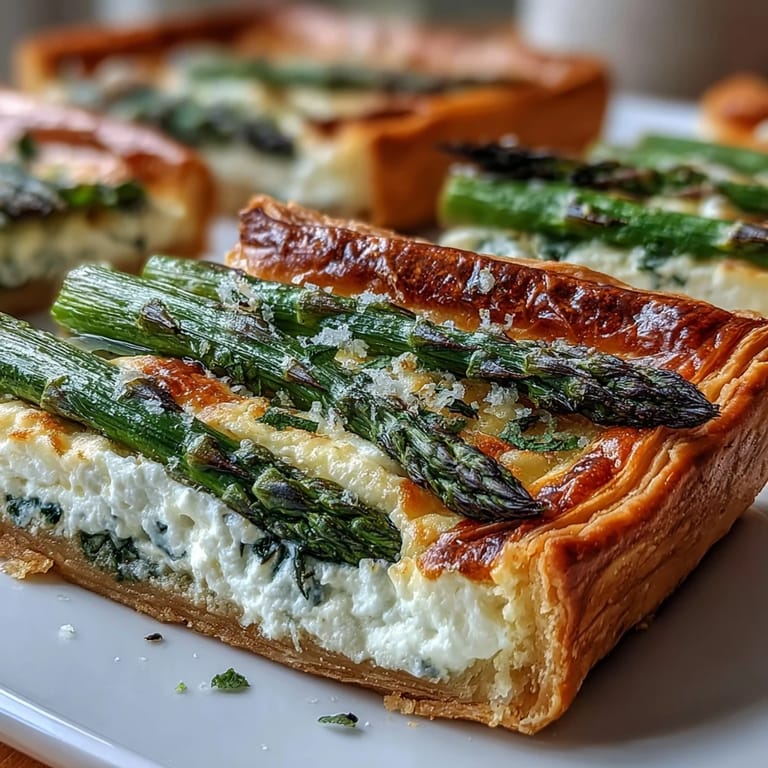
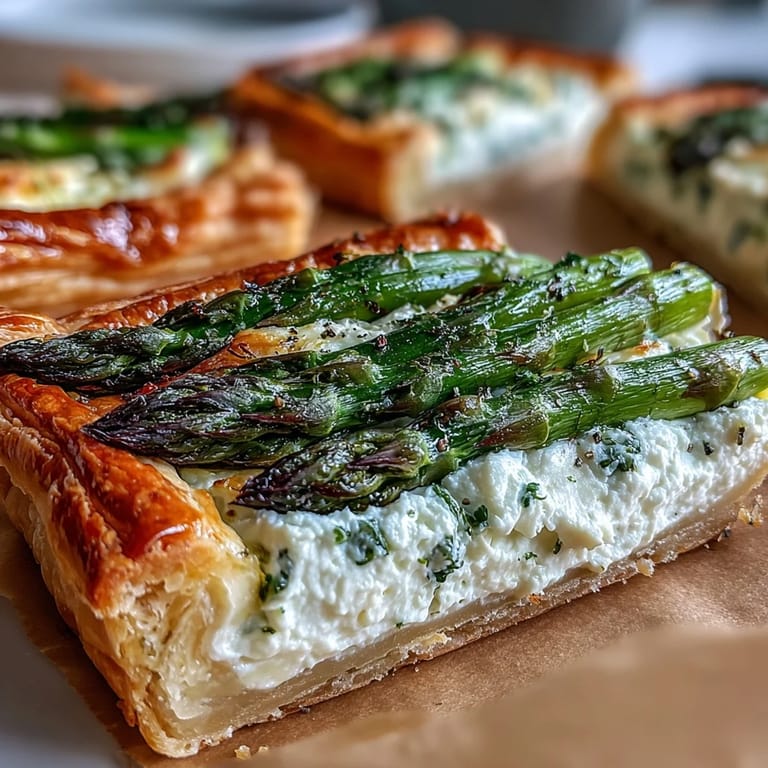
Save The hum of late morning light through my kitchen window always feels like an invitation to try something new, and this asparagus ricotta tart was once the answer to the question: what feels easy and a little special today? There’s something particularly uplifting about laying out slender asparagus spears on a pillowy bed of ricotta, the scent of lemon zest promising brightness even before the first bite. The first time I made it, I was lured as much by the idea of giving my rolling pin a day off as the hope of impressing my friends at brunch. As the pastry puffed up and goldened, I remember marveling at how effortless the whole thing seemed. Making it now always reminds me that elegance in the kitchen can be delightfully simple.
One breezy Sunday, I pulled this tart from the oven just as friends showed up, the air carrying hints of buttery pastry and fresh lemon through the whole flat. We ended up eating in the kitchen, straight off the cutting board—stems of asparagus gently snapping with each slice, the ricotta soft and cloudlike underneath. Someone asked what made it so light, and it sparked a whole conversation about little tweaks that elevate everyday meals. That afternoon, laughter bounced off the countertops right alongside notes of Parmesan and pepper, and not a crumb was left by the time the last coffee was poured.
Ingredients
- Puff pastry: Ready-rolled pastry lets you skip the effort of making dough from scratch, and I always make sure it’s had time to thaw so it bakes up perfectly puffy.
- Ricotta cheese: Its fresh creaminess is key—drain it briefly if overly wet so your tart won’t sog.
- Crème fraîche or sour cream: This adds a wonderful tang and keeps the filling silken; either works, depending on what’s in the fridge.
- Parmesan cheese: Lends a salty, nutty depth, and I find grating it fresh gives the best melt and flavor.
- Egg: Helps bind everything together, giving the filling just the right set when baked.
- Lemon zest and juice: This duo truly brightens the whole tart—use a fine grater for the zest to avoid bitterness.
- Garlic: Just a small clove, finely grated, mellowed in the oven and infusing the filling with gentle aroma.
- Salt and freshly ground black pepper: Essential for bringing out the flavors; taste the ricotta mixture and adjust if you like things punchy.
- Asparagus spears: Thin spears are best for quick, even roasting; snapping off the woody ends means no tough bites.
- Olive oil: Just a drizzle helps everything roast beautifully and adds a hint of richness.
- Fresh chives or parsley: Optional, but their pop of color and freshness make a big difference for both looks and taste.
Tired of Takeout? 🥡
Get 10 meals you can make faster than delivery arrives. Seriously.
One email. No spam. Unsubscribe anytime.
Instructions
- Get your oven ready:
- Set your oven to 400°F (200°C) and grab a baking sheet lined with parchment so nothing sticks later.
- Prepare the pastry:
- Unroll the puff pastry onto your tray, score a nice border about half an inch all around, and gently prick the center with a fork—these tricks keep the edges lofty and the middle from puffing up too much.
- Whip up the ricotta filling:
- Mix ricotta, crème fraîche, Parmesan, egg, lemon zest, lemon juice, garlic, salt, and pepper together until you have a creamy, uniform spread.
- Fill and layer:
- Spread the ricotta mixture inside the border, smoothing it to the edges, then lay the asparagus spears across, trimming to fit if needed and arranging for maximum coverage.
- Add flavor and bake:
- Drizzle asparagus with olive oil, crack over some black pepper, and slide the dish into the oven for 25–30 minutes, until the pastry is golden and everything smells amazing.
- Finish and serve:
- Cool the tart slightly, then scatter over fresh herbs if using—slice it up and serve while warm for mega flakiness or at room temp for brunch ease.
 Save
Save 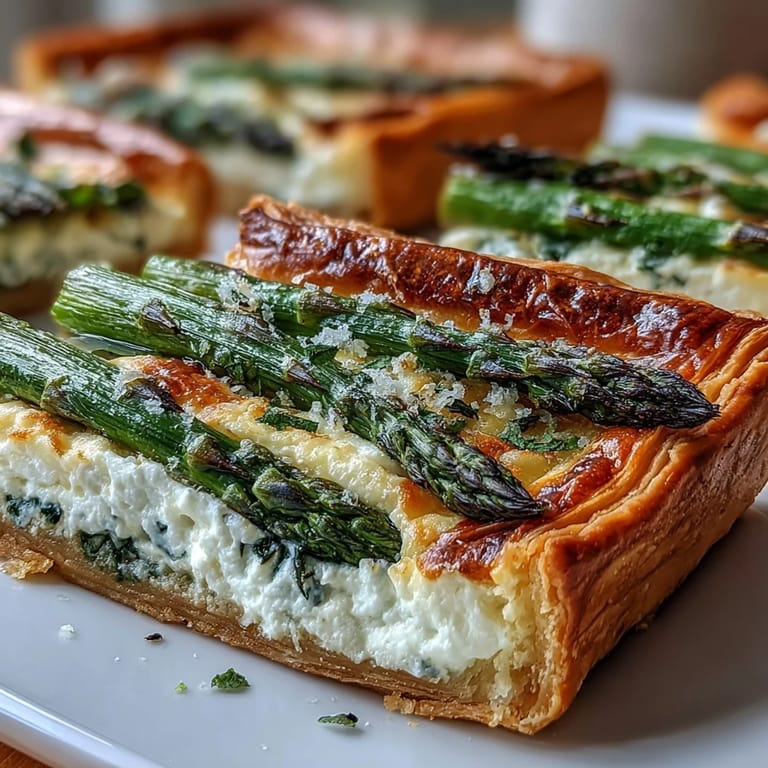 Save
Save As we finished off the last slices one spring afternoon, my little nephew declared it tasted like eating sunshine. It was such a spontaneous, happy compliment that the tart has become a celebratory staple for any family brunch or picnic since.
Making It Your Own
Some days, I’ll sneak in a hint of chili flakes or swap the ricotta for a tangy goat cheese for a twist, especially if there are odds and ends in the fridge. Even leftover roasted vegetables work as an extra layer, giving the tart a new character each time.
Pairing and Serving Ideas
A crisp green salad with sharp vinaigrette balances the creaminess of the tart—think peppery arugula or a tangle of shaved fennel. For drinks, something bright and chilled like a Sauvignon Blanc always feels right, though bubbly water with citrus is lovely for a lighter affair.
Troubleshooting and Last Touches
If your pastry is browning too quickly, covering the edges with foil for the last ten minutes has saved me more than once. Also, letting the tart rest for five minutes before slicing keeps the filling neat and the crust intact.
- Check your asparagus for even thickness so everything cooks together.
- A microplane makes zesting lemons feel effortless.
- Slice with a serrated knife for crisp edges every time.
 Save
Save  Save
Save May this tart bring a little brightness to your table, and may the asparagus always come out tender and green. Here’s to making ordinary days just a bit more special, one slice at a time.
Recipe FAQs
- → How should I trim asparagus for even cooking?
Bend each spear near the base to find the natural breaking point and snap off the woody end. For thin spears, leave whole; for thicker ones, halve lengthwise so they heat through evenly and sit flat on the filling.
- → Can I substitute the ricotta filling?
Yes. Drain ricotta well for a thicker finish, or use whipped goat cheese for tang. A mix of ricotta and crème fraîche keeps the filling creamy while retaining structure when baked.
- → How do I avoid a soggy center in the pastry?
Score a border and prick the center to encourage the edge to rise. Drain or strain wet ingredients slightly, pat asparagus dry, and bake until the pastry is deeply golden so the base stays crisp.
- → Can this be made ahead of time?
Assemble the tart on the baking sheet, cover, and refrigerate up to 24 hours; bake directly from chilled, adding a few extra minutes if needed. Alternatively, bake, cool, then reheat in a 350°F oven for 10–15 minutes to refresh the crust.
- → Is there a gluten-free option?
Use a store-bought gluten-free puff pastry or a firm gluten-free shortcrust as the base. Baking times may vary—watch for a golden, fully puffed edge and adjust oven time accordingly.
- → What pairings complement the tart?
Bright, acidic white wines such as Sauvignon Blanc or Pinot Grigio highlight the lemon and ricotta. A crisp green salad or lightly dressed spring vegetables also balance the richness.