 Save
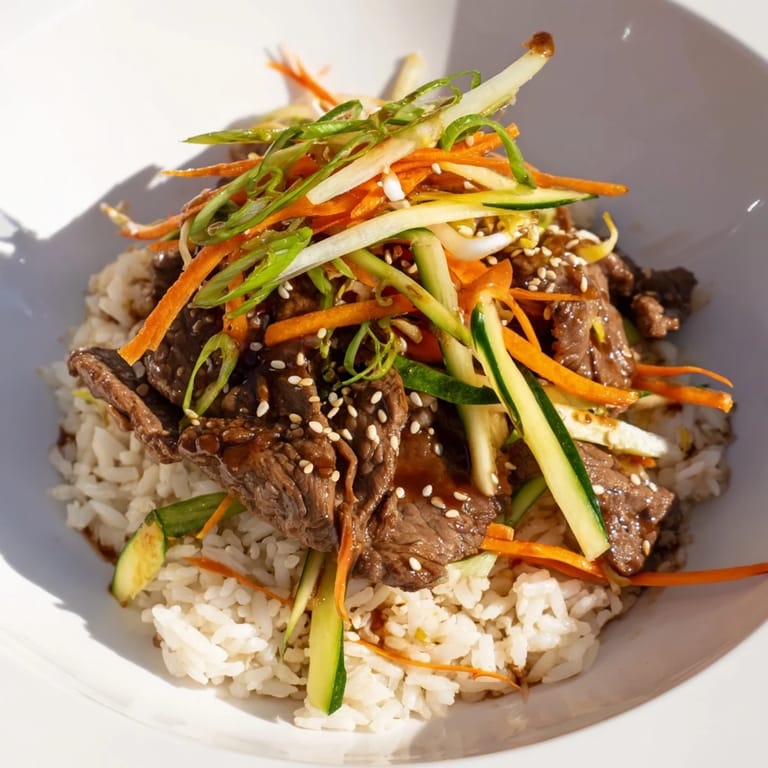
Save The first time I made bulgogi at home, I burned the garlic because I got distracted watching my neighbor's cat chase a leaf across their fence. That moment taught me something valuable: this dish doesn't need perfection, just attention. What started as a near-disaster turned into the best bowl I'd made in months—the slightly caramelized edges on the beef, the way the pear's sweetness balanced the soy, the whole thing coming together in under thirty minutes. Now whenever I make it, I smile at that memory and set a timer.
I made this for my college roommate on a random Tuesday when she was stressed about exams, and watching her face light up when she took that first bite reminded me why I cook. She asked for the recipe before she'd even finished the bowl, which is the highest compliment I've ever received in my kitchen.
Ingredients
- Beef sirloin or ribeye, thinly sliced: The thinner the slice, the faster it cooks and the better it absorbs the marinade—ask your butcher to slice it for you if you're not confident with a knife.
- Soy sauce: This is your umami backbone, the thing that makes everything taste intentional and deep.
- Brown sugar: Don't skip it or substitute with white sugar; brown sugar brings a subtle molasses note that white can't match.
- Sesame oil: Use the toasted kind, the darker one that smells like a Korean grandmother's kitchen.
- Rice vinegar: It cuts through the richness and keeps the dish from feeling heavy, which is why it matters more than you'd think.
- Ginger and garlic: Fresh is non-negotiable here; the difference between fresh and powdered will change your entire experience.
- Grated pear or sweet apple: This is the secret weapon that nobody expects—it tenderizes the meat and adds a gentle sweetness that rounds out all the salty, savory notes.
- Gochujang: Optional but worth it if you like a little heat; start with less than you think you need and adjust as you taste.
- Scallions and sesame seeds: These aren't just garnish, they're the final punctuation that makes every bite complete.
- Jasmine or short-grain rice: The slightly sticky texture holds the marinade and makes eating with chopsticks feel natural.
- Fresh vegetables for assembly: Crisp carrot, cool cucumber, and blanched bean sprouts are your textural contrast—they keep the bowl from feeling one-note.
Tired of Takeout? 🥡
Get 10 meals you can make faster than delivery arrives. Seriously.
One email. No spam. Unsubscribe anytime.
Instructions
- Build your marinade:
- Combine soy sauce, brown sugar, sesame oil, rice vinegar, minced garlic, grated ginger, grated pear, gochujang if using, scallions, sesame seeds, and black pepper in a large bowl. The mixture should smell complex and inviting, with sweetness, salt, and warmth all playing together.
- Marinate the beef:
- Add your thinly sliced beef to the marinade and toss it until every piece is coated. Cover and let it sit for at least fifteen minutes, though an hour is better if you have the time—the pear's natural enzymes will start breaking down the proteins and making the meat tender.
- Get your pan screaming hot:
- Heat a large skillet or wok over high heat until it's almost smoking. This is where the magic happens; you want that intense heat to create a quick, golden crust on the beef without cooking it through.
- Stir-fry the beef in batches:
- Working in batches if needed so you don't crowd the pan, add the marinated beef and let it cook undisturbed for about thirty seconds before you start stirring. You're looking for caramelized edges and a slightly translucent center, which takes about two to three minutes total per batch.
- Assemble your bowls:
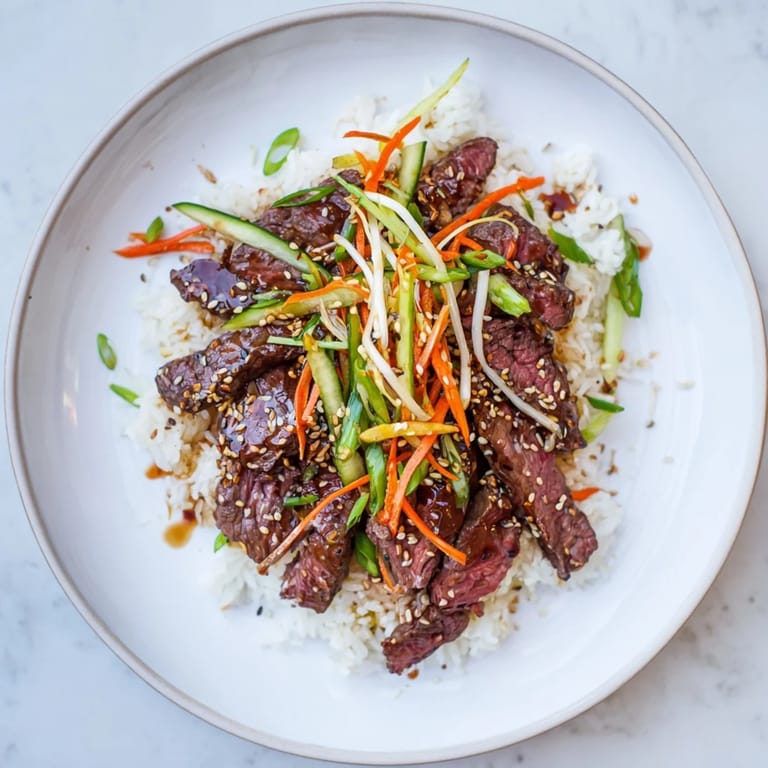
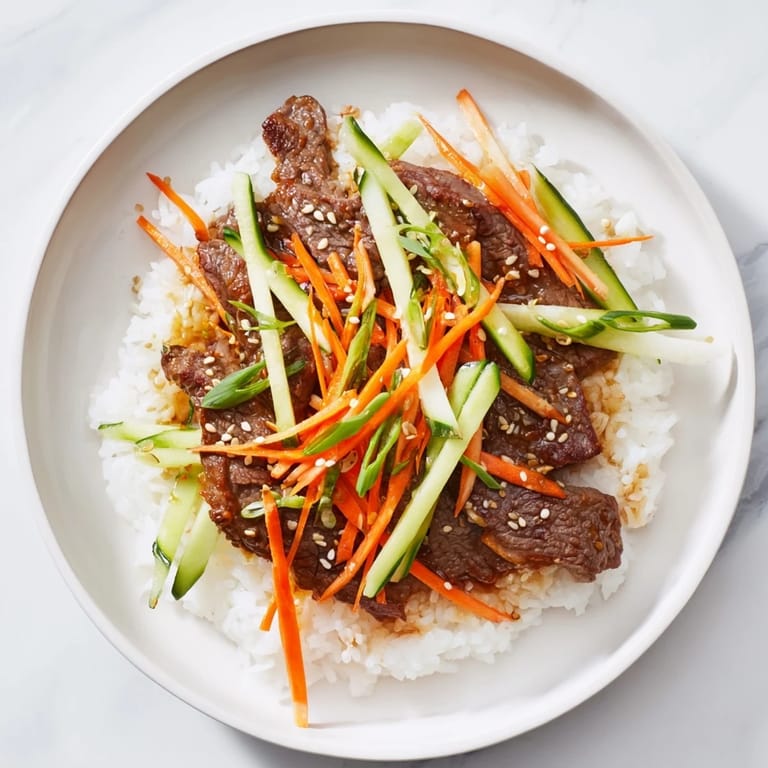
- Divide cooked rice among four bowls and arrange the warm beef on top, then add your julienned carrot, sliced cucumber, blanched bean sprouts, and kimchi if you're using it. The contrast between warm and cool, soft and crisp, is what makes this dish feel alive.
- Finish with garnish:
- Sprinkle extra scallions and toasted sesame seeds over everything and serve immediately while the beef is still warm and the vegetables are still crisp.
 Save
Save There's something almost meditative about standing at the stove with the wok screaming hot, hearing that sizzle when the beef hits the pan, knowing that in just a few minutes you'll have something that tastes like it came from a proper Korean restaurant. That sound, that smell—it reminds me that cooking doesn't have to be complicated to be meaningful.
The Secret of the Pear
The first time I learned about using grated pear in marinades, it felt like someone had handed me a cheat code for beef. The enzymes in the fruit actually work to break down the muscle fibers, making even a quick fifteen-minute marinade surprisingly effective. I've tested this with and without the pear, and honestly, it's the difference between beef that's just okay and beef that melts on your tongue.
Building Your Bowl
One of the best things about this dish is that it's endlessly customizable depending on what you have on hand and what you're in the mood for. The marinade is flexible, the vegetables are interchangeable, and the whole thing comes together so quickly that you can adjust as you go. I've made this with daikon radish instead of cucumber, with shredded cabbage, with roasted mushrooms—the structure stays the same, but your version will be uniquely yours.
Variations and Timing
If you're meal prepping, you can marinate the beef the night before and just cook it when you're ready, which means breakfast, lunch, or dinner becomes a matter of how much time you have. On weeknights when everything feels rushed, I skip the kimchi and extra vegetables and just focus on getting the beef cooked right, knowing that the marinade and sesame seeds carry enough flavor on their own. When I have more time, I roast an egg on top or add extra vegetables, turning a quick meal into something that feels more indulgent.
- Make the marinade while your rice is cooking to save time and keep your kitchen organized.
- Slice the beef ahead of time if it helps, but keep it in the marinade so it doesn't dry out.
- If you're sensitive to heat, start with half the gochujang and taste as you go—it's easier to add spice than to take it away.
 Save
Save This bowl has become my go-to for feeding people I care about on nights when I want to serve something that tastes special without requiring hours of work. It's the kind of dish that makes everyone ask for the recipe, and honestly, that never gets old.
Recipe FAQs
- → What cut of beef works best for this dish?
Ribeye and sirloin are ideal choices due to their tenderness and quick cooking properties.
- → Can I make this dish spicy?
Yes, adding gochujang (Korean chili paste) to the marinade provides a pleasant heat and depth of flavor.
- → What type of rice should I use?
Jasmine or short-grain white rice works well, offering a sticky texture that complements the beef and vegetables.
- → Are there gluten-free options available?
Yes, substitute regular soy sauce with tamari and ensure the gochujang used is gluten-free.
- → How long should the beef marinate?
Marinate the beef for at least 15 minutes; longer marination up to an hour enhances the flavors.