 Save
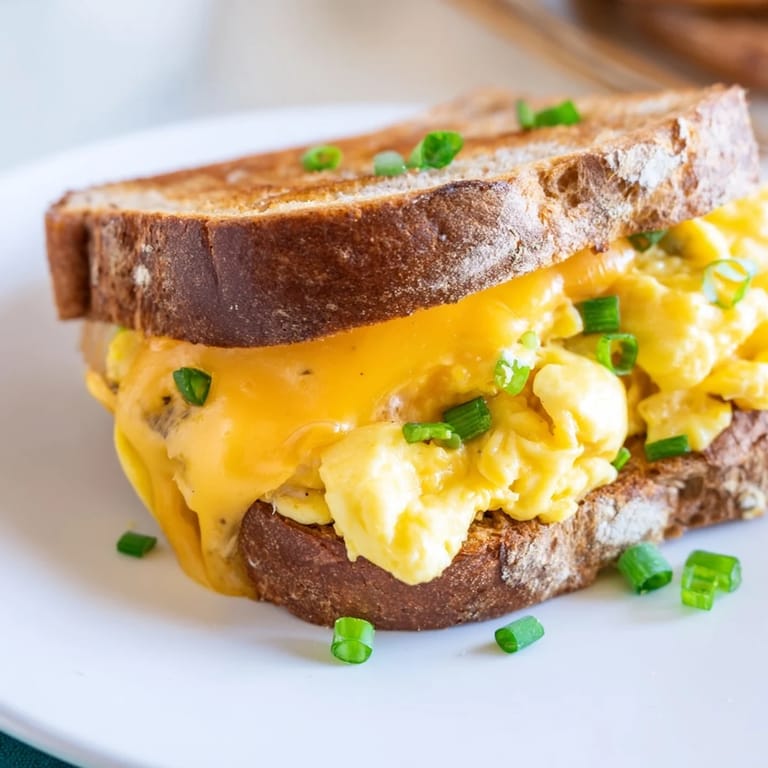
Save There's something quietly magical about the moment when scrambled eggs meet warm toast in a single pan, and you realize you've just created breakfast without dirtying half your kitchen. I discovered this method on a hectic Tuesday morning when I was running late, hungry, and determined not to juggle three pans like some kind of frantic short-order cook. The eggs melted into the bread, the cheese turned golden, and suddenly I had a warm, buttery sandwich that tasted like I'd actually planned ahead.
I remember making this for my roommate on a Saturday when we were both too tired to think, too hungry to wait. She watched from the kitchen counter as the eggs puffed slightly, the cheese melted into every corner, and somehow one pan became an entire breakfast moment. She's still asking me to make it, which feels like the highest compliment a recipe can get.
Ingredients
- Eggs: Three large ones whisked with milk create a tender scramble that clings beautifully to the bread—the milk is the secret to softness, not toughness.
- Sturdy sandwich bread: Sourdough or whole wheat holds up to the moisture and heat without disintegrating into sad toast.
- Unsalted butter: Just enough to coat the pan and give everything a golden, slightly nutty finish.
- Cheddar cheese: Or whatever melts in your fridge—sharp, mild, it all works because the heat is gentle and the contact time is brief.
- Chives or green onions: Optional but they're the final flourish that makes this feel intentional rather than rushed.
Tired of Takeout? 🥡
Get 10 meals you can make faster than delivery arrives. Seriously.
One email. No spam. Unsubscribe anytime.
Instructions
- Whisk and season:
- Crack your eggs into a bowl with milk, salt, and pepper, then whisk until the yolks and whites are completely combined and the color is pale and uniform. This takes about 30 seconds and makes all the difference in even cooking.
- Heat and butter the pan:
- Set your nonstick skillet over medium heat and let the butter melt slowly, swirling it around until it foams slightly and coats every surface. You want the pan warm but not smoking.
- Toast the bread:
- Lay both slices in the pan and listen for that quiet sizzle—it should be gentle, not aggressive. After a minute or so, flip them over so the other side gets toasted golden too.
- Pour the eggs:
- This is where the magic happens: pour the egg mixture right over and around the bread, watching it settle into the pan. You'll see it start to set almost immediately at the edges.
- Scramble gently:
- Use your spatula to push the cooking eggs toward the bread edges, letting the runny center flow underneath. Think of it as coaxing rather than aggressive stirring—we want creamy, not broken and dry.
- Add cheese:
- Once the eggs are mostly set but still slightly glossy and soft, lay one slice of cheese on each piece of bread. The residual heat will start melting it right away.
- Build the sandwich:
- Use your spatula to fold any excess cooked egg onto the bread, then carefully slide one slice over the other to form a sandwich. Press gently with the spatula to help it all stick together.
- Final cook:
- Let it sit over medium heat for another minute or two, pressing gently now and then, until the cheese is fully melted and the outside is golden and set. You want it warm all the way through but still tender inside.
- Finish and serve:
- Slide it onto a plate, sprinkle chives over the top if you're using them, and cut in half if you want to eat it like a person with two hands. Serve immediately while everything is still warm.
 Save
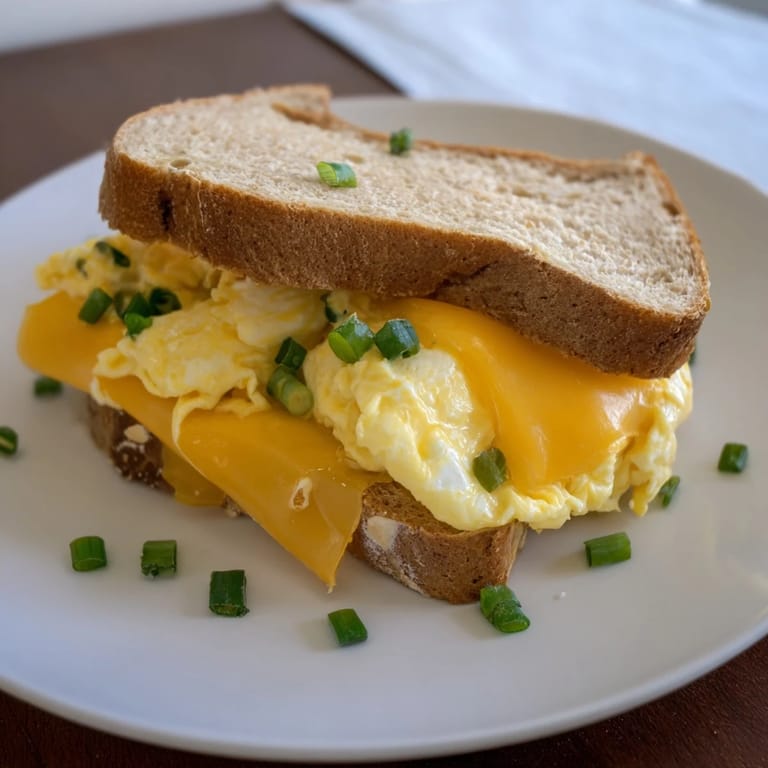
Save There was this one morning when the cheese melted so perfectly, pooling into golden corners, and my breakfast actually looked like something someone else had made for me. It's those small moments that make you realize cooking isn't just about feeding yourself—it's about creating something that feels a little bit luxurious before the rest of the day takes over.
Why This Works as a One-Pan Method
The beauty of cooking everything in one pan isn't just laziness (though that's part of it)—it's about managing temperature and moisture in a way that actually improves the dish. The bread soaks up the edges of the egg, the pan's warmth melts the cheese evenly, and everything stays connected instead of scattered across three different burners. You get a cohesive breakfast rather than a plate of separate components.
Variations and Additions
I've made this sandwich about a hundred different ways depending on what's actually in the fridge. Crispy bacon crumbled between the eggs, sautéed mushrooms, even a thin slice of tomato if I'm feeling fancy—they all disappear into the warmth and add their own character. The core recipe is flexible enough to handle what you have without falling apart, which is exactly what you need in a weekday breakfast.
Making It Your Own
The real trick is not overthinking it—this sandwich is meant to be simple and fast, something you can make without a recipe once you've done it once. The technique matters more than exact measurements because you're reading the pan and the eggs as you go, adjusting heat and timing to what's actually happening in front of you. That's when cooking stops feeling like following instructions and starts feeling like instinct.
- If you like your eggs looser, pull it off the heat a minute earlier and let carryover cooking finish the job.
- Cheese that's already sliced melts faster than chunks or shreds, so keep that in mind for timing.
- Cutting the sandwich in half makes it feel like a complete breakfast rather than just a warm egg delivery system.
 Save
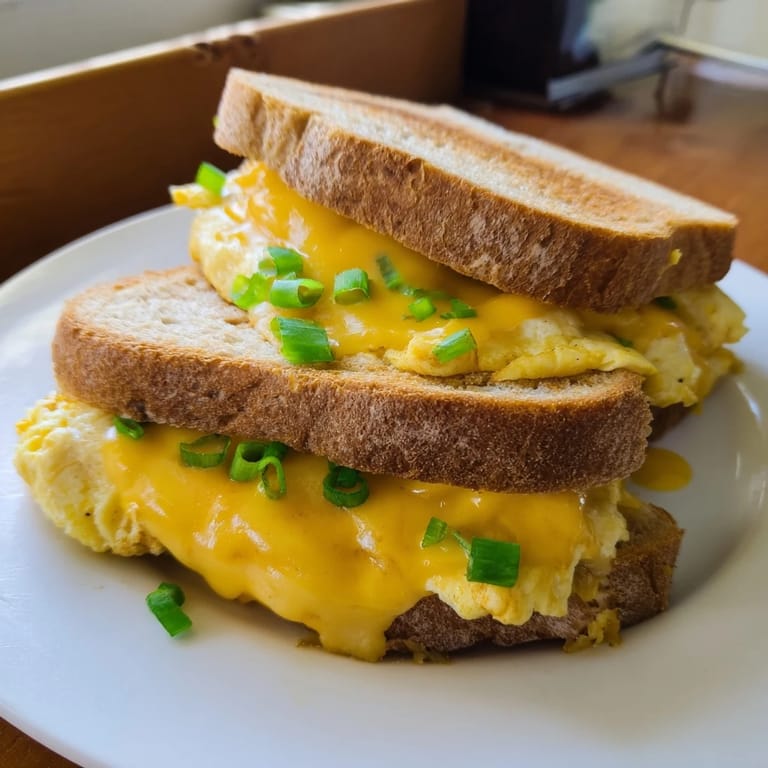
Save This sandwich has become my answer to mornings when I want something that tastes intentional but doesn't require me to be intentional before I've had coffee. It's proof that simplicity, when done right, feels like luxury.
Recipe FAQs
- → How do you cook eggs directly on bread?
Toast the bread slices in a skillet, then pour whisked eggs over and around them, letting eggs cook gently so they set over the bread edges.
- → What type of bread works best for this meal?
Sturdy slices like sourdough or whole wheat hold up well to cooking in the pan without becoming soggy.
- → Can I add other toppings besides cheese and chives?
Yes, cooked bacon, ham, or sautéed vegetables can be added for extra flavor.
- → What cooking tools are required?
A large nonstick skillet, spatula, mixing bowl, and whisk are needed for preparation.
- → How long does the entire cooking process take?
Preparation takes about 5 minutes and cooking roughly 8 minutes, totaling around 13 minutes.