 Save
Save My neighbor brought me a quart container of this soup the winter I had the flu, and I remember sitting up in bed with the bowl cradled in both hands, breathing in lemon and dill before I even tasted it. The broth was clean and bright, nothing heavy or overly rich, just exactly what my body wanted. I asked for the recipe a week later, and she laughed and said it was the easiest thing she made all month. Now I keep cooked chicken in my freezer just so I can pull this together on cold evenings when I need something that feels like care in a bowl.
I made this for my sister after she had her second baby, and she texted me at midnight saying she ate three bowls and froze the rest in single servings. She said it was the first thing that didnt feel like obligation food, that she actually looked forward to reheating it during those blurry newborn weeks. I started doubling the batch after that, because it freezes so well and because I like having it on hand when someone I love needs something warm and uncomplicated.
Ingredients
- Cooked chicken breast: Rotisserie chicken is my favorite shortcut here, the meat is already juicy and seasoned, and you can shred it with your hands in under a minute.
- Yellow onion: I dice mine small so it melts into the broth and adds sweetness without chunks floating around.
- Carrots: Peel them and cut them into even pieces so they cook at the same rate as the celery, and dont skip them because they add a subtle sweetness that balances the lemon.
- Celery: It gives the broth that classic soup backbone, and I always use the leafy tops if they have them because they taste like concentrated celery.
- Garlic: Fresh is essential, it blooms in the oil and makes the whole kitchen smell like somethings good is happening.
- Lemon: Zest it first before you juice it, and use a microplane if you have one so you get the fragrant oils without the bitter white pith.
- Fresh dill: This is the herb that makes the soup sing, dried works in a pinch but fresh dill has a brightness that dried cant touch.
- Parsley: I use it for color and a little freshness on top, but its optional if you dont have it.
- Orzo pasta: These tiny rice shaped grains turn tender and plump in the broth, and they make the soup feel more substantial without being heavy.
- Chicken broth: Low sodium is key so you control the salt, and I prefer boxed broth over canned because it tastes cleaner to me.
- Olive oil: Just enough to soften the vegetables and give the base a little richness.
- Bay leaf: It adds a subtle herbal depth you wont notice until you forget it one time and the soup tastes flat.
- Dried thyme: A small amount goes a long way, it adds earthiness that balances the bright lemon.
- Salt and pepper: Taste as you go, because the chicken and broth will already have some seasoning and you can always add more at the end.
- Parmesan cheese: Totally optional but a little grated on top adds a salty umami note that makes it feel a little fancy.
Tired of Takeout? 🥡
Get 10 meals you can make faster than delivery arrives. Seriously.
One email. No spam. Unsubscribe anytime.
Instructions
- Soften the vegetables:
- Heat the olive oil in your largest pot over medium heat, then add the onion, carrot, and celery and let them cook until they start to turn translucent and smell sweet, about five minutes. Stir them every minute or so to keep anything from sticking to the bottom.
- Bloom the aromatics:
- Add the garlic, thyme, and bay leaf and stir constantly for about a minute until the garlic smells toasty and fragrant. This step is quick but it builds so much flavor into the base.
- Build the broth:
- Pour in all the chicken broth and turn the heat up to bring it to a boil. You will see little bubbles breaking the surface and the vegetables will start to soften even more.
- Cook the orzo:
- Add the orzo and let it simmer for eight to ten minutes, stirring every couple of minutes so it doesnt clump or stick to the bottom. It should be tender but still have a little bite when you taste it.
- Add the chicken and lemon:
- Stir in the cooked chicken, lemon zest, and lemon juice and let everything simmer together for three or four minutes until the chicken is heated through. The soup will start to smell bright and sunny.
- Season and finish:
- Fish out the bay leaf and stir in the dill, salt, and pepper, tasting as you go. Add more lemon juice if you want it brighter, more salt if it tastes flat.
- Serve:
- Ladle the soup into bowls and sprinkle parsley and Parmesan on top if youre using them. Serve it hot with crusty bread on the side.
 Save
Save One night I made this soup and my husband came home late from work, stressed and quiet, and he stood at the stove eating it straight from the pot with a ladle. He didnt say much, just kept going back for more, and when he finally sat down he said it tasted like the kind of thing his mom used to make when he was sick as a kid. I realized then that some recipes do more than feed people, they give them a moment to stop and feel cared for without having to ask for it.
How to Store and Reheat
Let the soup cool completely before transferring it to airtight containers, and it will keep in the fridge for up to four days. The orzo will keep absorbing liquid as it sits, so I like to add a splash of broth or water when I reheat it on the stove over medium heat. You can freeze it for up to three months, but I recommend undercooking the orzo slightly if you know youre going to freeze it so it doesnt turn to mush when you thaw and reheat it. Let it thaw in the fridge overnight, then warm it gently on the stove and adjust the seasoning with a squeeze of fresh lemon juice.
Ways to Make It Your Own
If you want a richer, creamier soup, whisk two egg yolks in a bowl and slowly add a ladle of hot broth while whisking constantly, then stir that mixture back into the soup off the heat for a classic Greek avgolemono texture. Swap the orzo for rice if you need it to be gluten free, or toss in a handful of spinach or frozen peas in the last few minutes of cooking for extra vegetables. I have also used leftover turkey after Thanksgiving, and it works beautifully. If you dont have fresh dill, dried will do, but use about a third of the amount because dried herbs are more concentrated.
What to Serve Alongside
This soup is light enough that it pairs well with a hearty salad or a thick slice of sourdough bread brushed with olive oil and toasted until golden. I like to serve it with a simple cucumber and tomato salad dressed with olive oil, lemon, and salt, because the freshness echoes the soup without competing with it. If youre feeding a crowd, set out a bowl of grated Parmesan and some extra chopped dill so people can customize their bowls.
- A crusty baguette or garlic bread for dipping into the lemony broth.
- A green salad with a light vinaigrette to keep things fresh and bright.
- Roasted vegetables like zucchini or bell peppers if you want to make it a more substantial meal.
 Save
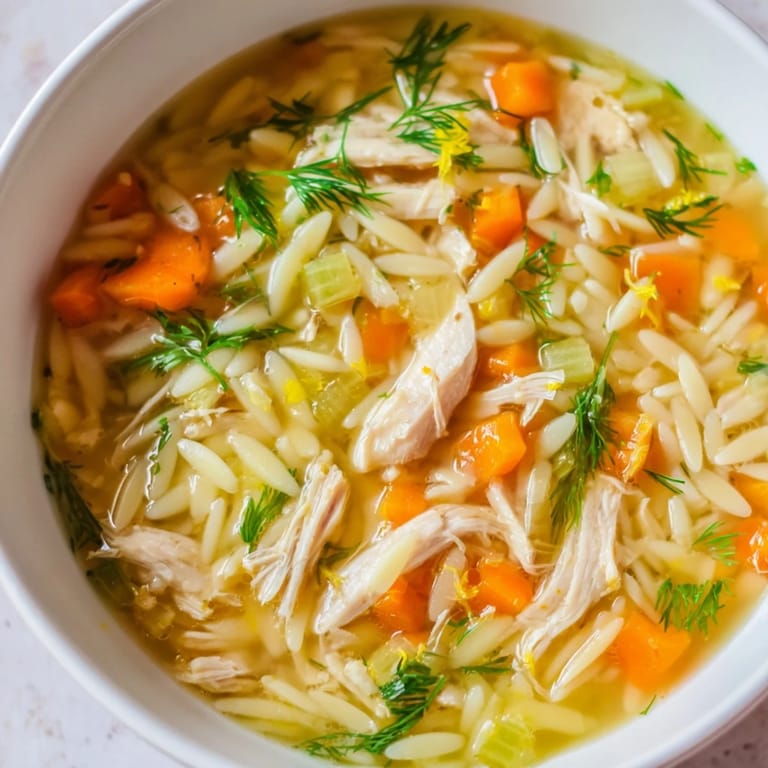
Save This soup has become my answer to so many moments, the kind of recipe I reach for when I want to feed someone I love without making a fuss. It is bright and gentle and fills the house with the kind of smell that makes people wander into the kitchen asking whats for dinner.
Recipe FAQs
- → Can I make this soup ahead of time?
Yes, this soup stores well in the refrigerator for up to 3 days. Store in an airtight container and reheat gently on the stovetop. Add fresh lemon juice and dill when reheating for optimal flavor. The soup also freezes well for up to 2 months; thaw overnight before reheating.
- → What's the avgolemono variation mentioned?
Avgolemono is a Greek finishing technique that creates a creamy, tangy soup. Beat 2 egg yolks and slowly whisk in a ladle of hot broth to temper them. Remove the pot from heat, then stir the egg mixture into the soup for a luxurious texture and rich lemon flavor.
- → How can I make this soup gluten-free?
Simply substitute the orzo pasta with an equal amount of long-grain white rice or gluten-free pasta. Rice takes about 15-18 minutes to cook, while gluten-free pasta typically follows package directions. Both options maintain the soup's comforting character.
- → What vegetables can I add or substitute?
This soup is very adaptable. Add fresh spinach, peas, or diced zucchini in the final minutes of cooking. Swap carrots for parsnips, or add fennel for extra aromatic depth. Just maintain similar cooking times so vegetables are tender but not mushy.
- → Can I use store-bought rotisserie chicken?
Absolutely. Rotisserie chicken is an excellent time-saver and often has great flavor from its seasoning. Shred or dice approximately 2 cups of meat from one whole bird. This cuts prep time significantly while delivering tender, juicy chicken.
- → How do I adjust the lemon flavor?
Start with the recipe's amount and taste as you go. Add lemon juice gradually to reach your preferred brightness. Fresh lemon juice is more flavorful than bottled. The zest adds subtle citrus notes without excessive tartness, making it perfect for balancing the savory broth.