 Save
Save The smell of searing beef used to make my dog pace circles around the kitchen, whining softly at the stove. I learned pot roast on a rainy Sunday when I had too much time and a cheap cut of chuck that needed serious attention. The first attempt was pale and tough because I skipped the browning, thinking it didnt matter. Now I know better: that dark crust on the meat is where all the magic starts, and patience during the sear is non-negotiable.
I made this for my parents the winter they visited during a snowstorm, and we ate it by candlelight when the power went out. The pot stayed warm on the stove for hours, and we kept going back for seconds with chunks of bread. My mom said it reminded her of her grandmothers kitchen, which felt like the highest compliment I could get. That night, the recipe stopped being just instructions and became something I wanted to repeat every cold season.
Ingredients
- Beef chuck roast or blade roast (3 to 3.5 lb): Look for visible marbling and avoid lean cuts, the fat melts during braising and keeps everything moist and flavorful.
- Kosher salt and black pepper (1.5 tsp and 1 tsp): Season generously before flouring so the crust has real depth, not just surface seasoning.
- All-purpose flour (2 tbsp): A light dusting helps the sear develop color and later thickens the braising liquid naturally.
- Olive oil and butter (3 tbsp and 1 tbsp): The combination gives you a high smoke point plus buttery richness without burning.
- Yellow onion (1 large): Thick wedges hold their shape and turn sweet and soft after hours in the pot.
- Garlic (4 cloves): Smash them with the side of your knife so they release oil quickly and dont scorch.
- Carrots, celery, baby potatoes (4, 3 ribs, 1.5 lb): Cut them large so they dont disintegrate, they should be tender but intact when you serve.
- Tomato paste (2 tbsp): Cooking it until it darkens removes the raw metallic taste and adds a deep, savory backbone.
- Dry red wine (1 cup): Use something youd actually drink, the flavor concentrates as it reduces and cheap wine tastes cheap in the final dish.
- Beef broth (2.5 cups): Low-sodium gives you control over seasoning, and homemade stock makes this transcendent if you have it.
- Worcestershire sauce (1 tsp): Just a splash adds umami and a hint of tanginess that balances the richness.
- Fresh rosemary, thyme, bay leaves (2, 3 sprigs, 2 leaves): Fresh herbs are ideal but dried work fine, just use less since dried flavors are more concentrated.
- Cornstarch slurry (optional, 1.5 tbsp with 2 tbsp water): Stir this in at the end if you want a thicker, spoon-coating gravy instead of a thinner jus.
- Fresh parsley (optional): A handful of chopped parsley brightens the plate and cuts through the heaviness visually and flavor-wise.
Tired of Takeout? 🥡
Get 10 meals you can make faster than delivery arrives. Seriously.
One email. No spam. Unsubscribe anytime.
Instructions
- Preheat and prep the beef:
- Set your oven to 300°F if youre using it. Pat the roast completely dry with paper towels so it sears instead of steams, then season every side with salt and pepper and dust lightly with flour, shaking off the excess.
- Sear the roast:
- Heat 2 tbsp oil and the butter in your heaviest pot over medium-high heat until shimmering. Lay the roast in gently and let it sit undisturbed for 4 to 5 minutes per side until deeply browned, including the edges, then transfer to a plate.
- Cook the aromatics:
- Lower the heat to medium and add the last tablespoon of oil if the pot looks dry. Toss in the onion wedges and cook for 3 to 4 minutes until softened and golden, then add the smashed garlic and stir for 30 to 60 seconds until fragrant.
- Bloom the tomato paste:
- Stir in the tomato paste and cook for 1 to 2 minutes, letting it darken and caramelize slightly. This step makes a huge difference in flavor depth.
- Deglaze with wine:
- Pour in the red wine and scrape up all the browned bits stuck to the bottom of the pot. Let it simmer for 2 to 3 minutes to reduce slightly and concentrate the flavor.
- Add broth and herbs:
- Stir in the beef broth and Worcestershire sauce, then drop in the rosemary, thyme, and bay leaves. Nestle the roast back into the pot with any accumulated juices, the liquid should come about halfway up the meat.
- Braise low and slow:
- Bring everything to a gentle simmer over medium heat, then cover tightly and either reduce the heat to low or transfer the pot to the oven. Cook for 1.5 hours undisturbed.
- Add the vegetables:
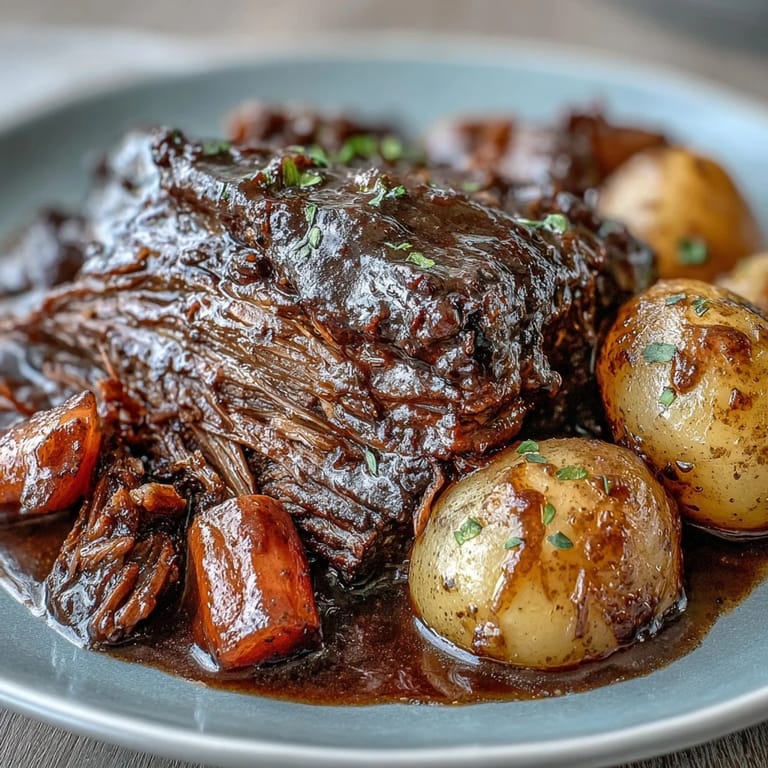
- After 1.5 hours, carefully turn the roast over and tuck the carrots, celery, and potatoes around it, pushing them into the liquid. Re-cover and cook for another 1.5 to 2 hours until the beef is fork-tender and the vegetables are soft but not mushy.
- Rest and skim:
- Transfer the roast and vegetables to a platter and tent loosely with foil. Skim the excess fat from the surface of the braising liquid with a spoon or ladle.
- Thicken the gravy (optional):
- Bring the liquid to a simmer and stir in the cornstarch slurry if you want a thicker sauce. Cook for 2 to 3 minutes until it coats the back of a spoon, adding a splash of broth if it gets too thick.
- Shred and serve:
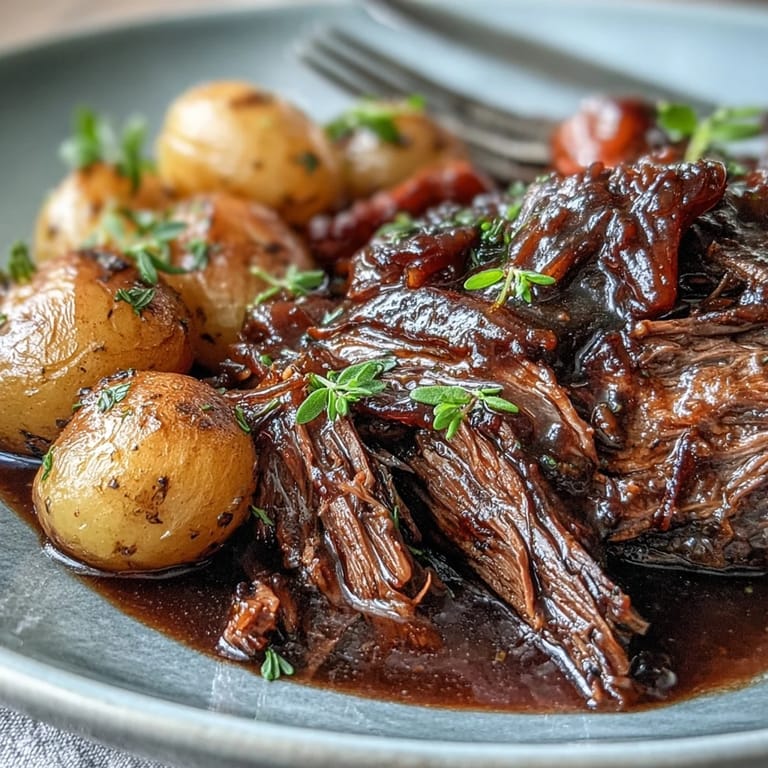
- Discard the herb stems and bay leaves. Shred the beef into large chunks or slice it against the grain, then return it to the pot or arrange it over the vegetables and spoon the hot gravy on top, finishing with chopped parsley if desired.
 Save
Save This dish became my go-to when I needed to feed a crowd without stress or when I wanted the house to smell like someones grandmother lived there. I once brought leftovers to a potluck and watched three people fight over the last spoonful of gravy-soaked potatoes. It reminded me that the best recipes arent always the fanciest ones, theyre the ones people remember and ask you to make again.
How to Store and Reheat
Let everything cool to room temperature, then transfer the beef, vegetables, and gravy to an airtight container and refrigerate for up to four days. The flavors deepen overnight, so leftovers often taste better than the original meal. Reheat gently on the stovetop over low heat, adding a splash of broth or water to loosen the gravy, or microwave individual portions in 30-second intervals, stirring between each round to heat evenly.
Slow Cooker and Make-Ahead Tips
You can sear the beef and aromatics on the stovetop as written, then transfer everything to a slow cooker and cook on low for 8 to 10 hours or high for 5 to 6 hours. Add the vegetables halfway through if you want them firmer, or toss them in at the start if you prefer them very soft. If youre prepping ahead, sear the meat and cook the aromatics the night before, refrigerate everything separately, then combine and braise the next day.
Serving Suggestions and Variations
This pot roast begs for something to soak up the gravy: crusty bread, buttered egg noodles, creamy mashed potatoes, or even polenta. Leftovers shred beautifully for sandwiches on toasted buns with horseradish, or you can toss the meat with the gravy and serve it over rice or in soft tacos with pickled onions. For a lighter version, trim visible fat before cooking and skim the braising liquid thoroughly, though youll sacrifice some richness.
- Use half beef broth and half homemade stock for an even deeper, more complex flavor.
- Swap baby potatoes for parsnips or turnips if you want a slightly sweeter, earthier vegetable mix.
- If you dont drink alcohol, replace the wine with an equal amount of extra beef broth plus a tablespoon of balsamic vinegar for acidity.
 Save
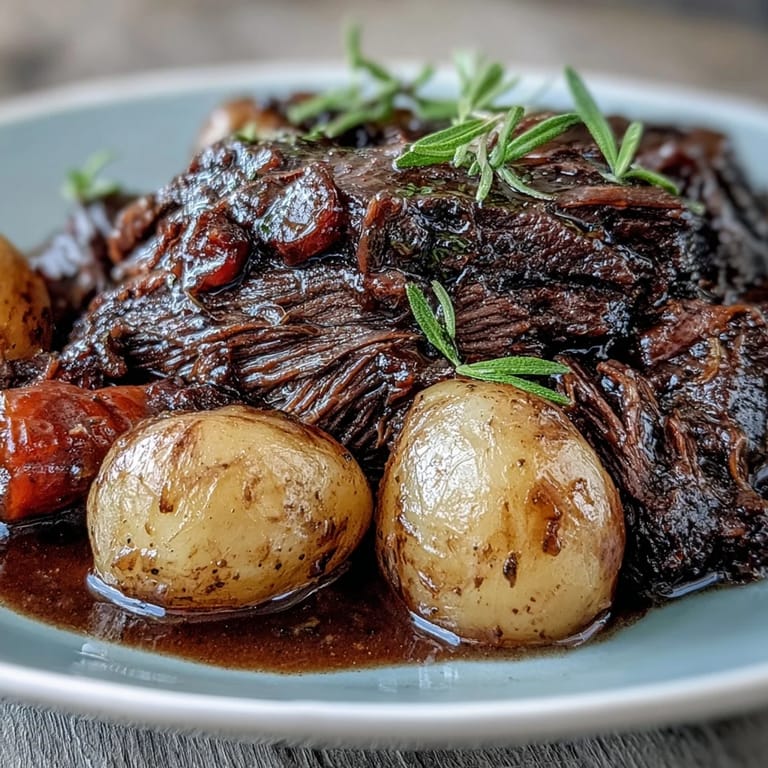
Save Pot roast is forgiving, warm, and worth the wait, and it turns a regular evening into something that feels like home. Make it once and youll understand why people have been cooking it this way for generations.
Recipe FAQs
- → What cut of beef works best for pot roast?
Chuck roast or blade roast are ideal choices because they contain generous marbling and connective tissue that breaks down during slow cooking. This results in incredibly tender, succulent meat that shreds easily. Look for a well-marbled piece weighing 3-3.5 pounds for best results.
- → How long should I cook pot roast for tenderness?
Plan for approximately 3 hours of total cooking time. The beef simmers for 1½ hours before vegetables are added, then cooks another 1½-2 hours until fork-tender. The meat is done when it easily pulls apart with minimal pressure and shreds into large chunks.
- → Can I make this in a slow cooker?
Absolutely. After searing the beef and sautéing the aromatics on the stovetop, transfer everything to your slow cooker. Cook on low for 8-10 hours or high for 5-6 hours. Add vegetables halfway through cooking if you prefer them to hold their shape better.
- → What can I substitute for red wine?
Replace the cup of red wine with additional beef broth for a non-alcoholic version. The dish will still be deeply flavorful from the tomato paste, herbs, and beef juices. You can also use balsamic vinegar or grape juice mixed with broth for a similar depth.
- → How do I get the thickest gravy?
For naturally thick gravy, reduce the cooking liquid on the stovetop after removing the beef and vegetables. For faster results, whisk together a cornstarch slurry (cornstarch mixed with cold water) and stir into the simmering liquid for 2-3 minutes until it reaches your desired consistency.
- → What sides pair well with pot roast?
Crusty bread for dipping in the gravy, buttered egg noodles, or creamy mashed potatoes are classic accompaniments. The dish is substantial enough to stand alone with just the vegetables that cook alongside the beef. A simple green salad with vinaigrette provides a nice fresh contrast.