 Save
Save One sticky summer afternoon, I was staring into my nearly empty fridge when I spotted a forgotten container of peanut butter and some noodles. My roommate had just brought back fresh cilantro from the market, and suddenly the idea of a bright, tangy noodle bowl felt less like making dinner and more like solving a delicious puzzle. That first bowl—served cold with lime squeezed over the top—became my go-to meal whenever I needed something that tasted both comforting and alive on my plate.
I made this for a small potluck once, bringing it in a big bowl with the dressing already tossed through, and watched three different people go back for seconds. What surprised me most was how it somehow tasted even better the next day—the noodles had soaked up all that peanut richness, and the vegetables stayed crisp. That's when I realized this wasn't just lunch food; it was the kind of dish that made people happy without needing anything fancy to prove it.
Ingredients
- Rice noodles or wheat noodles (300 g): Rice noodles stay tender and don't clump as easily, but wheat noodles have a nicer chew if you prefer that texture—either works beautifully here.
- Carrot, julienned: The natural sweetness balances the umami from the soy sauce, and julienning them thin means they soften slightly without losing their snap.
- Red bell pepper, thinly sliced: Choose one that's firm and glossy; the color matters as much as the flavor, adding brightness to every bite.
- Red cabbage, shredded (1 cup): It's crisp, slightly peppery, and holds its texture even when dressed, which I learned the hard way after using regular green cabbage once.
- Scallions, thinly sliced: Use both the white and green parts—the white adds a gentle onion note while the green brings freshness right at the end.
- Fresh cilantro (1/2 cup): If cilantro isn't your thing, mint or Thai basil work beautifully in its place; I've done both and never regretted it.
- Bean sprouts (1/2 cup): Add these just before serving if you're making the bowl ahead—they'll stay crispest and freshest that way.
- Creamy peanut butter (1/3 cup): The slightly thinner consistency makes whisking easier, though natural peanut butter works if you whisk a little longer to combine the oils.
- Soy sauce (2 tbsp): Use tamari if you need gluten-free, and taste as you go since soy sauces vary in saltiness.
- Sesame oil (1 tbsp): This is a flavor powerhouse, so resist the urge to pour; a little goes a long way and prevents the dressing from tasting greasy.
- Rice vinegar (1 tbsp): It's milder than white vinegar and adds just enough tang without sharpness—I don't recommend substituting it here.
- Honey or maple syrup (1 tbsp): Maple syrup keeps the recipe naturally vegan and adds a subtle earthiness I've come to prefer.
- Fresh ginger, grated (1 tsp): Grate it right before mixing so you get those bright, spicy notes; pre-grated loses its punch quickly.
- Garlic clove, minced (1 small): One clove is enough to whisper garlic flavor without drowning out everything else.
- Warm water (2–4 tbsp): Start with 2 tablespoons and add more until the dressing reaches the consistency you want—thinner for drizzling, thicker for coating.
- Roasted peanuts, chopped (2 tbsp): The toasted flavor adds depth, and chopping them by hand (not too fine) gives you little pockets of crunch throughout.
- Toasted sesame seeds (1 tsp): Toast them yourself if you can—they bloom in flavor and smell incredible.
- Lime wedges: Fresh lime is non-negotiable; that squeeze at the end brightens everything and makes the whole bowl feel complete.
Tired of Takeout? 🥡
Get 10 meals you can make faster than delivery arrives. Seriously.
One email. No spam. Unsubscribe anytime.
Instructions
- Cook and cool the noodles:
- Bring a pot of salted water to a boil and cook the noodles according to package time, then drain them in a colander. Rinse under cold running water while gently stirring with your fingers—this stops them from sticking and cools them down so they won't wilt the vegetables later.
- Whisk the peanut dressing:
- In a medium bowl, add peanut butter, soy sauce, sesame oil, rice vinegar, honey, ginger, and garlic. Whisk steadily until it starts to come together, then slowly add warm water a splash at a time, whisking between each addition until you reach a smooth, pourable consistency that coats the back of a spoon.
- Assemble the base:
- Toss the cooled noodles, carrot, bell pepper, cabbage, scallions, cilantro, and bean sprouts together in a large mixing bowl using two forks or salad tongs. The movement helps everything mix evenly without crushing the vegetables.
- Dress and toss:
- Pour the peanut dressing over the noodle mixture and toss gently but thoroughly, making sure the dressing reaches every strand and vegetable. If it seems dry, add a tablespoon more water and toss again.
- Plate and garnish:
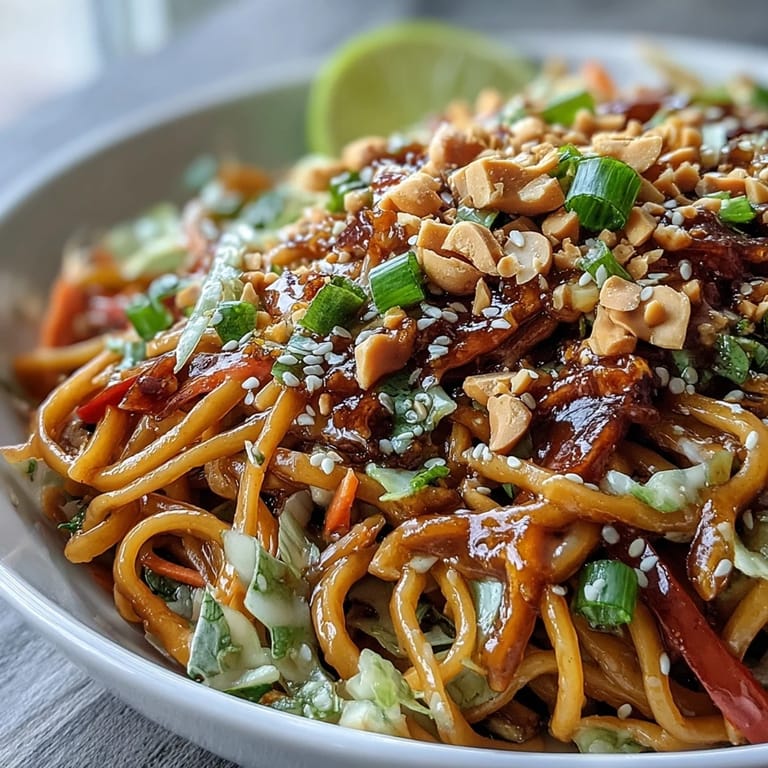
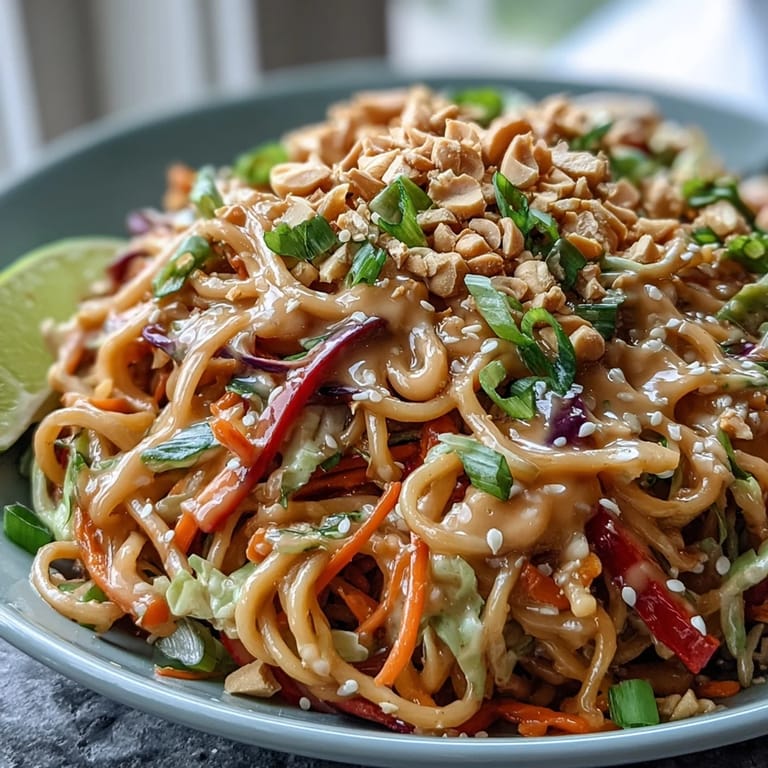
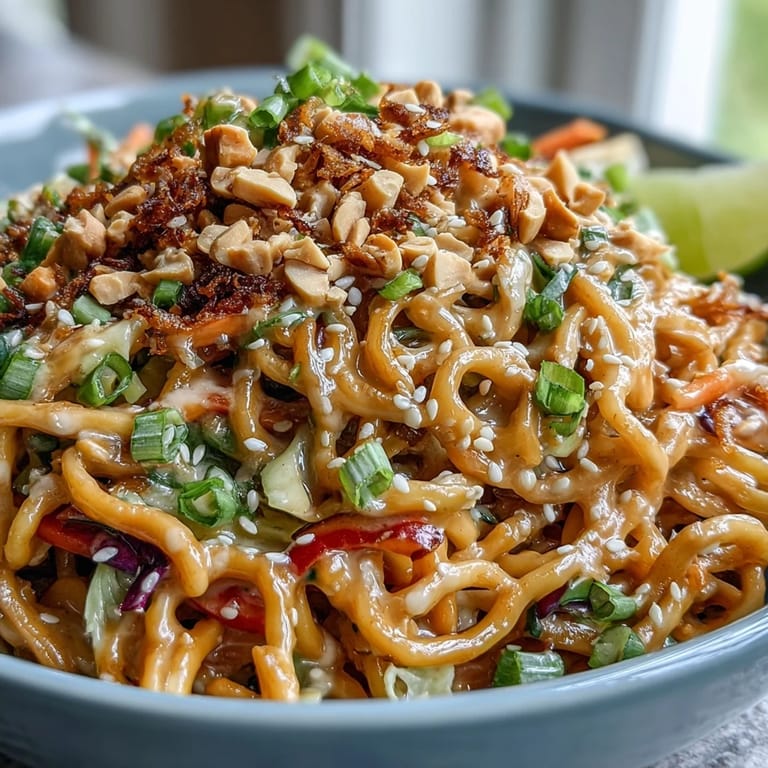
- Divide the noodle bowl among serving plates or bowls, then shower each portion with chopped peanuts, sesame seeds, and a small handful of extra cilantro. Serve each bowl with a lime wedge tucked alongside.
 Save
Save There's something grounding about a bowl of noodles topped with bright handfuls of fresh vegetables and a sauce that tastes both familiar and exciting. I've served this to people who swear they don't like cilantro, people with dietary restrictions, people in a hurry—and somehow it makes everyone at the table feel cared for without any fuss.
Making It Your Own
This bowl is more like a template than a strict formula, which is partly why I love it so much. I've added grilled tofu for protein some nights, thrown in leftover roasted vegetables from the night before, swapped the peanut butter for almond butter when that's what I had on hand. Each time it still tastes right, which tells me the balance of the dressing is solid enough to handle flexibility.
Serving and Timing
I usually make this for lunch because it doesn't need reheating and tastes great at room temperature or chilled, but it's equally good as a light dinner, especially in warmer months. If you're feeding a crowd, you can assemble the components ahead of time and let people dress their own bowls—it actually becomes more fun that way, with everyone adjusting the sauce thickness and toppings to their liking.
Storage and Next-Day Magic
Leftovers keep beautifully in the refrigerator for up to three days if you store the dressing separately from the noodles and vegetables; the noodles stay tender and the vegetables don't get soggy. I've learned that if you're packing this for lunch the next day, toss it all together right before eating so everything stays fresh and crisp.
- If the dressing has thickened overnight, whisk in a little water to loosen it back to its silky state.
- Keep the bean sprouts and cilantro in a separate container and add them just before eating for maximum crunch and freshness.
- A squeeze of fresh lime juice right before eating revives the whole bowl and makes it taste like you just made it.
 Save
Save This noodle bowl has become my answer to the question "what should I cook?" on those days when you want something that tastes good, feels nourishing, and doesn't demand much from you in return. I hope it becomes one of yours too.
Recipe FAQs
- → Can I make this dish gluten-free?
Yes. Use rice noodles instead of wheat noodles and replace regular soy sauce with tamari. Double-check all ingredient labels to ensure they're certified gluten-free.
- → How long does the peanut dressing last?
The dressing keeps well in an airtight container in the refrigerator for up to one week. The ingredients may separate slightly—just whisk before using.
- → Can I prepare this bowl ahead of time?
Yes. Cook and cool the noodles, prepare the vegetables, and store separately. The dressing can be made ahead. Toss everything together just before serving to maintain texture.
- → What vegetables work best in this dish?
The classic combination includes carrot, bell pepper, cabbage, and bean sprouts. You can also add cucumber, snap peas, shredded broccoli, or sliced radishes for crunch and color.
- → Is this bowl served hot or cold?
Both ways work beautifully. Serve chilled for a refreshing lunch, or gently warm the coated noodles in a skillet over low heat for a comforting dinner option.
- → How can I add more protein?
Grilled tofu, baked or fried tempeh, shredded chicken, or pan-seared shrimp make excellent additions. Marinate the protein in soy sauce and ginger before cooking for extra flavor.